- Today
- Holidays
- Birthdays
- Reminders
- Cities
- Atlanta
- Austin
- Baltimore
- Berwyn
- Beverly Hills
- Birmingham
- Boston
- Brooklyn
- Buffalo
- Charlotte
- Chicago
- Cincinnati
- Cleveland
- Columbus
- Dallas
- Denver
- Detroit
- Fort Worth
- Houston
- Indianapolis
- Knoxville
- Las Vegas
- Los Angeles
- Louisville
- Madison
- Memphis
- Miami
- Milwaukee
- Minneapolis
- Nashville
- New Orleans
- New York
- Omaha
- Orlando
- Philadelphia
- Phoenix
- Pittsburgh
- Portland
- Raleigh
- Richmond
- Rutherford
- Sacramento
- Salt Lake City
- San Antonio
- San Diego
- San Francisco
- San Jose
- Seattle
- Tampa
- Tucson
- Washington
Dover Today
By the People, for the People
Trump's 'Unrequited Love' for Putin Continues to Frustrate Allies
Former Trump officials and conservative commentators criticize the former president's favorable stance toward the Russian leader.
Apr. 7, 2026 at 12:57pm
Got story updates? Submit your updates here. ›
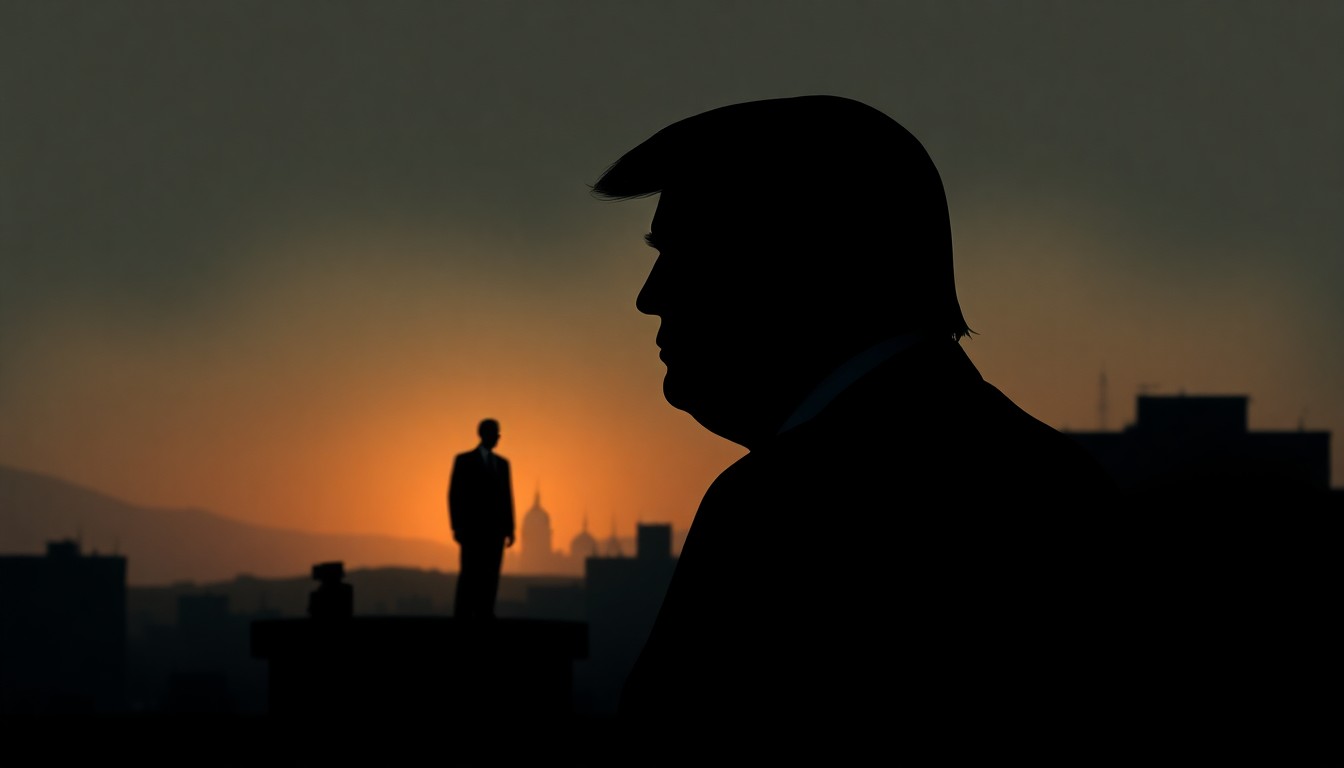 The former president's continued affinity for the Russian leader, despite Putin's indifference, has raised concerns about the potential impact on American foreign policy.Dover Today
Former U.S. President Donald Trump's ongoing affinity for Russian President Vladimir Putin has drawn criticism from both conservative and liberal voices. Commentators and former officials argue that Trump seems more comfortable with authoritarian leaders like Putin than with U.S. democratic allies, despite Putin's unwillingness to reciprocate Trump's overtures.
Why it matters
Trump's perceived deference to Putin and other autocrats has raised concerns about the potential corruption of American foreign policy and the undermining of longstanding alliances. As the U.S. navigates geopolitical tensions, Trump's continued embrace of Putin is seen by many as a liability.
The details
In March, Scottish journalist Andrew Neil, known for his conservative views, expressed frustration with Trump's foreign policy, noting that the former president imposed tariffs on U.S. allies but not on Russia. MSNBC host Joe Scarborough, a former Republican congressman, lamented that the GOP he grew up with, which believed in a strong West, has been replaced by admirers of Putin and Hungarian Prime Minister Viktor Orbán. The New York Times' Thomas B. Edsall argued that Trump has shown a willingness to 'sacrifice American interests in subservience to President Vladimir Putin of Russia,' citing reports that Russia is providing Iran with targeting information to attack U.S. forces in the Middle East.
- On March 6, 2026, the Washington Post reported that Russia is providing Iran with targeting information to attack American forces in the Middle East.
- On March 7, 2026, Trump attended the transfer of the flag-draped coffins of six U.S. Army Reserve members killed by a drone strike in Kuwait.
The players
Andrew Neil
A Scottish journalist known for his conservative views, who expressed frustration with Trump's foreign policy.
Joe Scarborough
An MSNBC host and former Republican congressman who lamented the GOP's shift away from a belief in a strong West.
Thomas B. Edsall
A columnist for the New York Times who argued that Trump has shown a willingness to sacrifice American interests to appease Putin.
Daniel Fried
A former U.S. ambassador to Poland who told Edsall that Trump seems more comfortable with authoritarian leaders like Putin than with America's democratic allies.
Fiona Hill
A former National Security Council official who told the BBC that Trump's 'unrequited love' for Putin has not been reciprocated.
What they’re saying
“I think, in some ways, he regards (Russian President Vladimir) Putin as more of an ally than he regards the United Kingdom or any of his European NATO allies.”
— Andrew Neil, Journalist
“The Republicans I grew up with who believed in a strong west have vanished and been replaced by admirers of Putin and Hungarian Prime Minister Viktor Orbán.”
— Joe Scarborough, MSNBC Host
“Trump does seem attracted to Putin as a strongman ruler. He seems more comfortable with — and gives more credence to — Putin than with leaders of America's democratic allies or with President Volodymyr Zelensky of Ukraine.”
— Daniel Fried, Former U.S. Ambassador to Poland
“Well, I think the first thing to disavow everybody of is the idea that there is a relationship between Donald Trump and Vladimir Putin. I think that's part of the problem, because Trump would like a relationship with Putin, and that's exactly why he doesn't criticize him. It's a kind of unrequited love of some description.”
— Fiona Hill, Former National Security Council Official
What’s next
The Biden administration is expected to continue to take a tougher stance on Russia compared to the Trump era, but the long-term impact of Trump's pro-Putin leanings on U.S. foreign policy remains to be seen.
The takeaway
Trump's continued affinity for Putin, despite the Russian leader's unwillingness to reciprocate, has raised concerns about the potential corruption of American foreign policy and the undermining of longstanding alliances. As the U.S. navigates geopolitical tensions, Trump's perceived deference to autocrats like Putin is seen by many as a liability.