- Today
- Holidays
- Birthdays
- Reminders
- Cities
- Atlanta
- Austin
- Baltimore
- Berwyn
- Beverly Hills
- Birmingham
- Boston
- Brooklyn
- Buffalo
- Charlotte
- Chicago
- Cincinnati
- Cleveland
- Columbus
- Dallas
- Denver
- Detroit
- Fort Worth
- Houston
- Indianapolis
- Knoxville
- Las Vegas
- Los Angeles
- Louisville
- Madison
- Memphis
- Miami
- Milwaukee
- Minneapolis
- Nashville
- New Orleans
- New York
- Omaha
- Orlando
- Philadelphia
- Phoenix
- Pittsburgh
- Portland
- Raleigh
- Richmond
- Rutherford
- Sacramento
- Salt Lake City
- San Antonio
- San Diego
- San Francisco
- San Jose
- Seattle
- Tampa
- Tucson
- Washington
National Guard Troops Remain Deployed in Washington With No End in Sight
The ongoing military presence in the nation's capital has drawn criticism over costs and concerns about suppressing dissent ahead of pivotal elections.
Apr. 20, 2026 at 12:56pm
Got story updates? Submit your updates here. ›
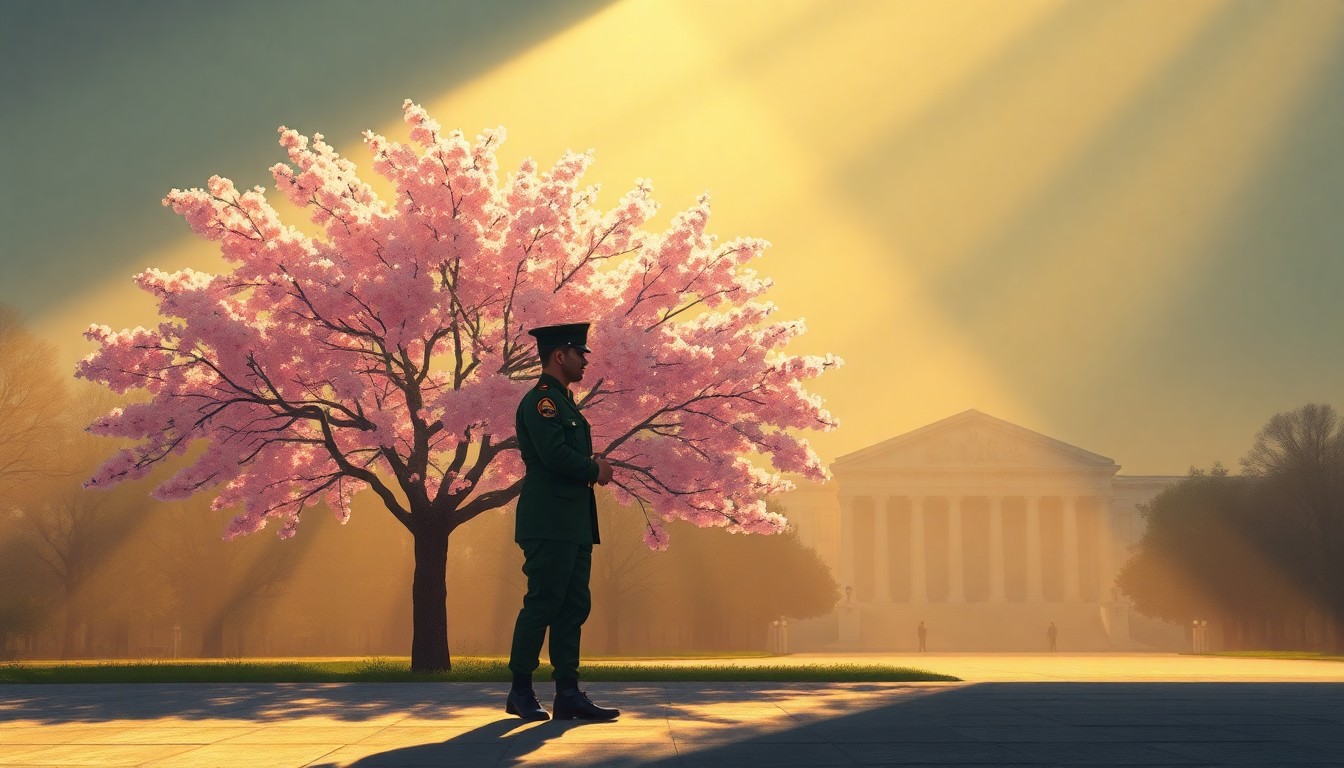 The lingering presence of armed National Guard troops on the streets of Washington, D.C. has drawn criticism over costs and concerns about suppressing dissent ahead of pivotal elections.Washington Today
Eight months after President Donald Trump declared a crime emergency in Washington, D.C. and called up the National Guard, more than 2,500 troops remain deployed across the city, with no clear end to the operation in sight. The lingering presence of armed soldiers on American streets has drawn criticism from local officials over the high costs and concerns that it could create an intimidating atmosphere during upcoming elections.
Why it matters
The indefinite deployment of National Guard troops in Washington, D.C. highlights the city's limited autonomy and the president's ability to unilaterally send in military forces with little effective resistance from local authorities. This raises concerns about the potential suppression of dissent and the impact on the democratic process, especially with pivotal elections looming.
The details
The National Guard deployment began in August 2025 when President Trump issued an executive order declaring a crime emergency in the nation's capital. Since then, guard members have assisted local police, responded to emergencies, and carried out various tasks, though they do not make arrests. While the White House claims the deployment has helped reduce crime, local officials disagree on how much credit the guard can be given, as crime was already declining before the deployment. A court battle over the legality of the deployment is ongoing, but without a judge intervening, it could continue as long as the White House wants.
- The National Guard deployment began in August 2025 when President Trump declared a crime emergency.
- Eight months after the initial deployment, more than 2,500 National Guard troops remain in Washington, D.C.
The players
President Donald Trump
The former president who issued the executive order to deploy the National Guard to Washington, D.C.
Phil Mendelson
Chairman of the District of Columbia Council, who has criticized the high costs of the National Guard deployment.
Muriel Bowser
The mayor of Washington, D.C., who has walked a fine line in her response to the federal intervention and National Guard deployment.
Brian Schwalb
The District of Columbia Attorney General, who is challenging the legality of the National Guard deployment in court.
Keya Chatterjay
The co-founder and executive director of the advocacy group Free DC, which is planning protests to oppose the federal surge and military presence in the city.
What they’re saying
“Taxpayers are paying more than a million dollars a day to have them walk around.”
— Phil Mendelson, Chairman of the District of Columbia Council
“The presence of armed soldiers on American streets is not a good look.”
— Phil Mendelson, Chairman of the District of Columbia Council
“Every local leader should want to mimic this success in their own locales.”
— Abigail Jackson, White House spokesperson
“It would be great if the federal government would use its money and resources to help the District on the things we need help with and not act like an invading army.”
— Brianne Nadeau, District Council member
“We should have local control and local democratic accountability for the people who enforce our laws. D.C. is uniquely disempowered in our system in many ways.”
— Scott Michelman, Legal director at the American Civil Liberties Union of the District of Columbia
What’s next
The court battle over the legality of the National Guard deployment in Washington, D.C. is ongoing, and without a judge stepping in, the military presence could continue as long as the White House wants.
The takeaway
The indefinite deployment of National Guard troops in Washington, D.C. highlights the city's limited autonomy and the president's ability to unilaterally send in military forces, raising concerns about the potential suppression of dissent and the impact on the democratic process ahead of pivotal elections.
Washington top stories

Washington events

Apr. 20, 2026
Washington Nationals vs. Atlanta Braves
Apr. 20, 2026
HEALTH x CARPENTER BRUT
Apr. 20, 2026
Krooked Kings