- Today
- Holidays
- Birthdays
- Reminders
- Cities
- Atlanta
- Austin
- Baltimore
- Berwyn
- Beverly Hills
- Birmingham
- Boston
- Brooklyn
- Buffalo
- Charlotte
- Chicago
- Cincinnati
- Cleveland
- Columbus
- Dallas
- Denver
- Detroit
- Fort Worth
- Houston
- Indianapolis
- Knoxville
- Las Vegas
- Los Angeles
- Louisville
- Madison
- Memphis
- Miami
- Milwaukee
- Minneapolis
- Nashville
- New Orleans
- New York
- Omaha
- Orlando
- Philadelphia
- Phoenix
- Pittsburgh
- Portland
- Raleigh
- Richmond
- Rutherford
- Sacramento
- Salt Lake City
- San Antonio
- San Diego
- San Francisco
- San Jose
- Seattle
- Tampa
- Tucson
- Washington
IMF Cuts Global Growth Outlook as Iran War Deepens Economic Risks
Energy shock, supply chain strain and geopolitical conflict cloud recovery, reshape policy priorities
Apr. 15, 2026 at 3:38pm
Got story updates? Submit your updates here. ›
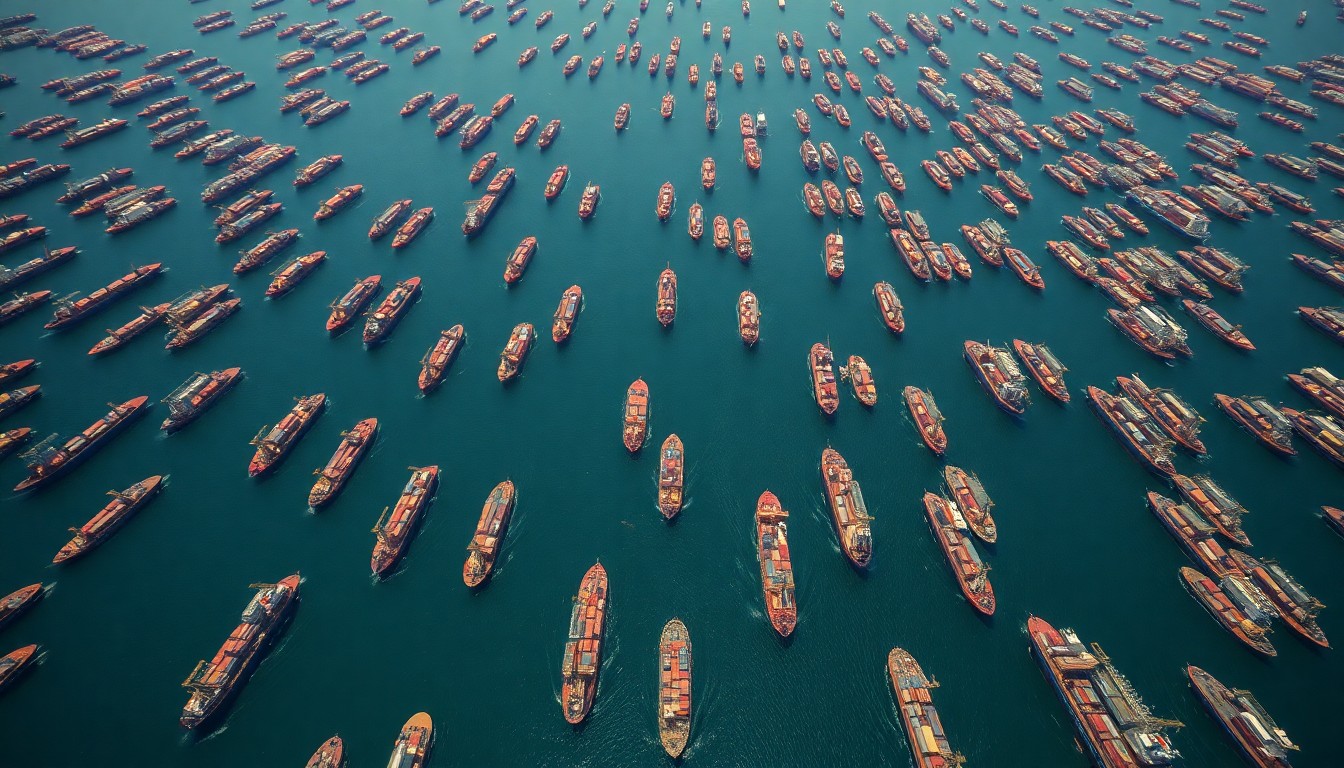 The blockade of the Strait of Hormuz has disrupted a critical global shipping corridor, with far-reaching economic consequences.Washington Today
The International Monetary Fund has downgraded its global growth outlook, warning that escalating conflict in the Middle East - now compounded by a near shutdown of the Strait of Hormuz - is disrupting trade, fueling inflation and complicating policymaking worldwide. Growth is now expected to slow to roughly 3.1% in 2026, down from earlier projections of about 3.4%, with risks tilted further to the downside.
Why it matters
The sudden collapse of shipping through the Strait of Hormuz is forcing producers worldwide to scramble for alternative sources of key inputs, driving up costs across multiple sectors, from agriculture to manufacturing. The burden is expected to fall unevenly, with lower-income regions facing the most severe consequences. Even if shipping resumes in the near term, the effects of the disruption could persist for months or longer, as damage to regional refining capacity and export infrastructure may take years to fully repair.
The details
On April 12, Donald Trump announced a blockade of 'any and all ships' attempting to pass through the Strait of Hormuz, a critical global shipping corridor. The move followed weeks of threats from Iran targeting vessels that did not pay multimillion-dollar transit fees. Together, the actions have effectively halted traffic through one of the world's most important commodity routes. Before the conflict, the Gulf region accounted for a significant share of global commodity exports, including roughly 20% of seaborne jet fuel, 10% of diesel, 23% of ammonia and 33% of helium production. It also supplied half of global seaborne sulfur and about 9% of aluminum.
- On April 12, Donald Trump announced a blockade of 'any and all ships' attempting to pass through the Strait of Hormuz.
- The move followed weeks of threats from Iran targeting vessels that did not pay multimillion-dollar transit fees.
The players
International Monetary Fund
An international organization that provides loans and grants to countries in economic distress and also conducts economic research.
Donald Trump
The former president of the United States who announced a blockade of the Strait of Hormuz.
Iran
A country in the Middle East that has been threatening vessels attempting to pass through the Strait of Hormuz.
Atlantic Council
A think tank that provided analysis on the economic impact of the Strait of Hormuz disruption.
Jerome Powell
The current chair of the United States Federal Reserve.
What they’re saying
“Global growth momentum entering 2026 has been 'halted' by the conflict, which has driven up energy prices and heightened uncertainty.”
— International Monetary Fund
“The closure represents a dual shock: an immediate supply disruption and a longer-term restructuring of global trade flows.”
— Atlantic Council
What’s next
The IMF emphasized that policymakers now face a narrow path forward: balancing inflation control with economic support while maintaining financial stability in an increasingly uncertain global environment.
The takeaway
The disruption in the Strait of Hormuz is expected to have far-reaching economic consequences, with lower-income regions facing the brunt of the impact. Policymakers will need to navigate a delicate balance between controlling inflation and supporting economic growth in the face of this geopolitical crisis.