- Today
- Holidays
- Birthdays
- Reminders
- Cities
- Atlanta
- Austin
- Baltimore
- Berwyn
- Beverly Hills
- Birmingham
- Boston
- Brooklyn
- Buffalo
- Charlotte
- Chicago
- Cincinnati
- Cleveland
- Columbus
- Dallas
- Denver
- Detroit
- Fort Worth
- Houston
- Indianapolis
- Knoxville
- Las Vegas
- Los Angeles
- Louisville
- Madison
- Memphis
- Miami
- Milwaukee
- Minneapolis
- Nashville
- New Orleans
- New York
- Omaha
- Orlando
- Philadelphia
- Phoenix
- Pittsburgh
- Portland
- Raleigh
- Richmond
- Rutherford
- Sacramento
- Salt Lake City
- San Antonio
- San Diego
- San Francisco
- San Jose
- Seattle
- Tampa
- Tucson
- Washington
Groundbreaking Lens-Free Imaging Tech Promises Scalable High-Resolution
MASI system uses computational algorithms to overcome physical limits of traditional optics
Apr. 12, 2026 at 7:14pm
Got story updates? Submit your updates here. ›
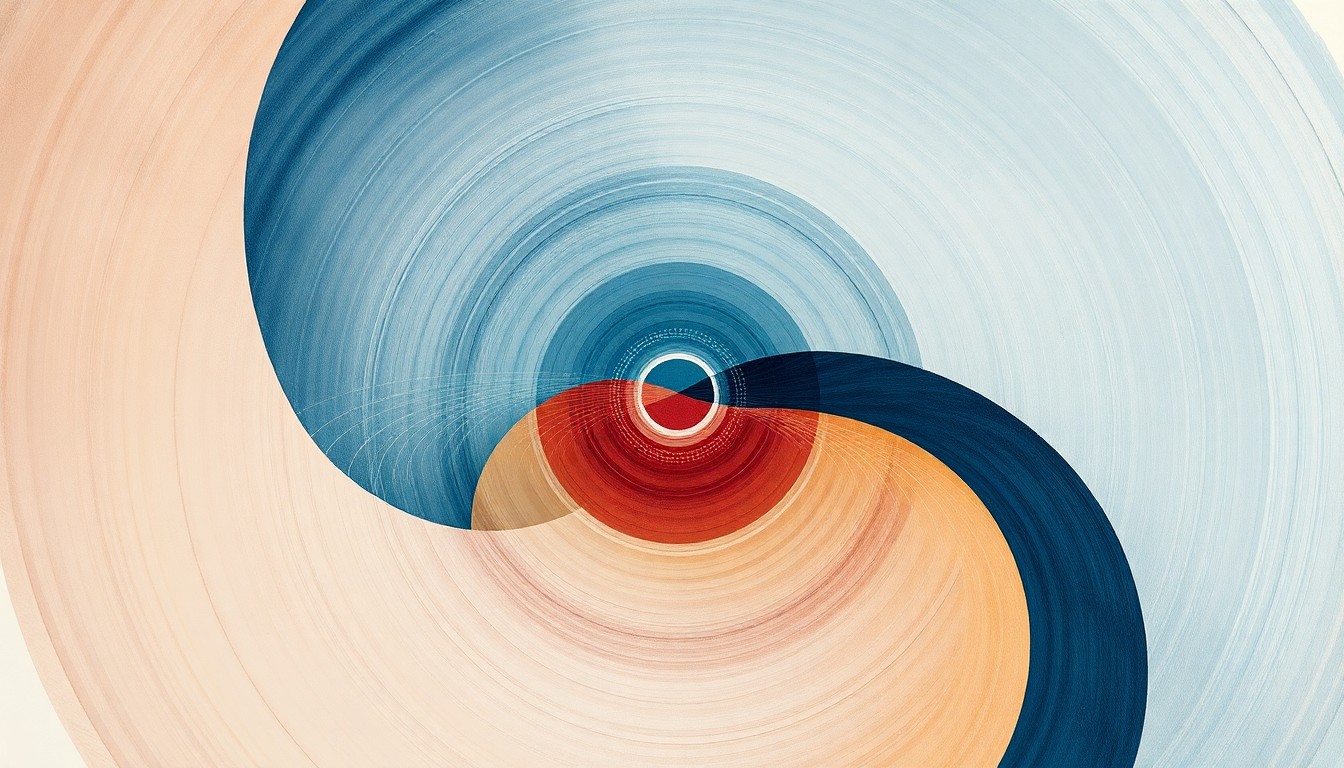 MASI's computational approach to optical imaging promises to unlock new scientific and industrial applications by overcoming the physical limitations of traditional lens-based systems.Storrs Today
Researchers at the University of Connecticut have developed a revolutionary new imaging technology called the Multiscale Aperture Synthesis Imager (MASI) that can capture highly detailed, wide-area images without relying on bulky lenses or precise physical alignment. By using an array of coded sensors to record diffraction patterns and then synchronizing the data computationally, MASI creates a virtual synthetic aperture much larger than any individual sensor, enabling sub-micron resolution imaging across a wide field of view.
Why it matters
This lens-free, software-driven approach to optical imaging has the potential to transform a wide range of scientific, medical, and industrial applications by overcoming the limitations of traditional optics. Unlike conventional systems that become exponentially more complex as they scale, MASI scales linearly, potentially enabling large sensor arrays for applications not previously possible.
The details
The core innovation of MASI is its ability to handle phase synchronization computationally rather than demanding perfect physical alignment of sensors. Each sensor in the array independently records diffraction patterns containing both amplitude and phase information about the light waves. Advanced algorithms then reconstruct the wavefields from these diffraction patterns and digitally propagate them back to the object plane, adjusting the relative phase differences to increase coherence and concentrate the energy in the final high-resolution image. This software-based approach sidesteps the diffraction limit and other constraints that have traditionally governed optical imaging systems.
- The MASI research was published in the journal Nature Communications in April 2026.
The players
Professor Guoan Zheng
The lead researcher on the MASI project and a professor at the University of Connecticut.
University of Connecticut
The institution where the MASI technology was developed by Professor Zheng and his team.
What they’re saying
“The potential applications for MASI span multiple fields, from forensic science and medical diagnostics to industrial inspection and remote sensing. But what's most exciting is the scalability -- unlike traditional optics that become exponentially more complex as they grow, our system scales linearly, potentially enabling large arrays for applications we haven't even imagined yet.”
— Professor Guoan Zheng, Lead Researcher, MASI Project
What’s next
The MASI team is exploring partnerships to further develop and commercialize the technology, with the goal of making it available for a wide range of scientific, medical, and industrial applications.
The takeaway
The MASI system's ability to capture high-resolution, wide-area images without relying on bulky lenses or precise physical alignment represents a major breakthrough in optical imaging. By handling the technical challenges computationally, this technology has the potential to reshape countless fields and enable new applications that were previously out of reach.