- Today
- Holidays
- Birthdays
- Reminders
- Cities
- Atlanta
- Austin
- Baltimore
- Berwyn
- Beverly Hills
- Birmingham
- Boston
- Brooklyn
- Buffalo
- Charlotte
- Chicago
- Cincinnati
- Cleveland
- Columbus
- Dallas
- Denver
- Detroit
- Fort Worth
- Houston
- Indianapolis
- Knoxville
- Las Vegas
- Los Angeles
- Louisville
- Madison
- Memphis
- Miami
- Milwaukee
- Minneapolis
- Nashville
- New Orleans
- New York
- Omaha
- Orlando
- Philadelphia
- Phoenix
- Pittsburgh
- Portland
- Raleigh
- Richmond
- Rutherford
- Sacramento
- Salt Lake City
- San Antonio
- San Diego
- San Francisco
- San Jose
- Seattle
- Tampa
- Tucson
- Washington
Santa Ynez Today
By the People, for the People
Waveguide Smart Glasses Face 3 Big Hurdles Before Going Mainstream
Color displays, limited controls, and inconsistent features hold back the future of wearable tech
Apr. 12, 2026 at 9:06pm
Got story updates? Submit your updates here. ›
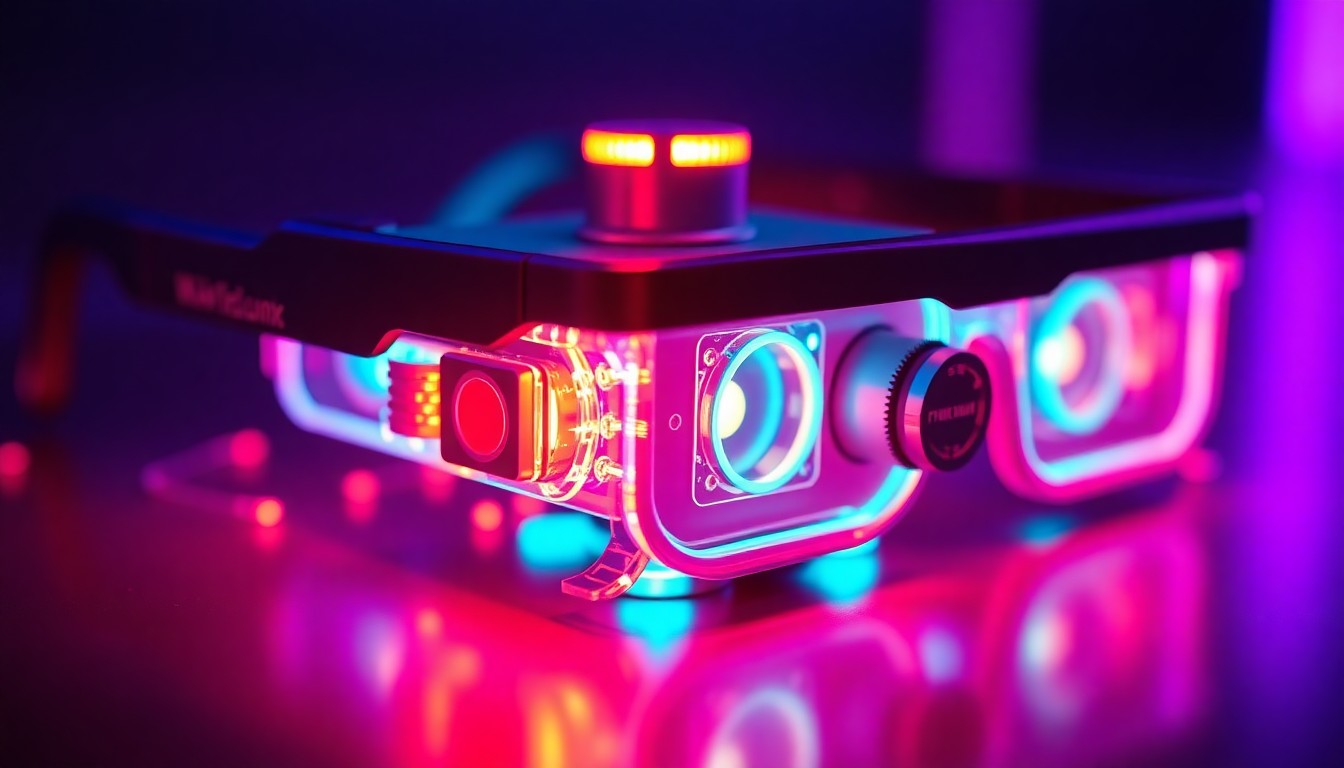 The intricate, luminous hardware powering the next generation of waveguide smart glasses holds the key to unlocking their true potential.Santa Ynez Today
Waveguide smart glasses have huge potential to revolutionize wearable tech by focusing on visual information, but current models are still plagued by issues like monochrome displays, finicky controls, and a fragmented feature set. While color waveguide displays and more advanced control systems are on the horizon, the category needs more polish, standardization, and third-party support before these glasses are worth buying for most consumers.
Why it matters
Waveguide smart glasses represent the future of wearable tech, with the ability to quickly display visual information like maps, recipes, and language translations right in your line of sight. However, the technology is still maturing, and current models have significant limitations that prevent them from being truly useful in everyday life. Overcoming these hurdles is crucial for waveguide glasses to become a mainstream consumer product.
The details
The biggest issue with current waveguide glasses is their monochrome displays, which only project the color green. This works for text and simple graphics, but severely limits their usefulness for anything more complex. Newer models with color waveguide displays, like the Meta Ray-Ban Display and upcoming Snap Specs, offer much better image quality, but are still bulkier than their monochrome counterparts. Control systems for waveguide glasses are also a mess, relying on finicky touch strips or awkward gesture-based interfaces. The Meta Ray-Ban Display has the best control scheme with its Neural Band wristband, but even that has consistency issues. Finally, the feature sets across different waveguide glass models are highly inconsistent. Some lack key capabilities like audio output, notifications, or navigation, while others have unreliable performance in areas like language translation and machine vision. There's also a dearth of third-party apps and support, limiting the usefulness of these glasses.
- Monochrome waveguide displays will soon be obsolete, as color models from Meta and Snap are expected to launch by the end of 2026.
- Waveguide glasses with higher resolutions, wider fields of view, and more compact designs are anticipated within the next 1-2 years.
- Improved control schemes and more standardized feature sets across brands should emerge as the category matures over the next 2-3 years.
The players
Even Realities
A startup developing one of the most usable waveguide smart glasses currently available, the Even G2, which features a monochrome display and limited controls.
Rokid
A Chinese tech company that produces waveguide smart glasses with monochrome displays and mixed performance in areas like language translation.
Vuzix
A pioneer in the waveguide smart glasses space, known for their Vuzix Z100 model which also has a monochrome display.
Meta
The parent company of Facebook, which has developed the Meta Ray-Ban Display, a waveguide smart glasses model with a color display but limited functionality.
Snap
The company behind Snapchat, which is working on new color waveguide smart glasses that are currently only available as developer hardware.
What they’re saying
“Waveguide smart glasses have the potential to be truly transformative, but current models are still a mix of promise and frustration.”
— The Author
“The Meta Ray-Ban Display has the best control system and interface I've seen in the category by far, but it's still not perfect.”
— The Author
“Even with a development platform, apps on the Even G2 face the other two big problems of current waveguide glasses: low-resolution, monochrome displays and very limited controls.”
— The Author
What’s next
As color waveguide displays, more advanced control systems, and standardized feature sets emerge over the next 1-2 years, the waveguide smart glasses category is poised to take a major step forward in becoming a viable mainstream consumer product.
The takeaway
Waveguide smart glasses represent an exciting future for wearable tech, but current models are still held back by technical limitations and inconsistencies. With continued innovation and refinement, these glasses could revolutionize how we access visual information in our daily lives, but they're not quite ready for prime time just yet.