- Today
- Holidays
- Birthdays
- Reminders
- Cities
- Atlanta
- Austin
- Baltimore
- Berwyn
- Beverly Hills
- Birmingham
- Boston
- Brooklyn
- Buffalo
- Charlotte
- Chicago
- Cincinnati
- Cleveland
- Columbus
- Dallas
- Denver
- Detroit
- Fort Worth
- Houston
- Indianapolis
- Knoxville
- Las Vegas
- Los Angeles
- Louisville
- Madison
- Memphis
- Miami
- Milwaukee
- Minneapolis
- Nashville
- New Orleans
- New York
- Omaha
- Orlando
- Philadelphia
- Phoenix
- Pittsburgh
- Portland
- Raleigh
- Richmond
- Rutherford
- Sacramento
- Salt Lake City
- San Antonio
- San Diego
- San Francisco
- San Jose
- Seattle
- Tampa
- Tucson
- Washington
Struggle to Be Alone With Thoughts Grows
Chronic digital overstimulation linked to anxiety, reduced emotional processing
Apr. 19, 2026 at 3:49pm
Got story updates? Submit your updates here. ›
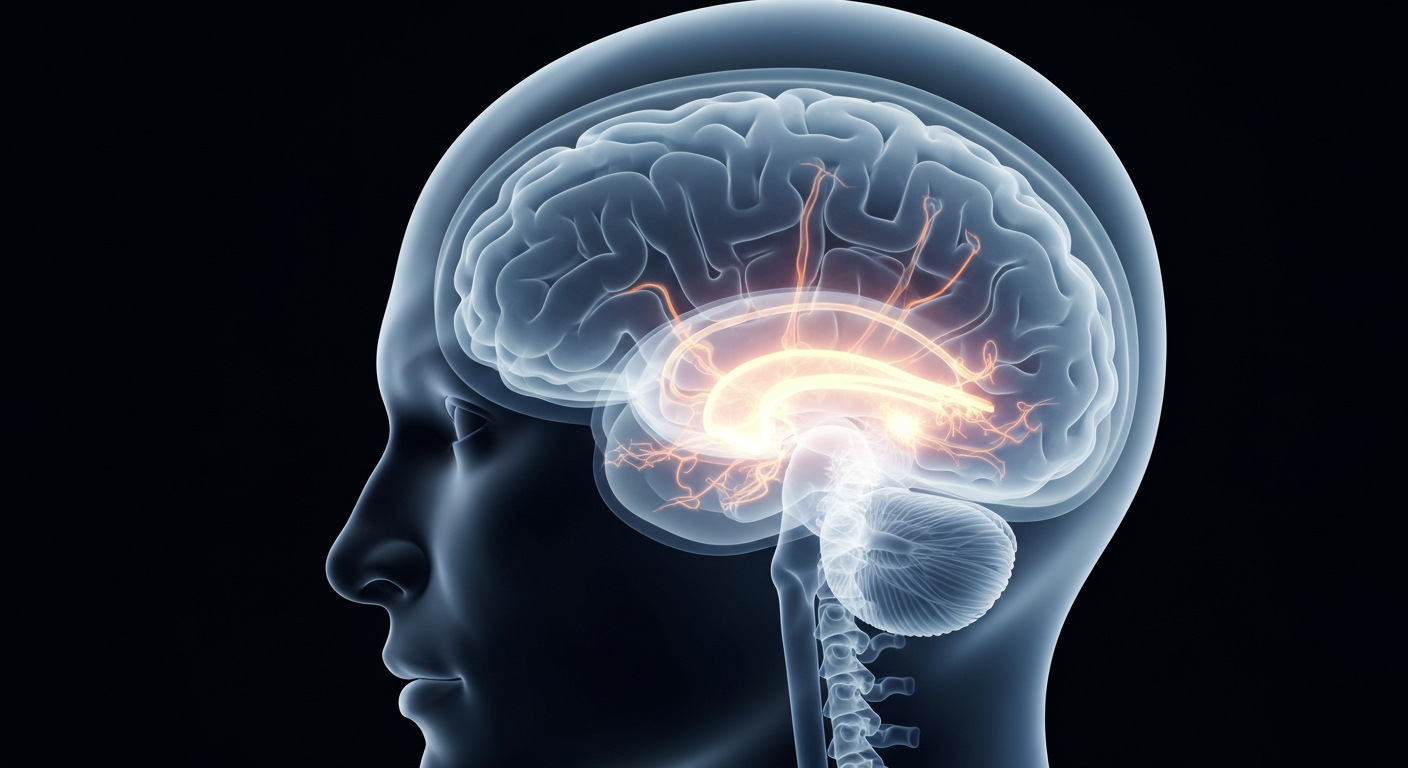 An X-ray view into the contemplative brain, highlighting the importance of solitary introspection for mental health.Santa Barbara Today
In an era of relentless digital stimulation, the simple act of sitting quietly with one's thoughts has become increasingly rare and uncomfortable for many. This phenomenon reflects a growing societal shift where external distractions override internal reflection, raising concerns about mental well-being and cognitive function. Chronic avoidance of solitude is linked to heightened anxiety and reduced capacity for emotional processing, with research indicating frequent smartphone use correlates with lower tolerance for unstructured time.
Why it matters
The inability to engage with spontaneous thought reflects a disruption in the brain's intrinsic capacity to simulate experiences and regulate emotion, which is foundational to mental health. Addressing this challenge requires cultivating 'attentional flexibility' - the ability to shift between focused engagement and restful introspection.
The details
Functional MRI research indicates chronic digital engagement can blunt sensitivity to naturally rewarding, low-arousal states, making solitude feel not just boring, but aversive. The default mode network, crucial for processes like autobiographical memory and empathy, may become dysregulated when constantly suppressed by external tasks, a pattern observed in conditions like anxiety and depression.
- A landmark 2014 study published in Science found that many participants preferred administering mild electric shocks to themselves over sitting alone in quiet contemplation for just 6 to 15 minutes.
- Epidemiological data from large-scale surveys, including those conducted by the Pew Research Center, show a steady rise in self-reported feelings of being 'constantly connected' and difficulty disconnecting, particularly among younger adults.
The players
Dr. Jonathan Smallwood
A cognitive neuroscientist specializing in mind-wandering at the University of California, Santa Barbara.
Dr. Sherry Turkle
An MIT professor and author of 'Alone Together'.
What they’re saying
“The inability to engage with spontaneous thought isn't just about boredom; it reflects a disruption in the brain's intrinsic capacity to simulate experiences and regulate emotion, which is foundational to mental health.”
— Dr. Jonathan Smallwood, Cognitive Neuroscientist
“We don't need to reject technology to reclaim our inner lives; we need to design our lives and our tools so that solitude is not feared, but welcomed as a resource.”
— Dr. Sherry Turkle, MIT Professor and Author
What’s next
Future studies are likely to explore the long-term neurodevelopmental impacts of constant stimulation, particularly in adolescents whose brains remain highly plastic.
The takeaway
Reclaiming moments of solitude is not a luxury, but a necessary component of cognitive and emotional maintenance. Seeking professional guidance can help individuals develop personalized strategies to build tolerance for quiet reflection and improve attentional flexibility.
Santa Barbara top stories


Santa Barbara events

Apr. 21, 2026
Drew and Ellie Holcomb
Apr. 25, 2026
Charlie Puth