- Today
- Holidays
- Birthdays
- Reminders
- Cities
- Atlanta
- Austin
- Baltimore
- Berwyn
- Beverly Hills
- Birmingham
- Boston
- Brooklyn
- Buffalo
- Charlotte
- Chicago
- Cincinnati
- Cleveland
- Columbus
- Dallas
- Denver
- Detroit
- Fort Worth
- Houston
- Indianapolis
- Knoxville
- Las Vegas
- Los Angeles
- Louisville
- Madison
- Memphis
- Miami
- Milwaukee
- Minneapolis
- Nashville
- New Orleans
- New York
- Omaha
- Orlando
- Philadelphia
- Phoenix
- Pittsburgh
- Portland
- Raleigh
- Richmond
- Rutherford
- Sacramento
- Salt Lake City
- San Antonio
- San Diego
- San Francisco
- San Jose
- Seattle
- Tampa
- Tucson
- Washington
California Democrats Struggle to Unify Behind Governor Candidate
Party leadership, including Newsom and Pelosi, refuse to intervene as crowded field splits votes ahead of primary
Apr. 18, 2026 at 3:48am by Ben Kaplan
Got story updates? Submit your updates here. ›
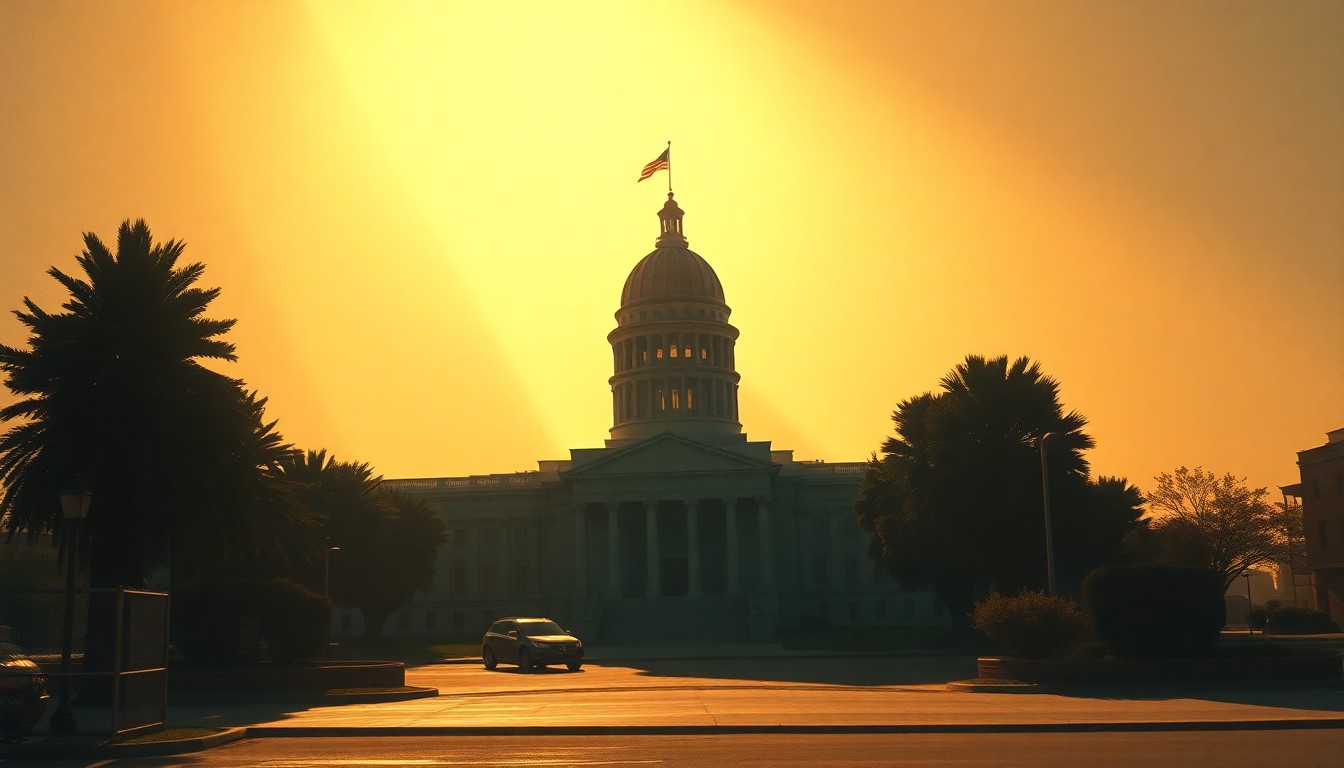 The absence of a clear Democratic successor to Governor Newsom casts a somber shadow over the state capitol, as the party struggles to unify behind a gubernatorial candidate.San Francisco Today
With a crowded field of seven major Democratic candidates and no clear frontrunner, California's Democratic Party leadership, including Governor Gavin Newsom and former House Speaker Nancy Pelosi, have declined to step in and try to cull the field. This has left the party facing the possibility of two Republicans advancing to the general election under the state's top-two primary system, sparking calls for stronger leadership from frustrated activists.
Why it matters
The lack of a unified Democratic candidate threatens the party's hold on the governor's office in the nation's largest state, with the possibility of two Republicans advancing to the general election raising concerns among Democrats about the direction of state policy on key issues like the environment, the economy, and social issues.
The details
Despite Rep. Eric Swalwell's recent exit, the Democratic field for California governor remains crowded, with seven major candidates splitting the vote. Neither Governor Gavin Newsom nor former House Speaker Nancy Pelosi have intervened to try to consolidate support behind a single candidate, drawing criticism from party activists who say the party's leadership has failed to provide the necessary guidance. Party Chair Rusty Hicks has urged candidates to 'honestly assess' their viability, but has stopped short of directly pressuring anyone to drop out.
- The California Democratic Party's endorsing convention was held in February, where no candidate received the 60% threshold needed for the party's backing.
- Ballots for the primary election will be sent to voters in early May 2026.
The players
Gavin Newsom
The current Democratic governor of California, who has declined to elevate a successor from the crowded field of candidates.
Nancy Pelosi
The former Democratic Speaker of the U.S. House of Representatives, who has also declined to intervene in the California governor's race.
Rusty Hicks
The chair of the California Democratic Party, who has faced criticism for not using his position to cull the field of candidates.
RL Miller
A longtime Democratic delegate and chair of the party's environmental caucus, who has criticized the party's leadership for a "failure of leadership" in the governor's race.
Amar Shergill
The former leader of the California Democratic Party's progressive caucus, who suggested the party's weak and decentralized leadership is by design to allow monied interests to exert more control.
What they’re saying
“I really do believe that there has been a failure of leadership at the top.”
— RL Miller, Longtime Democratic delegate and chair of the party's environmental caucus
“Rusty Hicks is furniture that folks with real power use at their discretion. There's no sort of anger or animosity towards him as a person. If it wasn't Rusty, it would be somebody else. This is just the political situation right now.”
— Amar Shergill, Former leader of the California Democratic Party's progressive caucus
What’s next
The California Democratic Party plans to conduct ongoing polls on the governor's race and release them every 7-10 days through early May, when ballots are sent to voters.
The takeaway
The lack of a clear Democratic frontrunner and party leadership's unwillingness to intervene has left the party vulnerable to the possibility of two Republicans advancing to the general election, raising concerns among activists about the future direction of the state on key policy issues.
San Francisco top stories

San Francisco events
Apr. 18, 2026
Jason Cheny
Apr. 18, 2026
Mayday Mae!/ Jaded Justice/ Scorpio Moon
Apr. 18, 2026
SFBATCO: The Lin-Manuel Effect