- Today
- Holidays
- Birthdays
- Reminders
- Cities
- Atlanta
- Austin
- Baltimore
- Berwyn
- Beverly Hills
- Birmingham
- Boston
- Brooklyn
- Buffalo
- Charlotte
- Chicago
- Cincinnati
- Cleveland
- Columbus
- Dallas
- Denver
- Detroit
- Fort Worth
- Houston
- Indianapolis
- Knoxville
- Las Vegas
- Los Angeles
- Louisville
- Madison
- Memphis
- Miami
- Milwaukee
- Minneapolis
- Nashville
- New Orleans
- New York
- Omaha
- Orlando
- Philadelphia
- Phoenix
- Pittsburgh
- Portland
- Raleigh
- Richmond
- Rutherford
- Sacramento
- Salt Lake City
- San Antonio
- San Diego
- San Francisco
- San Jose
- Seattle
- Tampa
- Tucson
- Washington
Ultraprocessed Foods Linked to Higher Risk of Knee Osteoarthritis
New study finds ultraprocessed foods may contribute to fat buildup in thigh muscles, increasing joint stress and inflammation.
Apr. 17, 2026 at 5:53pm by Ben Kaplan
Got story updates? Submit your updates here. ›
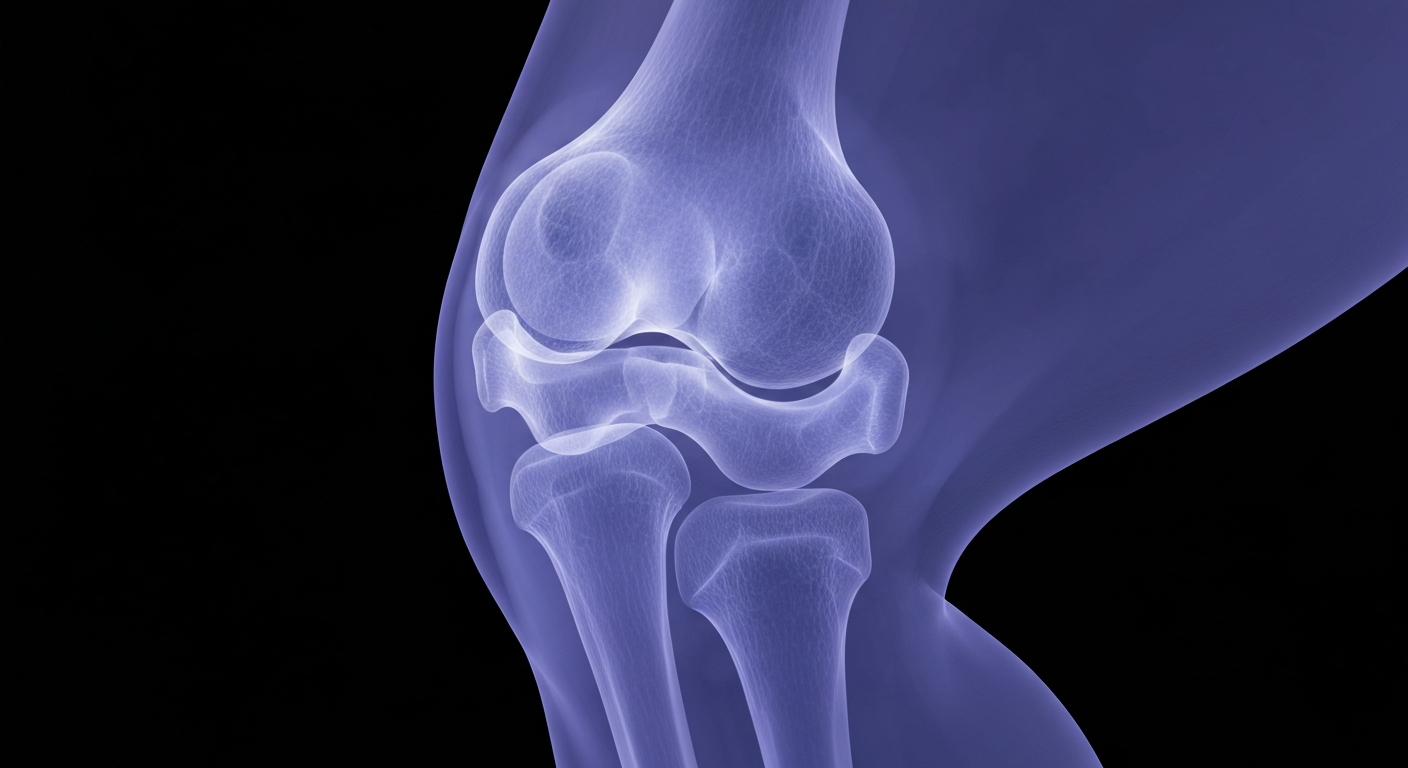 An X-ray view of the knee joint reveals the hidden impact of ultraprocessed foods on muscle quality and joint health.San Francisco Today
A new study from researchers at the University of California, San Francisco has found a link between consuming high amounts of ultraprocessed foods and an increased risk of developing knee osteoarthritis. The study analyzed data from 615 individuals and discovered that the more ultraprocessed foods people consumed, the higher the amount of fat stored inside their thigh muscles, which can weaken the support system for the knee and lead to more joint stress and inflammation.
Why it matters
Knee osteoarthritis is one of the largest non-cancer-related healthcare costs in the US and globally, and it is highly linked to obesity and unhealthy lifestyle choices. This new research suggests that reducing ultraprocessed food consumption may help preserve muscle quality and alleviate the burden of this degenerative joint condition.
The details
The research team analyzed data from the Osteoarthritis Initiative, a large public research project, and used non-enhanced MRI scans to look for degeneration marked by fat replacing healthy muscle fibers in the thigh. They found that the more ultraprocessed foods people consumed, the higher the amount of fat stored inside their thigh muscles, regardless of their total caloric intake, weight, or exercise levels. On average, the study participants consumed about 41% of their daily food from ultraprocessed sources.
- The study was published in the journal Radiology in 2026.
The players
Zehra Akkaya, MD
The lead author of the study and a researcher at the University of California, San Francisco (UCSF).
Osteoarthritis Initiative
A large, long-term public research project focused on knee osteoarthritis, which provided the data used in this study.
What they’re saying
“Over the past decades, in parallel to the rising prevalences of obesity and knee osteoarthritis, the use of natural ingredients in our diets has steadily diminished.”
— Zehra Akkaya, MD, Researcher, University of California, San Francisco
“It constitutes one of the largest non-cancer-related healthcare costs in the United States and around the world. It is highly linked to obesity and unhealthy lifestyle choices.”
— Zehra Akkaya, MD, Researcher, University of California, San Francisco
What’s next
The researchers noted that while the study showed a clear link between ultraprocessed foods and muscle fat, it could not definitively prove that the food caused the fat buildup, only that they happened at the same time. They also acknowledged that the study focused on people already at high risk for knee issues, so the results may not apply as much to younger or healthier populations.
The takeaway
This research highlights the potential negative impact of ultraprocessed foods on muscle quality and joint health, even for individuals who are otherwise active and at a healthy weight. Reducing ultraprocessed food consumption may be an important step in preventing and managing knee osteoarthritis, a debilitating and costly condition.
San Francisco top stories



San Francisco events

Apr. 17, 2026
LIVE 105 Presents: The Format 4/17
Apr. 17, 2026
SFBATCO: The Lin-Manuel Effect
Apr. 17, 2026
Kaskade