- Today
- Holidays
- Birthdays
- Reminders
- Cities
- Atlanta
- Austin
- Baltimore
- Berwyn
- Beverly Hills
- Birmingham
- Boston
- Brooklyn
- Buffalo
- Charlotte
- Chicago
- Cincinnati
- Cleveland
- Columbus
- Dallas
- Denver
- Detroit
- Fort Worth
- Houston
- Indianapolis
- Knoxville
- Las Vegas
- Los Angeles
- Louisville
- Madison
- Memphis
- Miami
- Milwaukee
- Minneapolis
- Nashville
- New Orleans
- New York
- Omaha
- Orlando
- Philadelphia
- Phoenix
- Pittsburgh
- Portland
- Raleigh
- Richmond
- Rutherford
- Sacramento
- Salt Lake City
- San Antonio
- San Diego
- San Francisco
- San Jose
- Seattle
- Tampa
- Tucson
- Washington
San Francisco's Hybrid Parrots Defy Easy Classification
Genomic research reveals the city's free-flying flock is a unique mix of two parrot species from different regions of South America.
Apr. 14, 2026 at 6:10pm by Ben Kaplan
Got story updates? Submit your updates here. ›
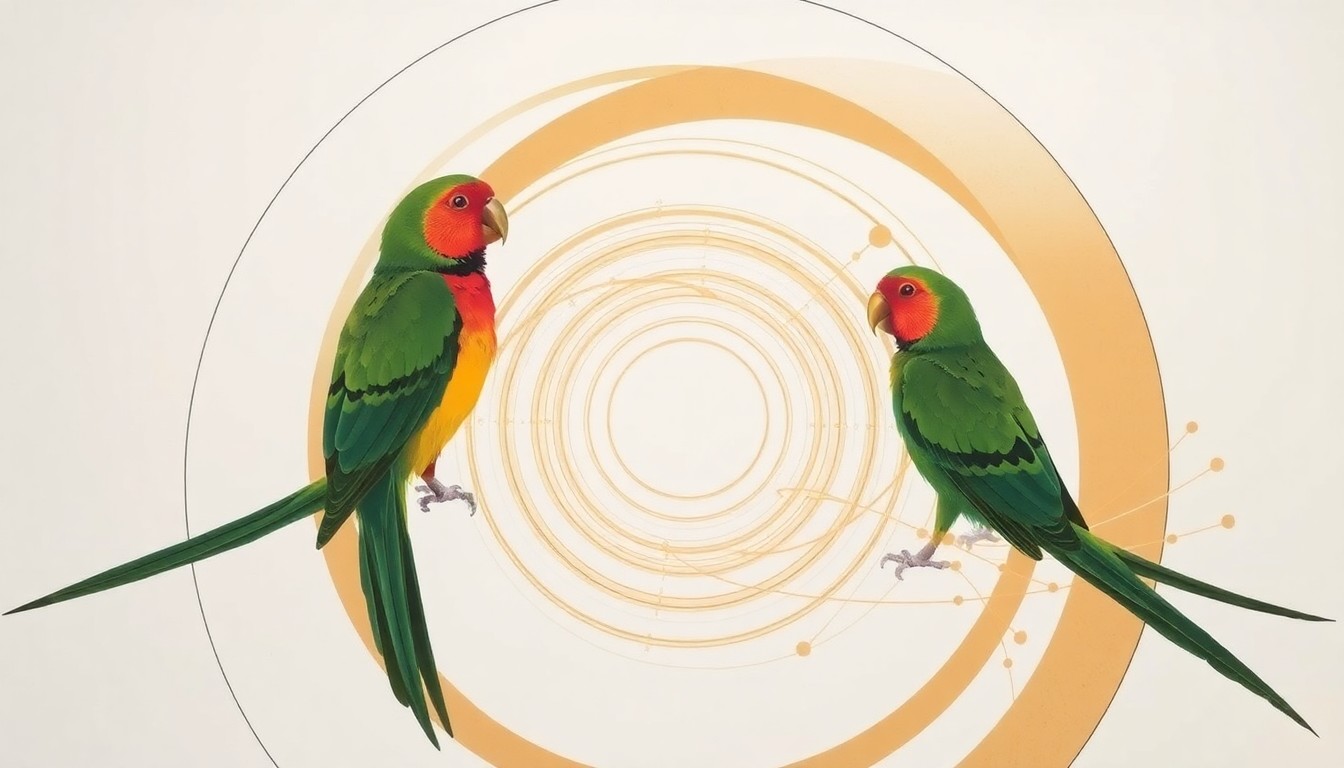 San Francisco's free-flying parrots are a genetically distinct hybrid population, the result of red-masked and mitred parakeets interbreeding over generations after being introduced to the urban environment.San Francisco Today
A new genomic study of San Francisco's free-flying parrot flock reveals they are a hybrid population, descended from both red-masked parakeets and mitred parakeets - two species that would never naturally meet in the wild. The research confirms the flock is a distinct breeding population, adapted to urban life, and not simply escaped or released pets. While their origins are human-driven, the parrots have established themselves as a unique part of San Francisco's ecosystem.
Why it matters
The story of San Francisco's parrots highlights the complex relationship between humans, nature, and urban environments. While the flock's origins stem from the exotic pet trade, the birds have thrived and evolved to become an integral part of the city's ecology. Understanding their unique genetic makeup and behaviors can inform how we manage and protect urban wildlife populations.
The details
Researchers from UC San Francisco and Stanford partnered with a local bird rescue to sequence the genome of a San Francisco parrot named Acorn, who had died from rodenticide poisoning. They found that the flock is a hybrid of red-masked parakeets, which are native to coastal Ecuador and Peru, and mitred parakeets, which are from the inland mountains of South America. This unlikely combination is the result of escaped or released pets interbreeding over generations. The genomic data confirms the flock is a distinct breeding population, rather than just a collection of escaped pets.
- In 1988, the first red-masked parakeets appeared in the wild in San Francisco.
- In the 1990s, a mitred parakeet named Olive joined the flock and bred with a red-masked male, producing the first known hybrid offspring.
- In 2023, a parrot named Acorn, suffering from rodenticide poisoning, provided researchers with the first complete genome sequence of a San Francisco red-masked parakeet.
The players
Dara Torgerson
An evolutionary population geneticist at UC San Francisco who studies humans, flies, and parrots, and volunteers with the local bird rescue Mickaboo.
Jacqueline Robinson
An evolutionary geneticist who was previously at UC San Francisco and has since moved to Princeton University, collaborating on the parrot genome research.
Olive
A mitred parakeet that joined the San Francisco flock in the 1990s and bred with a red-masked male, producing the first known hybrid offspring and contributing her genes to the entire flock.
Mark Bittner
The author of the 2004 memoir "The Wild Parrots of Telegraph Hill", which chronicled his years observing the original flock of around 30 red-masked parakeets in San Francisco.
Whitney Grover
The director of conservation for the Golden Gate Bird Alliance, providing expert commentary on the significance of the parrot flock's hybrid nature.
What they’re saying
“Basically, every member of the flock is somehow related to [Olive]. Although the genome cannot prove that Olive is the only mitred parakeet to contribute her genetics to today's flock, it's consistent with that theory.”
— Jacqueline Robinson, Evolutionary Geneticist
“I think there is a deeper culture for the ones in the wild than the ones I've seen that imprinted as pets. I don't think that has to do with genetics; I think that has everything to do with experiences. They know each other. They remember prior activities. They hold grudges; they also hold each other dear.”
— Dara Torgerson, Evolutionary Population Geneticist
“We've taken so much of their world from them. And now they're adapting, which is incredible, and resilient. But we should also think about, in a hands-off way, how can we let them thrive in a more natural way?”
— Whitney Grover, Director of Conservation, Golden Gate Bird Alliance
What’s next
Researchers plan to publish a paper on their genomic analysis of the San Francisco parrot flock, including samples from an additional 20 birds. This will provide further insights into the origins and genetic diversity of this unique urban population.
The takeaway
San Francisco's free-flying parrot flock is a remarkable example of how nature can adapt and thrive in an urban environment, even when its origins stem from human interference. The genomic research confirms the flock is its own distinct breeding population, a hybrid of two parrot species that would never naturally meet. As the flock continues to grow, it will be important for the city and its residents to find the right balance of protecting the parrots' wild nature while also appreciating their role in the local ecosystem.
San Francisco top stories


San Francisco events

Apr. 14, 2026
Janelle James
Apr. 14, 2026
Joe Klocek & Friends
Apr. 14, 2026
San Francisco Ballet presents La Sylphide