- Today
- Holidays
- Birthdays
- Reminders
- Cities
- Atlanta
- Austin
- Baltimore
- Berwyn
- Beverly Hills
- Birmingham
- Boston
- Brooklyn
- Buffalo
- Charlotte
- Chicago
- Cincinnati
- Cleveland
- Columbus
- Dallas
- Denver
- Detroit
- Fort Worth
- Houston
- Indianapolis
- Knoxville
- Las Vegas
- Los Angeles
- Louisville
- Madison
- Memphis
- Miami
- Milwaukee
- Minneapolis
- Nashville
- New Orleans
- New York
- Omaha
- Orlando
- Philadelphia
- Phoenix
- Pittsburgh
- Portland
- Raleigh
- Richmond
- Rutherford
- Sacramento
- Salt Lake City
- San Antonio
- San Diego
- San Francisco
- San Jose
- Seattle
- Tampa
- Tucson
- Washington
Breakthrough: Scientists Uncover Mechanism Behind Neuron Death in Multiple Sclerosis
Researchers trace neuron loss in the brain's gray matter to DNA damage caused by inflammation in multiple sclerosis.
Apr. 7, 2026 at 8:46am by Ben Kaplan
Got story updates? Submit your updates here. ›
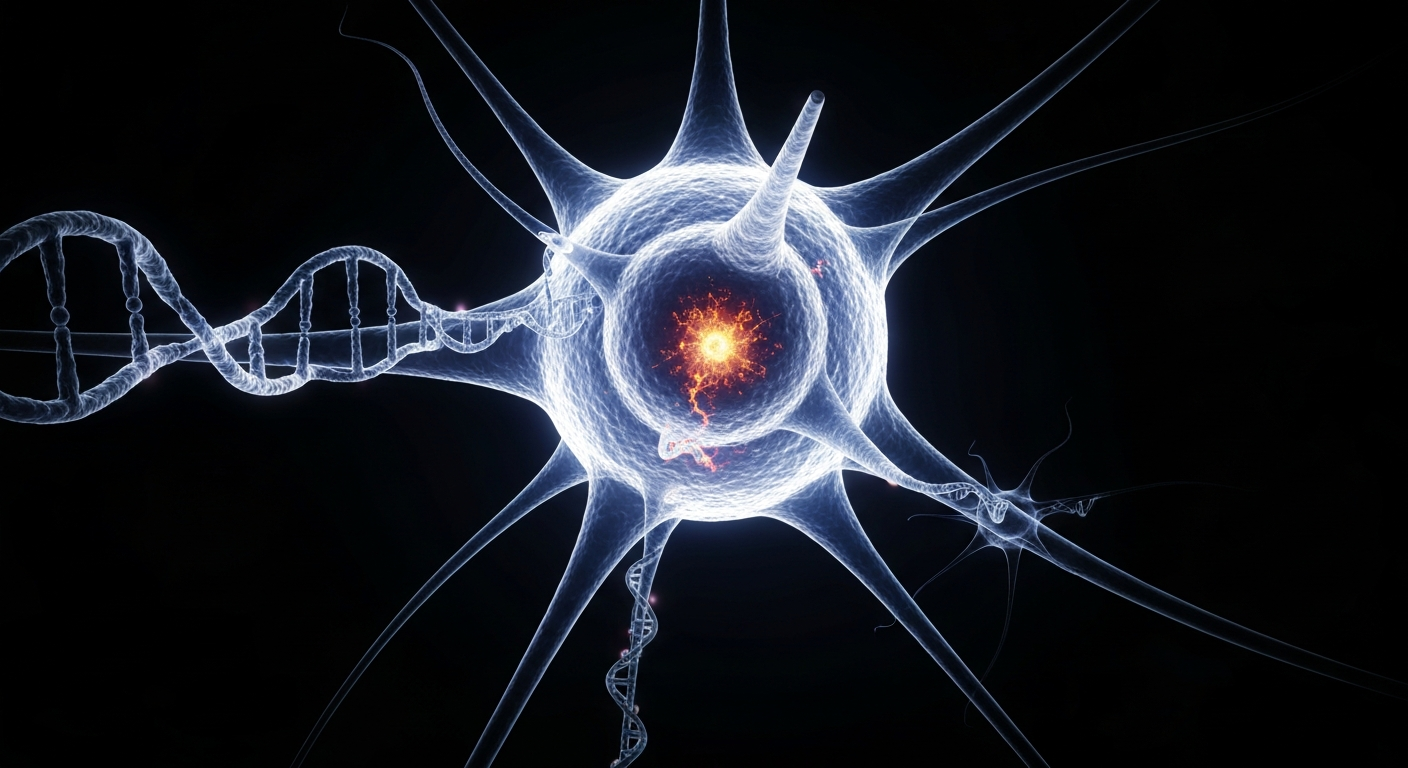 An X-ray-like image reveals the DNA damage within vulnerable neurons that leads to their death in multiple sclerosis.San Francisco Today
A team of scientists from UC San Francisco, University of Cambridge, and Cedars-Sinai Medical Center has made a breakthrough discovery in understanding the mechanism behind neuron death in multiple sclerosis (MS). The researchers found that inflammation in the brain during MS leads to DNA damage in a specific subset of neurons, called CUX2 neurons, which are critical for higher cognitive function. This DNA damage overwhelms the neurons' natural repair systems, causing them to die off. The findings provide a new direction for MS research and treatment, focusing on directly protecting these vulnerable gray matter neurons rather than just promoting remyelination of white matter.
Why it matters
This discovery is significant because it helps explain why brain scans of people with MS reveal damage not only to the white matter (the brain's wiring), but also to the gray matter, which houses the neurons responsible for higher thinking and cognition. Previous MS research has primarily focused on the loss of myelin, the insulation around nerve fibers, but this new understanding of neuron death in the gray matter opens up a new front in the fight against the debilitating effects of MS.
The details
The researchers found that in mouse models of MS, inflammation triggers chemical reactions that damage the DNA in CUX2 neurons, a specific subset of neurons in the brain's gray matter. These neurons normally have robust DNA repair mechanisms to cope with the stresses of rapid growth and development early in life. However, the inflammation overwhelms these repair systems, leading to widespread DNA damage and neuron death. The team also found evidence of this same DNA damage process occurring in gray matter lesions from people with MS.
- The findings were published on April 1, 2026 in the journal Nature.
The players
Steve Fancy
A professor in the UCSF Weill Institute for Neurosciences and the co-corresponding author of the two studies.
Stephen Hauser
The Robert A. Fishman Distinguished Professor in Neurology who directs the UCSF Weill Institute for Neurosciences.
David Rowitch
The deputy director for Research at Guerin Children's, professor of Paediatrics at the University of Cambridge, and co-corresponding author of the studies.
What they’re saying
“It's become clear that in addition to promoting remyelination (rebuilding myelin) in progressive MS, it's essential to find ways to directly protect grey matter neurons themselves.”
— Steve Fancy, Professor, UCSF Weill Institute for Neurosciences
“We've had remarkable success developing therapies to slow the loss of myelin during MS, but grey matter lesions and the disability they cause have been harder to address.”
— Stephen Hauser, Robert A. Fishman Distinguished Professor in Neurology, UCSF
“The CUX2 neurons are like a 'canary in the coal mine' for the brain affected by MS. If we can protect these neurons, we might be able to contain the damage before the disease progresses.”
— David Rowitch, Deputy Director for Research, Guerin Children's; Professor of Paediatrics, University of Cambridge
What’s next
The researchers plan to further investigate ways to directly protect the vulnerable CUX2 neurons in the brain's gray matter, in addition to continuing efforts to promote remyelination of white matter. This new understanding of the mechanism behind neuron death could lead to the development of novel therapies to address the debilitating cognitive and functional impacts of multiple sclerosis.
The takeaway
This breakthrough discovery provides critical insight into the underlying causes of neurodegeneration in multiple sclerosis, shifting the focus of research and treatment beyond just the loss of myelin. By targeting the DNA damage and neuron death in the brain's gray matter, scientists may be able to develop new strategies to better preserve cognitive function and prevent the progressive disability associated with MS.
San Francisco top stories



San Francisco events

Apr. 7, 2026
San Francisco Giants vs. Philadelphia Phillies

Apr. 7, 2026
Golden State Warriors vs. Sacramento Kings