- Today
- Holidays
- Birthdays
- Reminders
- Cities
- Atlanta
- Austin
- Baltimore
- Berwyn
- Beverly Hills
- Birmingham
- Boston
- Brooklyn
- Buffalo
- Charlotte
- Chicago
- Cincinnati
- Cleveland
- Columbus
- Dallas
- Denver
- Detroit
- Fort Worth
- Houston
- Indianapolis
- Knoxville
- Las Vegas
- Los Angeles
- Louisville
- Madison
- Memphis
- Miami
- Milwaukee
- Minneapolis
- Nashville
- New Orleans
- New York
- Omaha
- Orlando
- Philadelphia
- Phoenix
- Pittsburgh
- Portland
- Raleigh
- Richmond
- Rutherford
- Sacramento
- Salt Lake City
- San Antonio
- San Diego
- San Francisco
- San Jose
- Seattle
- Tampa
- Tucson
- Washington
AI Algorithm Enables Biological Imaging Breakthroughs
Caltech researchers develop CellSAM, a tool that can identify cells in images for a wide variety of biological applications.
Apr. 18, 2026 at 5:44am
Got story updates? Submit your updates here. ›
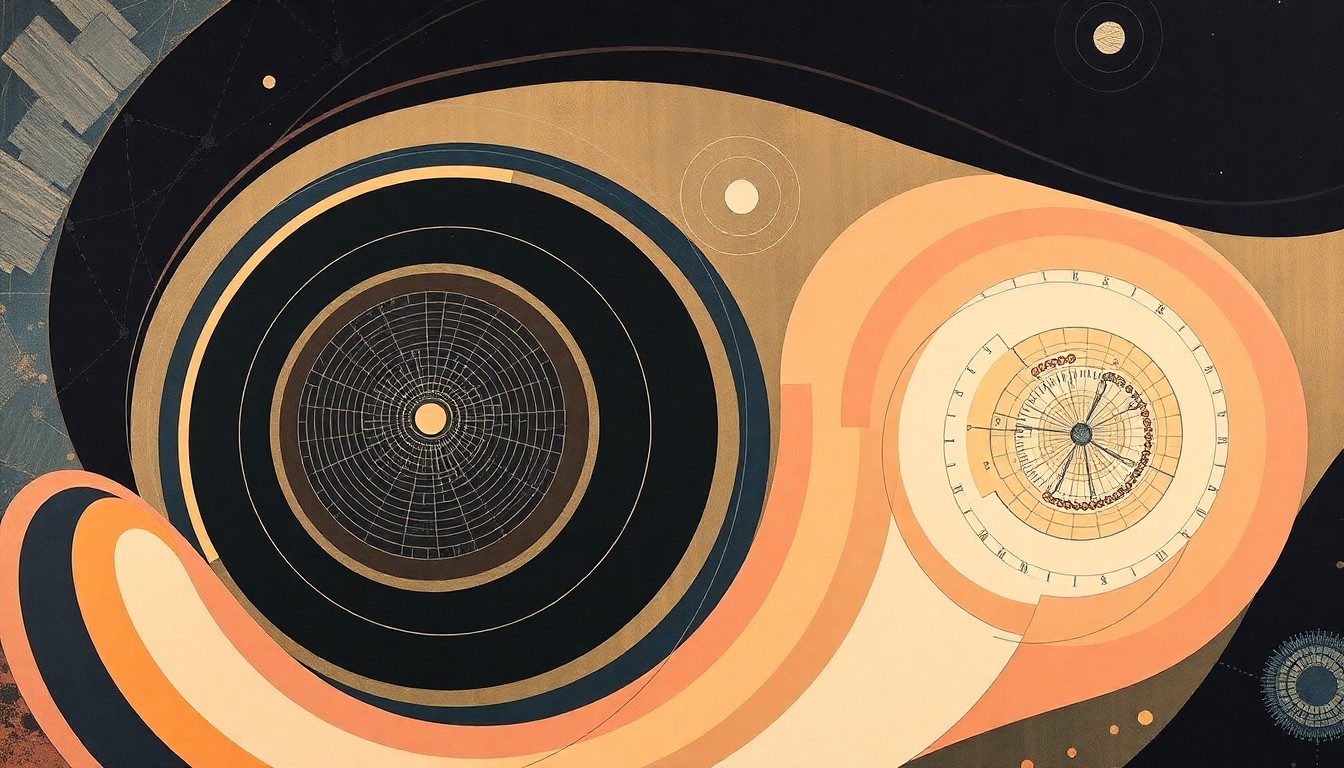 An abstract visualization of the complex cellular dynamics that can now be analyzed and understood at unprecedented scales thanks to the CellSAM algorithm.Pasadena Today
Researchers at the California Institute of Technology (Caltech) have developed an artificial intelligence algorithm called CellSAM (Cell Segment Anything Model) that can identify cells in images for a wide range of biological applications, from detecting cancer cells to observing immune cells. The new tool, a collaboration between the labs of David Van Valen and Yisong Yue, was trained on vast amounts of labeled biological images and aims to make existing image analysis workflows more efficient and enable the exploration of biological questions at unprecedented scales.
Why it matters
Traditionally, distinguishing and labeling individual cells in biological images and videos has been a labor-intensive manual task. CellSAM allows researchers to track millions of cells across different conditions, enabling new insights into rare cell states and the relationship between subtle changes in cell shape and treatment response. This breakthrough can significantly advance biological discovery and understanding.
The details
The CellSAM algorithm was trained on a large dataset of hand-labeled biological images, allowing it to identify different cell types, their locations, and how they interact with neighboring cells. This is critical for understanding complex biological phenomena, such as why certain cancer immunotherapies work for some patients but not others. The tool is currently available for researchers to use for free, and the team plans to continue improving it by training it on more types of biological data.
- The CellSAM algorithm was developed in 2026 by researchers at the California Institute of Technology (Caltech).
- A paper describing the research was published in the journal Nature Methods in April 2026.
The players
David Van Valen
An assistant professor of biology and biological engineering, Heritage Medical Research Institute Investigator, and Howard Hughes Medical Institute (HHMI) Freeman Hrabowski Scholar at Caltech, who co-led the development of CellSAM.
Yisong Yue
A professor of computing and mathematical sciences at Caltech, who co-led the development of CellSAM.
Caltech
The California Institute of Technology, where the CellSAM algorithm was developed by an interdisciplinary team of researchers.
What they’re saying
“Before, students would spend countless hours identifying cells by hand or fixing an algorithm's mistakes. Now, our single model can do that work for you in many different applications. I'm really excited to see how this method pushes the frontier of biological discovery. There's a lot of fascinating, interesting data that we can now collect and the previous hurdles to getting insights from those data are slowly being knocked down one at a time.”
— David Van Valen, Assistant Professor of Biology and Biological Engineering, Caltech
“Approaches like CellSAM don't just make existing image-analysis workflows more efficient-they make it possible to explore biological questions at scales that used to be impractical. When you can track millions of cells across many conditions, you can start probing things like how rare cell states appear or how subtle changes in cell shape relate to treatment response. These are the kinds of insights that become accessible only when the bottlenecks in analysis are removed.”
— Yisong Yue, Professor of Computing and Mathematical Sciences, Caltech
What’s next
The Caltech team plans to continue improving the CellSAM algorithm by training it on more types of biological data, further expanding its capabilities and applications.
The takeaway
The development of the CellSAM algorithm represents a significant breakthrough in biological imaging, enabling researchers to analyze complex cellular dynamics and gain new insights that were previously impractical due to the limitations of manual cell identification. This tool has the potential to accelerate biological discovery and understanding across a wide range of fields.
Pasadena top stories


Pasadena events
Apr. 18, 2026
Death of a Salesman - Local
Apr. 18, 2026
Death of a Salesman - Local
Apr. 19, 2026
Death of a Salesman - Local