- Today
- Holidays
- Birthdays
- Reminders
- Cities
- Atlanta
- Austin
- Baltimore
- Berwyn
- Beverly Hills
- Birmingham
- Boston
- Brooklyn
- Buffalo
- Charlotte
- Chicago
- Cincinnati
- Cleveland
- Columbus
- Dallas
- Denver
- Detroit
- Fort Worth
- Houston
- Indianapolis
- Knoxville
- Las Vegas
- Los Angeles
- Louisville
- Madison
- Memphis
- Miami
- Milwaukee
- Minneapolis
- Nashville
- New Orleans
- New York
- Omaha
- Orlando
- Philadelphia
- Phoenix
- Pittsburgh
- Portland
- Raleigh
- Richmond
- Rutherford
- Sacramento
- Salt Lake City
- San Antonio
- San Diego
- San Francisco
- San Jose
- Seattle
- Tampa
- Tucson
- Washington
Google Advances Robotics AI, but Manufacturing Readiness Remains a Challenge
New 'embodied reasoning' model improves robots' ability to interpret visual inputs, but experts caution that precision is key for factory floor applications.
Apr. 18, 2026 at 2:58am
Got story updates? Submit your updates here. ›
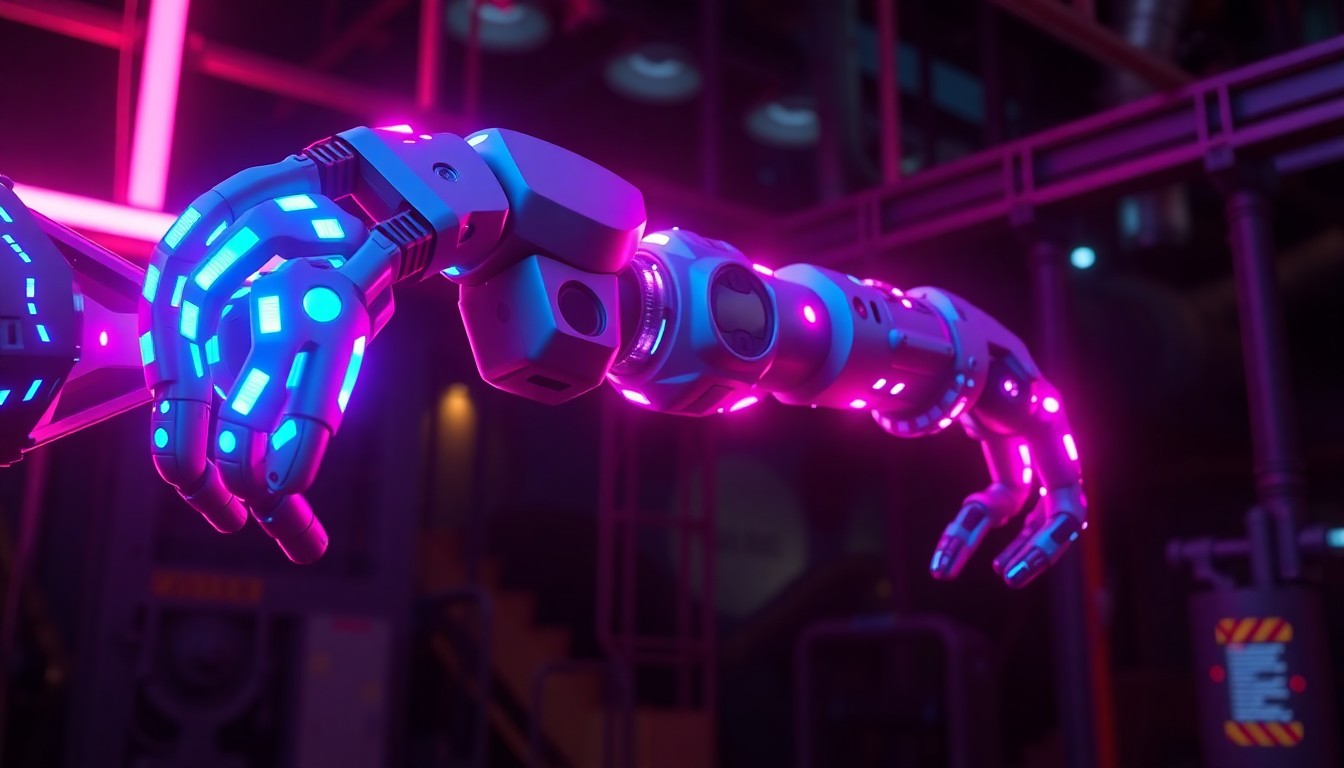 As robotics AI advances, the challenge of achieving the precision required for manufacturing readiness remains a key hurdle for the industry.Mountain View Today
Google has introduced an updated robotics AI model designed to improve how robots interpret and act in real-world environments, a development that could expand automation into more complex industrial tasks over time. The model, Gemini Robotics-ER 1.6, focuses on 'embodied reasoning,' the ability for robots to understand physical surroundings, interpret visual inputs and determine whether tasks have been completed successfully. While the update is positioned as a step toward more autonomous robots, industry experts caution that advances in reasoning do not automatically translate into manufacturing readiness, as robots in production environments are expected to perform tasks with near-perfect consistency, particularly in quality-critical and safety-critical operations.
Why it matters
The development highlights a broader shift in robotics, as companies work to move beyond fixed automation toward systems that can interpret and respond to real-world conditions, an evolution that could gradually expand the range of tasks suitable for automation in manufacturing environments. However, industry experts warn that 'reasoning is the wrong frame for manufacturing tasks,' as robots in production settings must achieve 100% precision every single time, a bar that humans cannot consistently meet.
The details
Google's new robotics AI model, Gemini Robotics-ER 1.6, focuses on 'embodied reasoning,' improving capabilities such as spatial reasoning, multi-view perception and instrument reading, including the ability to interpret gauges and indicators in manufacturing environments. This could enable more reliable inspection and monitoring tasks, with robots equipped to perform routine checks by reading pressure gauges, fluid levels and other critical indicators without human intervention. The system also introduces improved 'success detection,' allowing robots to determine whether a task has been completed correctly before moving on, a key requirement for expanding automation beyond simple, repetitive actions.
- Google introduced the Gemini Robotics-ER 1.6 model in April 2026.
The players
A multinational technology company that has been a leader in the development of robotics and artificial intelligence technologies.
Boston Dynamics' Spot
A mobile robot that has been used to navigate industrial facilities and capture images of gauges and other equipment.
Ken Macken
The CEO of Workr Robotics, an expert who cautions that advances in reasoning do not automatically translate into manufacturing readiness, as robots in production environments must achieve 100% precision every single time.
What they’re saying
“Reasoning is the wrong frame for manufacturing tasks. When a robot is reading a gauge on a production line, you don't want it to reason about whether the reading is acceptable. You want it to be correct — every time. In quality-critical or safety-critical contexts, 'pretty good reasoning' isn't good enough.”
— Ken Macken, CEO of Workr Robotics
“The whole reason manufacturers bring robots into a factory is to do jobs that require 100% precision, every single time. That's the bar humans can't consistently meet, and it's why automation exists. A robot that can interpret the world but doesn't get it right every time doesn't clear that bar.”
— Ken Macken, CEO of Workr Robotics
What’s next
While the Gemini Robotics-ER 1.6 model represents an important step forward in robotics AI, industry experts caution that further advancements are needed to meet the strict precision requirements of manufacturing environments. Continued research and development will be necessary to bridge the gap between improved reasoning capabilities and the production-ready solutions that factories demand.
The takeaway
Google's latest robotics AI model showcases the industry's progress in developing systems that can better interpret and respond to real-world conditions. However, this advancement in 'embodied reasoning' does not automatically translate into manufacturing readiness, as robots in production settings must achieve a level of precision that exceeds human capabilities. Bridging this gap remains a key challenge for the robotics industry as it seeks to expand the range of tasks suitable for automation in factory environments.