- Today
- Holidays
- Birthdays
- Reminders
- Cities
- Atlanta
- Austin
- Baltimore
- Berwyn
- Beverly Hills
- Birmingham
- Boston
- Brooklyn
- Buffalo
- Charlotte
- Chicago
- Cincinnati
- Cleveland
- Columbus
- Dallas
- Denver
- Detroit
- Fort Worth
- Houston
- Indianapolis
- Knoxville
- Las Vegas
- Los Angeles
- Louisville
- Madison
- Memphis
- Miami
- Milwaukee
- Minneapolis
- Nashville
- New Orleans
- New York
- Omaha
- Orlando
- Philadelphia
- Phoenix
- Pittsburgh
- Portland
- Raleigh
- Richmond
- Rutherford
- Sacramento
- Salt Lake City
- San Antonio
- San Diego
- San Francisco
- San Jose
- Seattle
- Tampa
- Tucson
- Washington
Merced Today
By the People, for the People
California Investigates Mysterious Return of Invasive Nutria Rodents
State wildlife officials suspect a deliberate release may be behind the sudden reappearance of the destructive South American rodents.
Apr. 12, 2026 at 7:14pm
Got story updates? Submit your updates here. ›
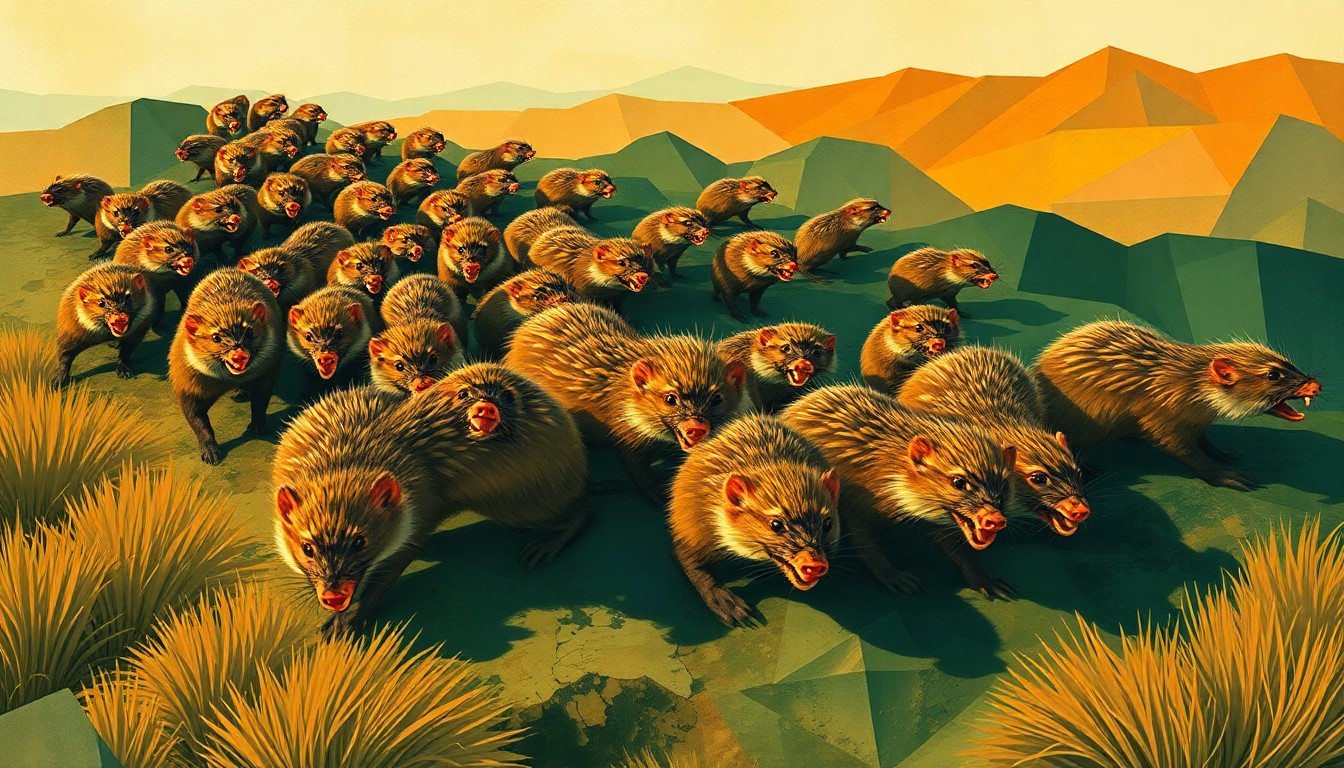
 An abstract visualization of the complex ecological forces at play in the nutria invasion, highlighting the delicate balance of California's wetlands disrupted by the introduction of this destructive, non-native species.Merced Today
The California Department of Fish and Wildlife is investigating the sudden reappearance of invasive nutria rodents in the state's wetlands, with researchers speculating that the rodents may have been deliberately released, rather than migrating naturally. These large, beaver-like creatures have been causing significant damage to ecosystems and agriculture, prompting urgent eradication efforts.
Why it matters
The nutria invasion raises concerns about the impact of non-native species on California's delicate ecosystems and the potential for human actions to disrupt the natural balance of the environment. The mystery behind their return also highlights the need for vigilance and responsible stewardship of natural resources.
The details
A pregnant female nutria was first discovered in Merced County in 2017, and since then, the rodents have been rapidly reproducing and causing widespread damage. They consume a quarter of their body weight in vegetation, burrow destructively, and disrupt waterways and agriculture. Recent research by the California Department of Fish and Wildlife suggests that the nutria population in California is genetically similar to those in Oregon, making it unlikely that they migrated on their own. Researchers believe that people may have intentionally brought the nutria to California, either as a natural vegetation control method or out of personal interest.
- In 2017, a pregnant female nutria was discovered in Merced County, marking the start of the current nutria invasion.
- Since 2017, the nutria population has been rapidly growing and causing significant damage to California's wetlands and agriculture.
The players
California Department of Fish and Wildlife
The state agency responsible for managing and protecting California's wildlife and natural resources, including leading the efforts to eradicate the invasive nutria population.
U.S. Fish and Wildlife Service
The federal agency that has suggested hunting and cooking nutria as a creative approach to engaging the public in the fight against the invasive species.
What they’re saying
“We must find the source of these nutria and stop their spread before they cause even more damage to our ecosystems and agriculture.”
— Samantha Katz, Biologist, California Department of Fish and Wildlife
What’s next
The California Department of Fish and Wildlife will continue its efforts to trap and remove nutria, as well as investigate the possibility of a deliberate release to determine the source of the invasion.
The takeaway
The nutria invasion in California highlights the need for vigilance and responsible stewardship of natural resources, as the introduction of non-native species can have devastating consequences for local ecosystems. This mystery also underscores the importance of understanding the complex interconnections within the natural world and the potential for human actions to disrupt the delicate balance of our environment.