- Today
- Holidays
- Birthdays
- Reminders
- Cities
- Atlanta
- Austin
- Baltimore
- Berwyn
- Beverly Hills
- Birmingham
- Boston
- Brooklyn
- Buffalo
- Charlotte
- Chicago
- Cincinnati
- Cleveland
- Columbus
- Dallas
- Denver
- Detroit
- Fort Worth
- Houston
- Indianapolis
- Knoxville
- Las Vegas
- Los Angeles
- Louisville
- Madison
- Memphis
- Miami
- Milwaukee
- Minneapolis
- Nashville
- New Orleans
- New York
- Omaha
- Orlando
- Philadelphia
- Phoenix
- Pittsburgh
- Portland
- Raleigh
- Richmond
- Rutherford
- Sacramento
- Salt Lake City
- San Antonio
- San Diego
- San Francisco
- San Jose
- Seattle
- Tampa
- Tucson
- Washington
Roki Sasaki Struggles to Pitch 5 Innings in MLB: Reasons & Analysis
Dodgers' Japanese phenom faces challenges adapting his pitch mix to MLB lineups
Apr. 20, 2026 at 3:53am
Got story updates? Submit your updates here. ›
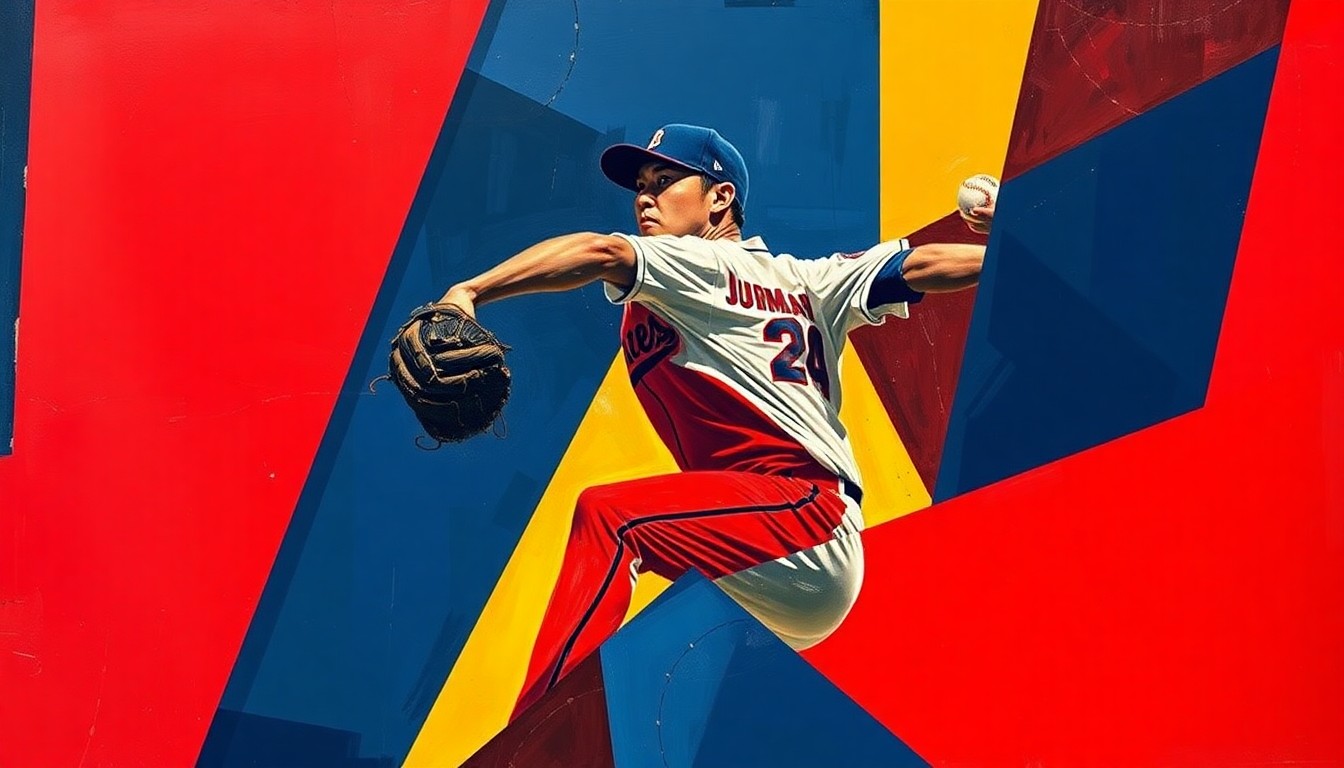 Sasaki's limited pitch arsenal leaves him vulnerable as MLB hitters adjust to his fastball-splitter combination.Los Angeles Today
Los Angeles Dodgers manager Dave Roberts confirmed that Roki Sasaki's recent struggles stem from a limited pitch arsenal, as the 23-year-old Japanese right-hander has failed to complete five innings in three of his first four MLB starts. Sasaki, signed to a record-setting seven-year, $65 million contract last offseason, has shown flashes of dominance but continues to rely heavily on his splitter and fastball, leaving him vulnerable when opponents adjust during later at-bats.
Why it matters
Sasaki's early inconsistency presents a high-risk, high-reward scenario for fantasy managers, with his elite strikeout potential offset by a 4.80 ERA through four starts. The Dodgers' reluctance to extend his workload beyond 75 pitches per start could also limit his win probability and innings accumulation, directly impacting his value in category-based formats. Additionally, the organization's luxury tax payroll means every rotation spot must deliver near-ace production, putting pressure on Sasaki to adapt quickly.
The details
Despite averaging 98.4 mph on his fastball and generating a 42.7% whiff rate on his splitter, Sasaki has thrown just two off-speed pitches beyond his core duo: a curveball (4.1% usage) and a rarely seen slider (1.8%). Opposing hitters have posted a .389 wOBA and .512 slugging percentage when facing him for the third time in a game, a stark contrast to the .210 wOBA allowed in first-time matchups. To unlock his ceiling, Sasaki needs to develop a reliable third pitch, either a slider or a changeup, to disrupt hitters' timing and keep them off-balance.
- Sasaki has failed to complete five innings in three of his first four MLB starts.
The players
Roki Sasaki
A 23-year-old Japanese right-handed pitcher signed by the Los Angeles Dodgers to a record-setting seven-year, $65 million contract in the offseason.
Dave Roberts
The manager of the Los Angeles Dodgers.
Mark Prior
The pitching coach for the Los Angeles Dodgers.
Brandon Gomes
The general manager of the Los Angeles Dodgers.
What they’re saying
“He's got the stuff to dominate anywhere. But right now, hitters are timing him up because they recognize what's coming. He needs to show us something different—something that makes them guess.”
— Dave Roberts, Los Angeles Dodgers Manager
“The adjustment isn't mechanical—it's mental. Trusting a second breaking ball in 0-2 counts is what separates good starters from great ones in this league.”
— Mark Prior, Dodgers Pitching Coach
What’s next
The Dodgers currently sit atop the NL West at 12-6, but their starting rotation has absorbed significant injury losses, with Tyler Glasnow (forearm strain) and Yoshinobu Yamamoto (elbow inflammation) both on the 15-day IL. Sasaki's inability to eat innings places extra pressure on the bullpen, which has logged the third-most relief innings in MLB through April 19. General Manager Brandon Gomes has publicly backed the young hurler, telling Dodgers.com that 'we're investing in a five-year arc, not five starts,' yet the organization's luxury tax payroll—projected at $287 million, $12 million over the threshold—means every rotation spot must deliver near-ace production. Sasaki's leash may be shorter than his contract suggests if he cannot adapt by mid-May.
The takeaway
Sasaki's tenure in Los Angeles hinges on his ability to evolve beyond a two-pitch pitcher. While his physical tools remain among the best in baseball, the MLB's advanced scouting and patient approach at the plate will continue to expose his limitations until he adds a credible third offering. The Dodgers' championship window is open now, and while they possess the depth to absorb short-term struggles, Sasaki must demonstrate tangible progress by mid-May to secure his role in the rotation. If he fails to adapt, the front office may start exploring alternatives—not as a referendum on his talent, but as a pragmatic response to a win-now mandate backed by a historic payroll investment.
Los Angeles top stories



Los Angeles events


Apr. 20, 2026
Biffy Clyro: The Futique Tour
Apr. 21, 2026
MJ (Touring)