- Today
- Holidays
- Birthdays
- Reminders
- Cities
- Atlanta
- Austin
- Baltimore
- Berwyn
- Beverly Hills
- Birmingham
- Boston
- Brooklyn
- Buffalo
- Charlotte
- Chicago
- Cincinnati
- Cleveland
- Columbus
- Dallas
- Denver
- Detroit
- Fort Worth
- Houston
- Indianapolis
- Knoxville
- Las Vegas
- Los Angeles
- Louisville
- Madison
- Memphis
- Miami
- Milwaukee
- Minneapolis
- Nashville
- New Orleans
- New York
- Omaha
- Orlando
- Philadelphia
- Phoenix
- Pittsburgh
- Portland
- Raleigh
- Richmond
- Rutherford
- Sacramento
- Salt Lake City
- San Antonio
- San Diego
- San Francisco
- San Jose
- Seattle
- Tampa
- Tucson
- Washington
Industry Today
By the People, for the People
Mobile Stages Bring Protest Music to LA Immigration Rallies
Activist musicians use flatbed trucks as mobile platforms to project their message of immigrant rights across the city
Apr. 16, 2026 at 9:38pm
Got story updates? Submit your updates here. ›
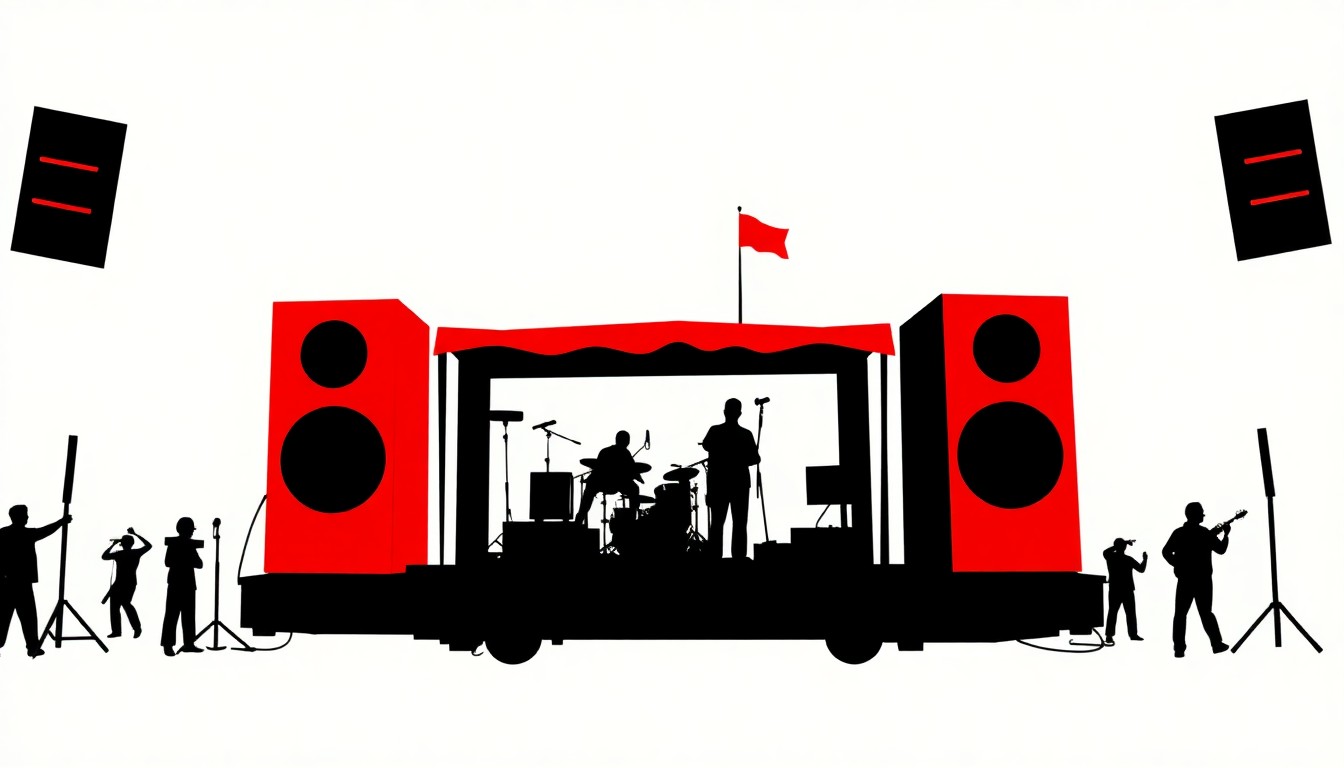 Mobile stages equipped with powerful speakers allow protest musicians to bring their message directly to immigrant detention centers and other sites of conflict.Industry Today
The landscape of social protest is evolving, moving away from static rallies toward more agile, decentralized forms of expression. One of the most potent examples of this trend is the use of mobile stages to bring art directly to the front lines of conflict, such as the work of the band Los Jornaleros del Norte, who have converted flatbed trucks into musical hubs to serenade immigrants held at detention centers in California.
Why it matters
This trend toward 'sonic resistance' suggests a future where art is not just a supplement to protest, but a primary tool for mobilization. When music is mobile, it can respond in real-time to events, such as rolling up to street corners hours after immigration raids have occurred. The use of specific musical genres also serves a psychological purpose, redirecting raw anger and sorrow into collective energy and helping to minimize confrontation between protesters and authorities.
The details
By utilizing massive speakers on a mobile stage, Los Jornaleros del Norte have brought serenades to immigrants held at facilities like the desert detention center in Adelanto, California. This strategy allows the music to penetrate physical barriers, providing a vital emotional link between those detained and the community waiting for them outside. The band's use of upbeat Mexican cumbias and corridos—ballads that narrate the experiences of the working class—helps redirect the energy of a crowd, making them more excited while simultaneously lowering the tension between the people and agents or police.
- In 1995, the band formed in response to a raid in the City of Industry, California.
- The band has been performing at immigration protests and detention centers across Southern California.
The players
Los Jornaleros del Norte
A group of migrant musicians, mostly current or former day laborers, who perform original protest music to support immigrant workers' rights in Los Angeles and Southern California.
National Day Laborer Organizing Network (NDLON)
An organization that advocates for immigrant day laborers and other low-wage workers, often incorporating art and music into their organizing.
Omar León
The band director of Los Jornaleros del Norte.
Loyda Alvarado
The lead singer of Los Jornaleros del Norte.
Carlos Roberto Montoya Valdéz
A day laborer who was killed while attempting to escape an immigration raid.
What they’re saying
“Music can redirect the energy of a crowd, making them more excited whereas simultaneously lowering the tension between the people and agents or police.”
— Omar León, Band Director, Los Jornaleros del Norte
“The act of dancing and singing amidst pain is a way to maintain cultural identity and foster deep community connection.”
— Loyda Alvarado, Lead Singer, Los Jornaleros del Norte
What’s next
The band's viral success in sharing their protest music online has also exposed them to targeted harassment from supporters of the Trump administration, including attempts to seize the truck used for their performances. This suggests a future where protest musicians must navigate a dual existence: as community organizers on the ground and as digital figures facing online backlash.
The takeaway
The success of musical protest is rarely an isolated effort, but rather embedded within larger organizational frameworks like the National Day Laborer Organizing Network (NDLON). This synergy ensures that the music is not just entertainment, but a strategic component of a broader campaign for immigrant rights.