- Today
- Holidays
- Birthdays
- Reminders
- Cities
- Atlanta
- Austin
- Baltimore
- Berwyn
- Beverly Hills
- Birmingham
- Boston
- Brooklyn
- Buffalo
- Charlotte
- Chicago
- Cincinnati
- Cleveland
- Columbus
- Dallas
- Denver
- Detroit
- Fort Worth
- Houston
- Indianapolis
- Knoxville
- Las Vegas
- Los Angeles
- Louisville
- Madison
- Memphis
- Miami
- Milwaukee
- Minneapolis
- Nashville
- New Orleans
- New York
- Omaha
- Orlando
- Philadelphia
- Phoenix
- Pittsburgh
- Portland
- Raleigh
- Richmond
- Rutherford
- Sacramento
- Salt Lake City
- San Antonio
- San Diego
- San Francisco
- San Jose
- Seattle
- Tampa
- Tucson
- Washington
Severe Hypothyroidism Linked to Widespread Heart Dysfunction
UC Davis Health study finds cardiac issues even in patients without overt myxedema coma
Apr. 16, 2026 at 4:04am
Got story updates? Submit your updates here. ›
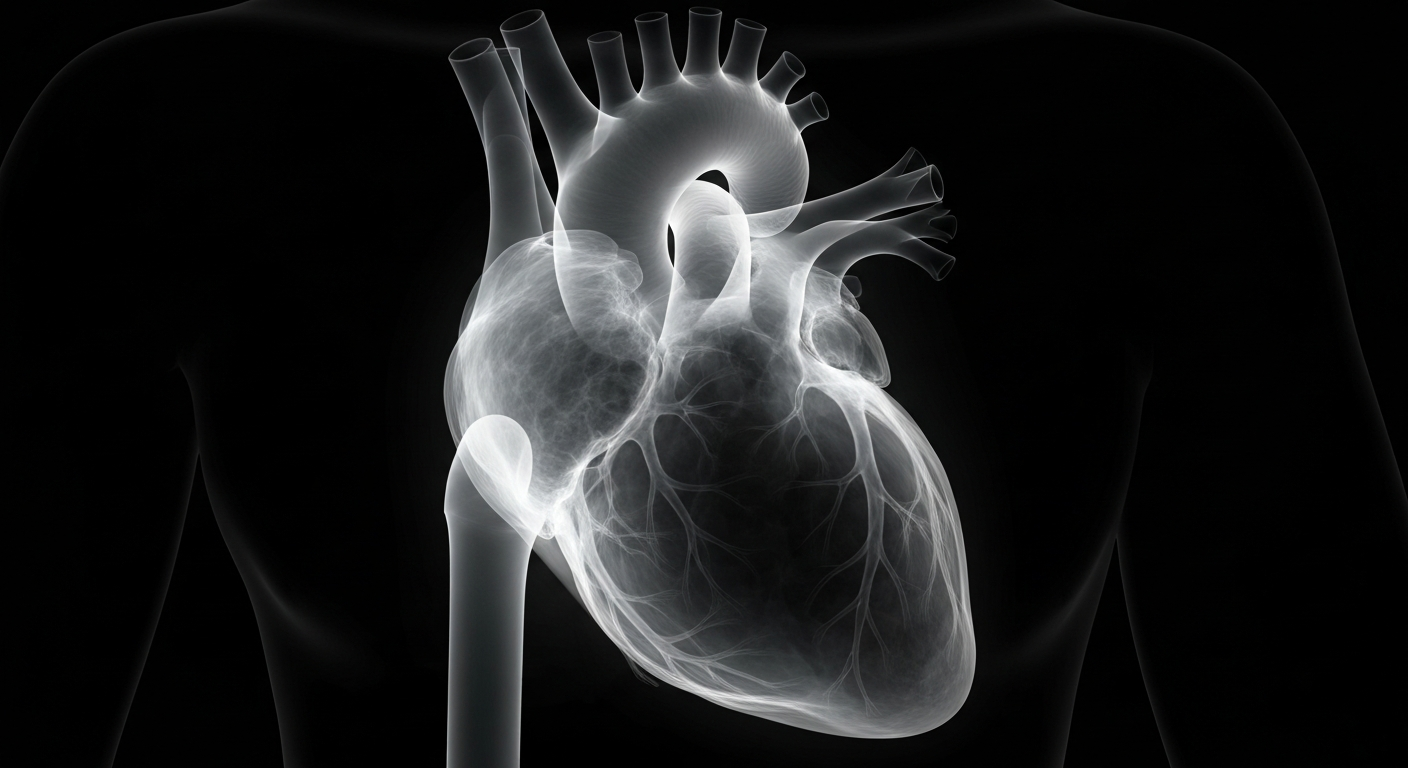 An X-ray view of a weakened, hypothyroid heart reveals the physiological toll of severe thyroid hormone deficiency.Davis Today
A new study from UC Davis Health found that severe hypothyroidism, including in patients with the life-threatening condition myxedema coma, is directly linked to widespread cardiac dysfunction. The researchers examined 112 intensive care unit patients and discovered that over one-third had reduced left ventricular ejection fraction, two-thirds had abnormal diastolic function, and nearly 70% showed impaired myocardial strain, even in those without overt myxedema coma symptoms.
Why it matters
This research challenges the long-held assumption that low thyroid hormone levels during acute illness are simply an adaptive metabolic response, rather than a true hormone deficiency that can directly impair heart function. The findings suggest that in the context of critical illness like septic shock, the heart may function as a 'purely hypothyroid organ', making it a potential target for thyroid hormone replacement therapy.
The details
The study evaluated 112 intensive care unit patients using detailed echocardiographic analysis. The results revealed widespread cardiac dysfunction, with more than one-third of patients having reduced left ventricular ejection fraction, two-thirds exhibiting abnormal diastolic function, and nearly 70% demonstrating impaired myocardial strain. Notably, these issues were present even in patients with preserved ejection fraction and occurred at similar rates in individuals with and without overt myxedema coma.
- The study findings were published in The Journal of Clinical Endocrinology & Metabolism in 2026.
The players
Joaquin Lado
Chief of Endocrinology, Diabetes and Metabolism at UC Davis Health.
UC Davis Health
A academic health system and medical center located in Davis, California.
What they’re saying
“If thyroid hormone deficiency weakens the heart, why wouldn't a prolonged deficiency worsen septic cardiomyopathy?”
— Joaquin Lado, Chief of Endocrinology, Diabetes and Metabolism
What’s next
Lado and his team are now exploring the direct effects of thyroid hormones on cardiac muscle cells in the lab, with early studies suggesting thyroid hormones can enhance contractility within minutes. They have also developed an approved clinical trial protocol to study thyroid hormone replacement therapy in patients with septic shock, though conducting such research presents significant challenges.
The takeaway
This research challenges long-held assumptions about the role of thyroid hormones in critical illness, suggesting that severe hypothyroidism may directly impair cardiac performance. If confirmed, it could open new avenues for therapeutic intervention to improve outcomes for patients with life-threatening heart dysfunction.