- Today
- Holidays
- Birthdays
- Reminders
- Cities
- Atlanta
- Austin
- Baltimore
- Berwyn
- Beverly Hills
- Birmingham
- Boston
- Brooklyn
- Buffalo
- Charlotte
- Chicago
- Cincinnati
- Cleveland
- Columbus
- Dallas
- Denver
- Detroit
- Fort Worth
- Houston
- Indianapolis
- Knoxville
- Las Vegas
- Los Angeles
- Louisville
- Madison
- Memphis
- Miami
- Milwaukee
- Minneapolis
- Nashville
- New Orleans
- New York
- Omaha
- Orlando
- Philadelphia
- Phoenix
- Pittsburgh
- Portland
- Raleigh
- Richmond
- Rutherford
- Sacramento
- Salt Lake City
- San Antonio
- San Diego
- San Francisco
- San Jose
- Seattle
- Tampa
- Tucson
- Washington
Alameda Today
By the People, for the People
Teacher Builds Free Computer Lab for Underfunded School
Robert Litt used donated computers and open-source software to create a technology-rich classroom on a $0 budget.
Apr. 20, 2026 at 9:09am
Got story updates? Submit your updates here. ›
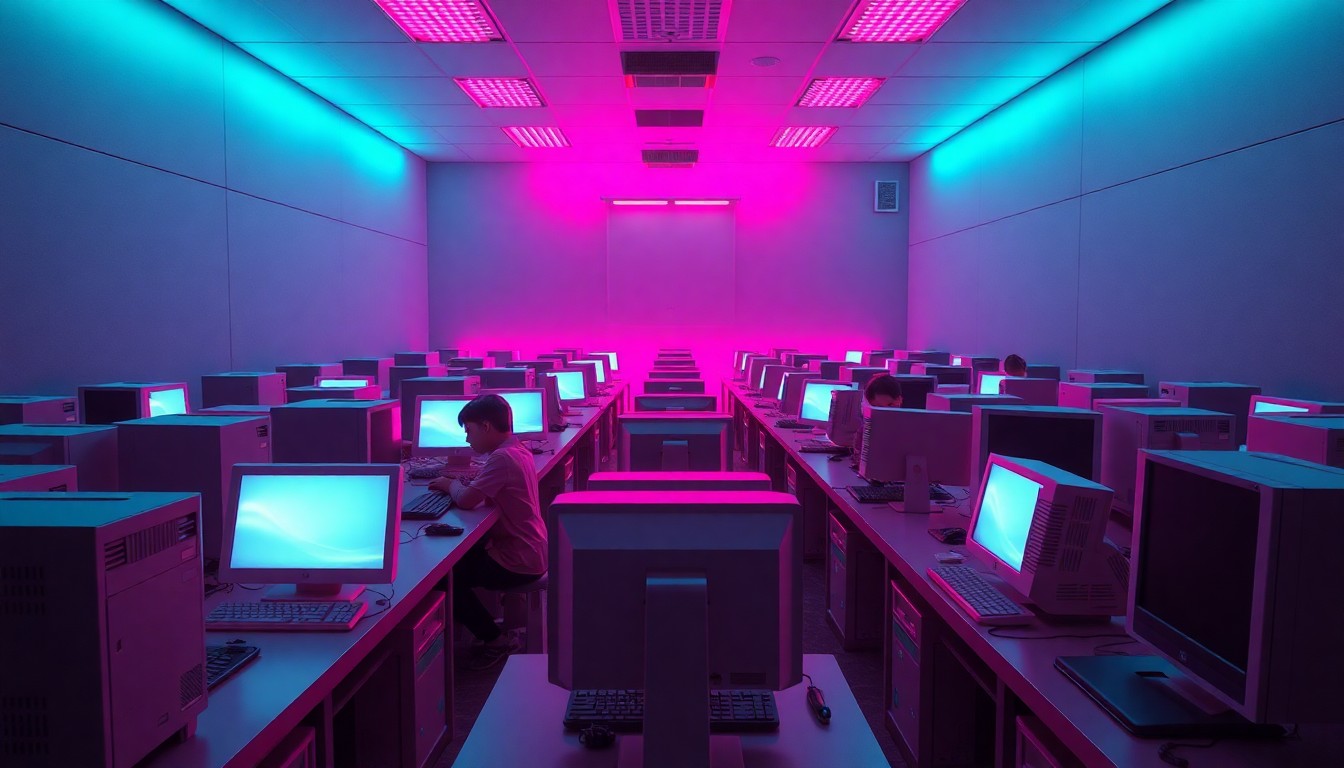 An innovative teacher's efforts to build a free computer lab for his underfunded school have empowered students with valuable digital skills.Alameda Today
Robert Litt, a sixth-grade teacher at ASCEND school in Alameda, California, was determined to bring technology into his classroom despite a lack of funding. He acquired 18 donated computers, installed the free Linux operating system, and then reached out to businesses and families to collect more donated machines. With the help of a local Linux user group and a nonprofit called Partimus, Litt was able to build a full computer lab for his school at no cost, providing students with hands-on experience in using spreadsheets, creating websites, and other digital skills.
Why it matters
Many schools, especially those in low-income areas, struggle to afford the technology needed to prepare students for the digital world. Litt's story shows how teachers can take matters into their own hands and leverage community resources to bridge this "hidden" digital divide, giving students access to valuable computer skills.
The details
Litt began by acquiring 18 donated computers, but found they were slow and had software issues. With the help of a local Linux user group, he was able to install the free, open-source Linux operating system, reviving the old machines. Litt then reached out to businesses and families to collect more donated computers, turning down anything older than 2002 or with less than 512MB of RAM. He also worked with the nonprofit Partimus to set up an install server, allowing him to efficiently deploy Linux across multiple machines. Over the course of six months, Litt was able to build a full computer lab of over 70 donated, Linux-powered computers for his school.
- In 2007, Litt acquired the initial 18 donated computers for his classroom.
- Six months later, Litt had his first full computer lab set up at ASCEND school.
- As of this year, Litt has acquired over 70 computers for the ASCEND computer lab.
The players
Robert Litt
A sixth-grade teacher at ASCEND school in Alameda, California, who was determined to bring technology into his classroom despite a lack of funding.
ASCEND
A small arts K-8 school in the Alameda County School District where Litt teaches.
Partimus
A local nonprofit dedicated to providing computers and free software support to schools in the Bay Area, which helped Litt set up an install server for his computer lab.
What they’re saying
“Underfunded schools are starving in the midst of plenty. Discarded computers are our nation's most wasted educational resource.”
— Robert Litt, Sixth-grade teacher
“Many computers people say are broken are actually experiencing software problems. When he'd install Linux, many of the supposedly broken computers would work just fine.”
— Robert Litt, Sixth-grade teacher
What’s next
Litt will be moving to a new school this coming fall, where he hopes to continue his efforts to bring technology and digital skills to underfunded classrooms.
The takeaway
Litt's story demonstrates how teachers can leverage community resources and free, open-source software to bridge the digital divide in their classrooms, even with limited budgets. His approach shows that lack of funding does not have to be a barrier to providing students with valuable technology education.