- Today
- Holidays
- Birthdays
- Reminders
- Cities
- Atlanta
- Austin
- Baltimore
- Berwyn
- Beverly Hills
- Birmingham
- Boston
- Brooklyn
- Buffalo
- Charlotte
- Chicago
- Cincinnati
- Cleveland
- Columbus
- Dallas
- Denver
- Detroit
- Fort Worth
- Houston
- Indianapolis
- Knoxville
- Las Vegas
- Los Angeles
- Louisville
- Madison
- Memphis
- Miami
- Milwaukee
- Minneapolis
- Nashville
- New Orleans
- New York
- Omaha
- Orlando
- Philadelphia
- Phoenix
- Pittsburgh
- Portland
- Raleigh
- Richmond
- Rutherford
- Sacramento
- Salt Lake City
- San Antonio
- San Diego
- San Francisco
- San Jose
- Seattle
- Tampa
- Tucson
- Washington
NASA's Parker Solar Probe Unveils Sun's Secrets at Breakneck Speeds
Groundbreaking mission provides unprecedented data to revolutionize solar weather forecasting
Apr. 12, 2026 at 6:04pm
Got story updates? Submit your updates here. ›
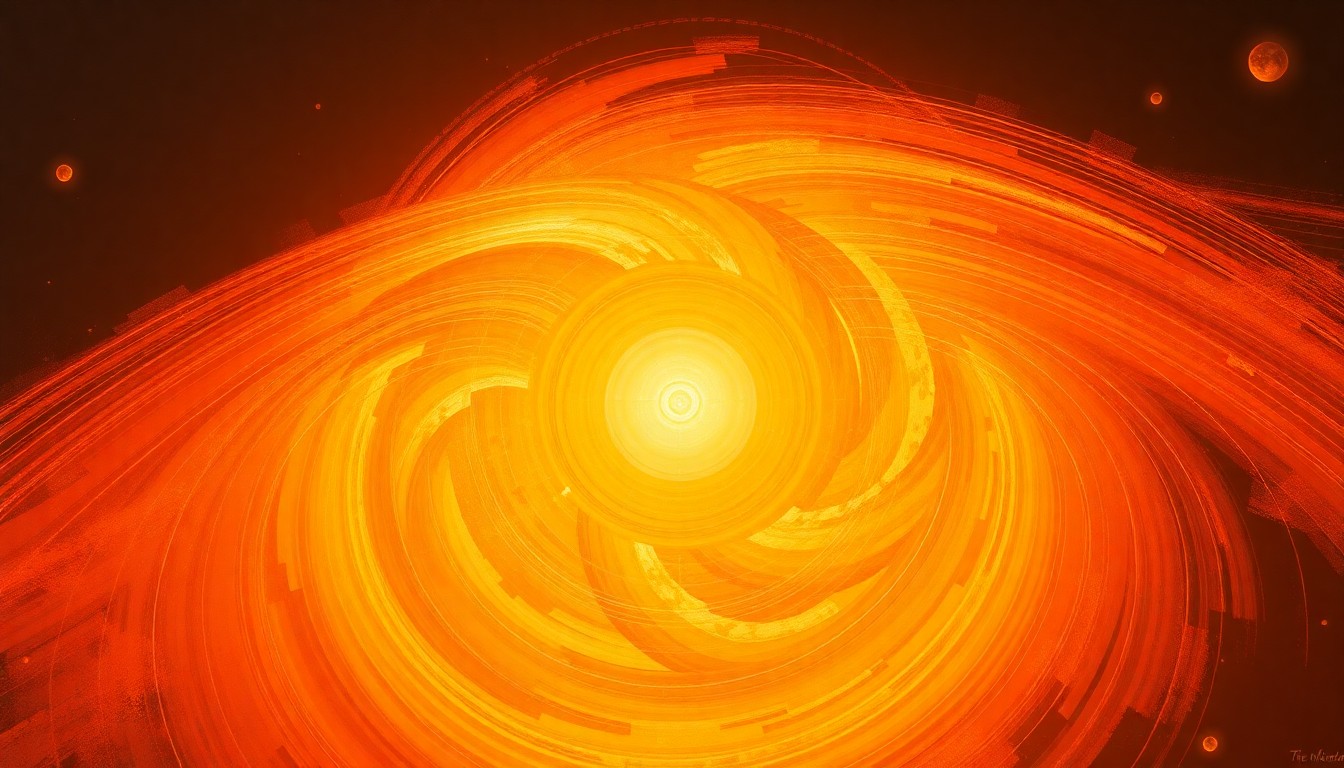 The Parker Solar Probe's groundbreaking data sheds new light on the Sun's dynamic outer atmosphere, paving the way for more accurate space weather forecasting.Tucson Today
In a historic mission, NASA's Parker Solar Probe has captured remarkable data on the Sun's corona, a superheated gas halo extending millions of miles into space. A research team led by the University of Arizona has now analyzed these findings, shedding light on the behavior of hot plasma near the Sun's surface and its profound implications for space weather prediction.
Why it matters
Understanding the Sun's atmosphere is crucial for predicting the timing and nature of solar disturbances reaching Earth, which can impact communications satellites and increase radiation exposure for aircraft. The Parker Solar Probe's close-range readings have allowed researchers to study these regions directly, offering the clearest glimpse yet into the formation of the solar wind.
The details
Launched in 2018, the Parker Solar Probe is on a looping journey around the Sun, utilizing gravity assists from Venus. During its record-breaking close pass, just 3.8 million miles from the solar surface, the probe captured high-resolution data on the Sun's corona. This region exhibits surprising thermal behavior, with plasma moving outward from the Sun's core cooling significantly in the visible photosphere, then unexpectedly heating up again in the outer corona. To interpret the probe's data, the research team developed the Arbitrary Linear Plasma Solver (ALPS), a new computational tool that enables them to analyze how individual particles respond to waves moving through the Sun's plasma.
- The Parker Solar Probe was launched in 2018.
- The probe made its record-breaking close pass to the Sun in 2026.
The players
Parker Solar Probe
A NASA spacecraft on a mission to unravel the mysteries of the Sun.
University of Arizona
The institution leading the research team that analyzed the data from the Parker Solar Probe.
Kristopher Klein
A physicist at the Lunar and Planetary Laboratory who is part of the research team.
What they’re saying
“We know there's this constant heat being input into the solar wind, and we want to understand the mechanisms driving that heating.”
— Kristopher Klein, Physicist, Lunar and Planetary Laboratory
What’s next
The research team plans to continue analyzing the Parker Solar Probe's data to further refine models of solar weather and its impact on Earth and other celestial bodies.
The takeaway
The Parker Solar Probe's unprecedented data has the potential to significantly enhance our understanding of the Sun's atmosphere and improve our ability to predict the timing and nature of solar disturbances, which can have significant impacts on Earth and beyond.
Tucson top stories



Tucson events

Apr. 15, 2026
Back to the Future The Musical (Touring)
Apr. 15, 2026
Marlon Funaki: Half Moon Tour @ 191 Toole
Apr. 16, 2026
Back to the Future The Musical (Touring)