- Today
- Holidays
- Birthdays
- Reminders
- Cities
- Atlanta
- Austin
- Baltimore
- Berwyn
- Beverly Hills
- Birmingham
- Boston
- Brooklyn
- Buffalo
- Charlotte
- Chicago
- Cincinnati
- Cleveland
- Columbus
- Dallas
- Denver
- Detroit
- Fort Worth
- Houston
- Indianapolis
- Knoxville
- Las Vegas
- Los Angeles
- Louisville
- Madison
- Memphis
- Miami
- Milwaukee
- Minneapolis
- Nashville
- New Orleans
- New York
- Omaha
- Orlando
- Philadelphia
- Phoenix
- Pittsburgh
- Portland
- Raleigh
- Richmond
- Rutherford
- Sacramento
- Salt Lake City
- San Antonio
- San Diego
- San Francisco
- San Jose
- Seattle
- Tampa
- Tucson
- Washington
NASA Finds Young Stars Dim in X-rays Faster Than Expected
Quieting of stellar radiation could benefit prospects for life on orbiting planets.
Apr. 15, 2026 at 7:32am
Got story updates? Submit your updates here. ›
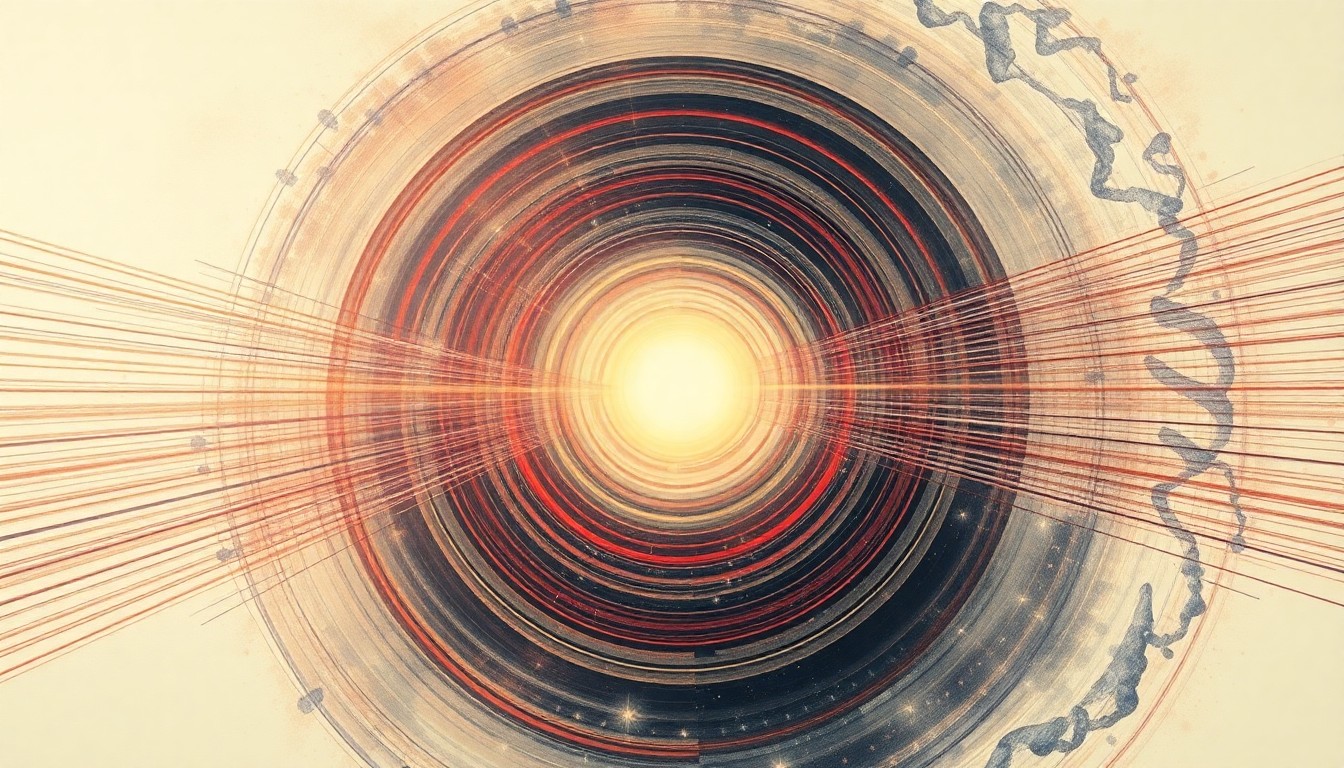 An abstract visualization of the natural 'quieting' of young Sun-like stars, as their internal magnetic field generation becomes less efficient over time.Huntsville Today
Scientists have discovered that young stars similar to our Sun are dimming in X-ray output more rapidly than previously thought, according to a new study using NASA's Chandra X-ray Observatory. The findings suggest this natural 'quieting' of young stars could be a boon for the formation of life on orbiting planets.
Why it matters
Large amounts of X-rays from young stars can erode a planet's atmosphere and prevent the formation of molecules necessary for organic life. This study indicates that Sun-like stars may become less hazardous to potential life-bearing planets sooner than expected.
The details
The research team analyzed eight star clusters between 45 million and 750 million years old, finding that Sun-like stars unleashed only about a quarter to a third of the expected X-rays. They believe the process that generates magnetic fields in these stars becomes less efficient as they age, leading to a faster dimming of X-ray activity.
- The study was published on April 15, 2026 in The Astrophysical Journal.
- The star clusters analyzed ranged from 45 million to 750 million years old.
The players
Konstantin Getman
The lead author of the study from Penn State University.
Vladimir Airapetian
A co-author from NASA's Goddard Space Flight Center.
Eric Feigelson
A co-author also from Penn State University.
Chandra X-ray Observatory
The NASA telescope used to monitor the X-ray output of the young stars.
What they’re saying
“While science fiction - like the microbes in Project Hail Mary - imagines alien life that dims stellar output by consuming its energy, our real observations reveal a natural 'quieting' of young Sun-like stars in X-rays.”
— Konstantin Getman, Lead author
“It's possible that we owe our existence to our Sun doing the same thing, several billion years ago, that we see these young stars doing now.”
— Vladimir Airapetian, Co-author
What’s next
The researchers will continue to investigate the cause of the rapid dimming of X-ray activity in young Sun-like stars.
The takeaway
This study suggests that Sun-like stars may become less hazardous to potential life-bearing planets sooner than previously thought, as their X-ray output naturally declines over time - a finding that could have implications for the search for habitable worlds.
Huntsville top stories


Huntsville events

Apr. 16, 2026
Sons of Legion - Soul to SØL Tour
Apr. 17, 2026
Rod Stewart: ONE LAST TIME
Apr. 17, 2026
Jason Salmon