- Today
- Holidays
- Birthdays
- Reminders
- Cities
- Atlanta
- Austin
- Baltimore
- Berwyn
- Beverly Hills
- Birmingham
- Boston
- Brooklyn
- Buffalo
- Charlotte
- Chicago
- Cincinnati
- Cleveland
- Columbus
- Dallas
- Denver
- Detroit
- Fort Worth
- Houston
- Indianapolis
- Knoxville
- Las Vegas
- Los Angeles
- Louisville
- Madison
- Memphis
- Miami
- Milwaukee
- Minneapolis
- Nashville
- New Orleans
- New York
- Omaha
- Orlando
- Philadelphia
- Phoenix
- Pittsburgh
- Portland
- Raleigh
- Richmond
- Rutherford
- Sacramento
- Salt Lake City
- San Antonio
- San Diego
- San Francisco
- San Jose
- Seattle
- Tampa
- Tucson
- Washington
Lung Cancer's Identity Shift: Hidden in Plain Sight
New study shows some lung cancers can change type as they evolve, making them more aggressive and harder to treat
Apr. 11, 2026 at 1:03am
Got story updates? Submit your updates here. ›
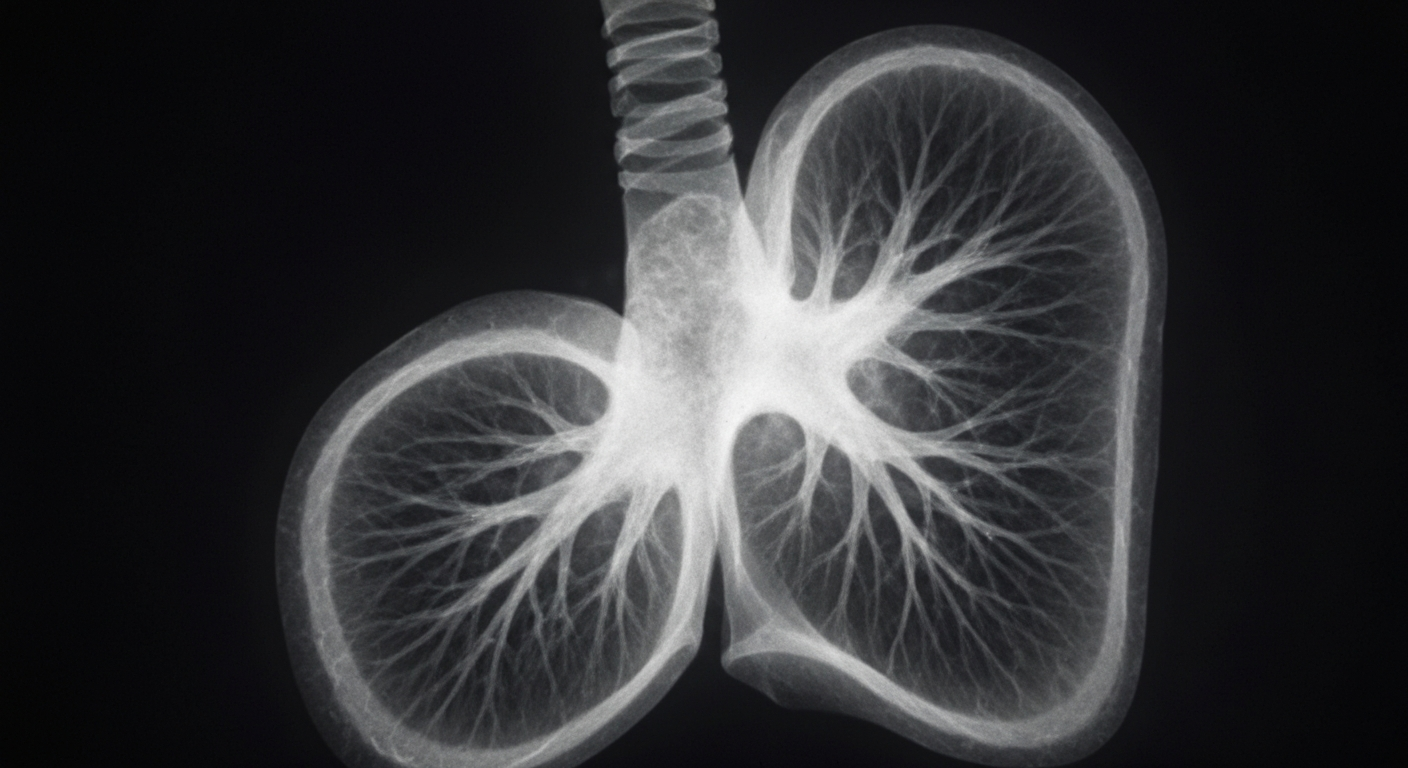 An X-ray view into the complex, ever-changing landscape of a lung tumor, where cancer cells dynamically shift identities to evade treatment.Seattle Today
A new study co-led by the Institute for Systems Biology (ISB) has found that some lung cancers can change identity as they evolve, shifting from one cancer type to another in ways that may make them more aggressive and difficult to treat. The study focused on a rare form of lung cancer known as combined small-cell lung cancer (cSCLC), which contains features of both small-cell and non-small-cell lung cancer. Researchers discovered these tumors do not arise from two separate cancers, but rather originate from a single ancestral cancer cell that evolves over time, with cells transitioning between identities.
Why it matters
The findings highlight the importance of understanding not just the genetic mutations in cancer, but also how cancer cells change state and interact with their environment. The researchers say cancer is not static, and to treat it effectively, we need to understand how it evolves, not just what it is at a single point in time.
The details
Using a combination of spatial and single-cell genomic approaches, the researchers found these tumors are not simply mixtures of different cancer types, but rather dynamic systems with cancer cells actively changing their identity. About one-third of the SCLC-like tumor cells analyzed showed mixed identities, carrying features of multiple cancer types at once. The study also revealed different regions within the same tumor create distinct microenvironments, with some areas rich in immune cells and others largely immune-excluded, often separated by dense bands of fibroblasts that may help wall off parts of the tumor from immune attack.
- The study was published in Cell Reports Medicine in 2026.
The players
Institute for Systems Biology (ISB)
A research institute located in Seattle, Washington that co-led the study on lung cancer identity shifts.
Wei Wei, PhD
Associate professor at the Institute for Systems Biology and co-corresponding author of the study.
Qihui Shi, PhD
Researcher at Fudan University and co-corresponding author of the study.
What they’re saying
“We found that these tumors are not simply mixtures of different cancer types. They are dynamic systems, with cancer cells actively changing their identity. That flexibility may help explain why they are so difficult to treat.”
— Wei Wei, Associate Professor, Institute for Systems Biology
“By combining spatial genomics, single-cell analysis, and multi-region sequencing, we were able to trace how these tumors evolve across both space and time. This approach allowed us to capture transitional cell states that are not visible using conventional methods.”
— Qihui Shi, Researcher, Fudan University
What’s next
The team has developed a four-gene diagnostic tool called cSCLC Detector, which may help identify these mixed tumors more accurately. The tool was built on the insight that the small-cell and non-small-cell parts of cSCLC share early trunk mutations, meaning a biopsy of only the small-cell region can still reveal the tumor's hidden mixed identity.
The takeaway
This study shows that lung cancer is not a static disease, but rather a dynamic system where cancer cells can actively change their identity. Understanding this evolution and the complex tumor microenvironment is crucial for developing more effective treatments for this difficult-to-treat cancer.
Seattle top stories



Seattle events


Apr. 11, 2026
Seattle Kraken Suites
Apr. 11, 2026
Seattle Kraken vs. Calgary Flames