- Today
- Holidays
- Birthdays
- Reminders
- Cities
- Atlanta
- Austin
- Baltimore
- Berwyn
- Beverly Hills
- Birmingham
- Boston
- Brooklyn
- Buffalo
- Charlotte
- Chicago
- Cincinnati
- Cleveland
- Columbus
- Dallas
- Denver
- Detroit
- Fort Worth
- Houston
- Indianapolis
- Knoxville
- Las Vegas
- Los Angeles
- Louisville
- Madison
- Memphis
- Miami
- Milwaukee
- Minneapolis
- Nashville
- New Orleans
- New York
- Omaha
- Orlando
- Philadelphia
- Phoenix
- Pittsburgh
- Portland
- Raleigh
- Richmond
- Rutherford
- Sacramento
- Salt Lake City
- San Antonio
- San Diego
- San Francisco
- San Jose
- Seattle
- Tampa
- Tucson
- Washington
GPU Breach Exposes Systemic Risks in AI Compute
New attack shows how GPU memory flaws can escalate to full system compromise, challenging core security assumptions
Apr. 11, 2026 at 11:38am
Got story updates? Submit your updates here. ›
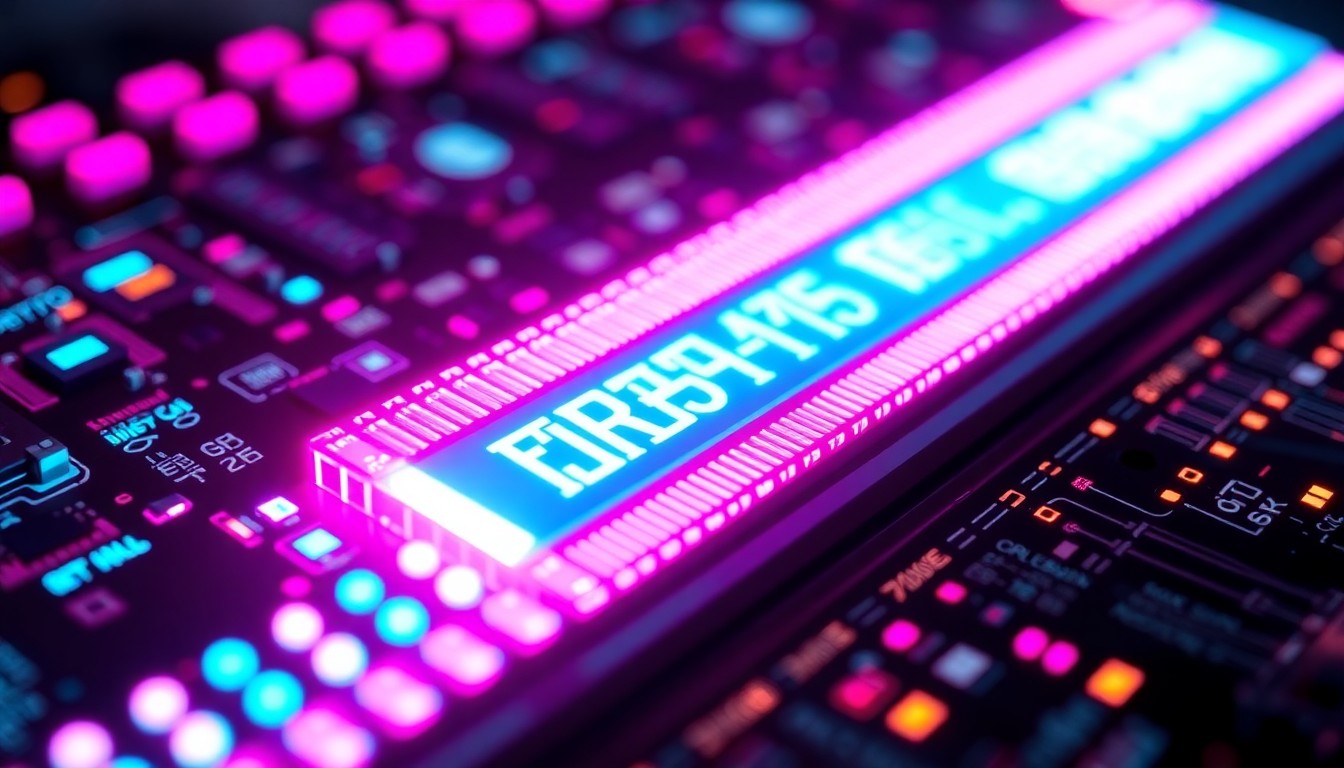 A glowing GPU memory module and page table data structures illustrate the systemic risks of GPU vulnerabilities that can compromise entire computing systems.Seattle Today
Security researchers have revealed a novel attack called GPUBreach that demonstrates how Rowhammer bit flips in GPU memory can corrupt page tables and grant unprivileged code direct GPU memory access. This access can then be weaponized to trigger CPU-side driver vulnerabilities and escalate to a root shell, all without disabling IOMMU protections. The attack highlights how the GPU, traditionally an isolated co-processor, has become a critical component in the overall system trust chain, and how a clever combination of memory faults and driver flaws can bypass conventional hardening measures.
Why it matters
As GPUs power more workloads, including AI inference and training on single servers or in the cloud, attackers gaining GPU control can pivot to the host, potentially compromising data, kernels, and orchestration layers. The claim that IOMMU alone is insufficient under GPUBreach raises concerns about the misalignment between hardware isolation and software trust assumptions, requiring a rethinking of defense-in-depth strategies.
The details
The GPUBreach attack begins with Rowhammer-induced bit flips in GPU memory, propagating to GPU page tables and enabling arbitrary GPU memory access from an unprivileged CUDA kernel. It then leverages memory-safety bugs in the NVIDIA driver to climb into CPU privileges, compromising the system without disabling IOMMU protection. This cascade illustrates how security boundaries are only as strong as the weakest link, requiring hardening of the interactions between the GPU and CPU, including drivers, firmware, and IOMMU configurations.
- The GPUBreach vulnerability was disclosed in April 2026.
The players
Security Researchers
The GPUBreach vulnerability was discovered and disclosed by a team of security researchers.
NVIDIA
The GPU manufacturer whose driver was found to contain memory-safety bugs that could be exploited as part of the GPUBreach attack chain.
What they’re saying
“This isn't just about flipping a bit; it's about breaking the trusted boundary between GPU memory and system software. The GPU, traditionally a co-processor with isolated memory, becomes a backdoor into the host.”
— Security Researcher
“If attackers can threaten root access through GPU channels, then governance around cloud GPU instances, supply chain integrity, and firmware updates becomes a matter of national security scale for some industries.”
— Security Researcher
What’s next
Enterprises relying on CUDA-enabled workloads and GPU acceleration must reassess threat models and patch cadences to address the GPUBreach vulnerability. Vendors and researchers will need to collaborate on layered mitigations that specifically address the GPU-driver interaction surface, including stricter validation of memory-state changes from GPU code, driver sandboxing, and more rigorous memory-safety testing around CUDA components.
The takeaway
GPUBreach is a wake-up call about the evolving threat landscape as accelerators become central to our computing ecosystems. The attack exposes the fragility of assuming that protections like ECC and IOMMU are sufficient when the attacker can manipulate the very state of the GPU and its interaction with system software. The defense playbook must evolve to address the inseparable bond between GPU memory, page tables, and driver trust, requiring a holistic, defense-in-depth strategy that anticipates these chained vulnerabilities and acts quickly to close them.
Seattle top stories



Seattle events

Apr. 11, 2026
Seattle Kraken Suites
Apr. 11, 2026
Seattle Kraken vs. Calgary Flames