- Today
- Holidays
- Birthdays
- Reminders
- Cities
- Atlanta
- Austin
- Baltimore
- Berwyn
- Beverly Hills
- Birmingham
- Boston
- Brooklyn
- Buffalo
- Charlotte
- Chicago
- Cincinnati
- Cleveland
- Columbus
- Dallas
- Denver
- Detroit
- Fort Worth
- Houston
- Indianapolis
- Knoxville
- Las Vegas
- Los Angeles
- Louisville
- Madison
- Memphis
- Miami
- Milwaukee
- Minneapolis
- Nashville
- New Orleans
- New York
- Omaha
- Orlando
- Philadelphia
- Phoenix
- Pittsburgh
- Portland
- Raleigh
- Richmond
- Rutherford
- Sacramento
- Salt Lake City
- San Antonio
- San Diego
- San Francisco
- San Jose
- Seattle
- Tampa
- Tucson
- Washington
Martinsville Today
By the People, for the People
NASCAR's Brad Moran Addresses Fan Outrage Over Stage Cautions and TV Influence
The managing director acknowledges excessive caution lengths, highlighting the complex relationship between sports and broadcasting.
Apr. 12, 2026 at 12:59pm
Got story updates? Submit your updates here. ›
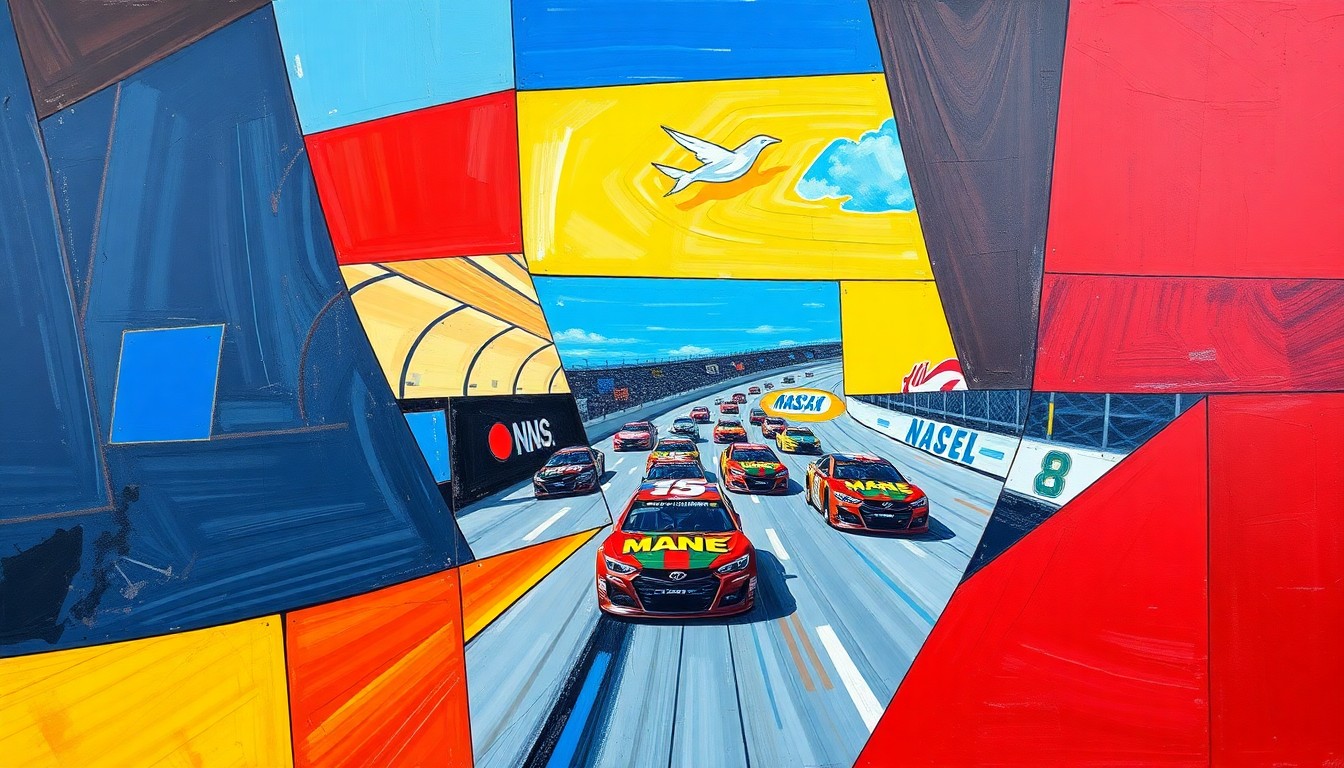 The complex interplay between NASCAR's on-track action, broadcast demands, and fan expectations is captured in this cubist-inspired illustration.Martinsville Today
NASCAR's Cup Series managing director Brad Moran has addressed the recent fan outrage over the lengthy stage cautions, particularly during the recent race at Martinsville Speedway. Moran admitted that the cautions were excessively long, a rare display of transparency from sports management. The situation underscores the delicate balance between safety, entertainment, and the demands of television production, as broadcasters aim to capture the excitement of pit stops for viewers at home. Drivers, like veteran Denny Hamlin, have voiced their frustration over the extended cautions and the influence of television on the sport's flow. This issue reflects a broader trend in sports broadcasting, where networks' heavy investments in sports rights can impact the presentation and pacing of the game. NASCAR is committed to working with broadcast partners to minimize caution lengths, but finding a solution that satisfies all parties is a complex task requiring collaborative effort.
Why it matters
The debate over stage cautions in NASCAR highlights the ongoing tension between the sport's natural flow, the safety of the drivers, and the demands of television production. As broadcasters invest heavily in sports rights, their influence on the presentation and pacing of the game has become more pronounced, raising questions about the future of sports broadcasting and the potential consequences for the sports themselves.
The details
The recent race at Martinsville Speedway served as the backdrop for this issue, where the first stage was nearly caution-free, a rarity in NASCAR. However, the late appearance of a caution flag, just two laps before the end of Stage 1, created a conundrum for the broadcast partners, primarily FOX Sports. The broadcasters, with their own set of sponsorships and commercial obligations, were caught in a bind, as they aim to capture the excitement of pit stops for viewers at home, but the timing of the caution disrupted this plan.
- The recent race at Martinsville Speedway took place in 2026.
The players
Brad Moran
The Cup Series managing director for NASCAR, who acknowledged the excessive length of stage cautions.
Denny Hamlin
A veteran NASCAR driver who voiced his concerns about the extended cautions and the influence of television on the sport's flow.
FOX Sports
The broadcast partner for NASCAR, which was caught in a bind due to the timing of the caution flag at Martinsville.
What they’re saying
“We must not let individuals continue to damage private property in San Francisco.”
— Robert Jenkins, San Francisco resident
What’s next
NASCAR is committed to working with broadcast partners to minimize caution lengths, but finding a solution that satisfies all parties is a complex task requiring collaborative effort.
The takeaway
This situation highlights the ongoing tension between the sport's natural flow, the safety of the drivers, and the demands of television production. As broadcasters invest heavily in sports rights, their influence on the presentation and pacing of the game has become more pronounced, raising questions about the future of sports broadcasting and the potential consequences for the sports themselves.