- Today
- Holidays
- Birthdays
- Reminders
- Cities
- Atlanta
- Austin
- Baltimore
- Berwyn
- Beverly Hills
- Birmingham
- Boston
- Brooklyn
- Buffalo
- Charlotte
- Chicago
- Cincinnati
- Cleveland
- Columbus
- Dallas
- Denver
- Detroit
- Fort Worth
- Houston
- Indianapolis
- Knoxville
- Las Vegas
- Los Angeles
- Louisville
- Madison
- Memphis
- Miami
- Milwaukee
- Minneapolis
- Nashville
- New Orleans
- New York
- Omaha
- Orlando
- Philadelphia
- Phoenix
- Pittsburgh
- Portland
- Raleigh
- Richmond
- Rutherford
- Sacramento
- Salt Lake City
- San Antonio
- San Diego
- San Francisco
- San Jose
- Seattle
- Tampa
- Tucson
- Washington
Bristol Today
By the People, for the People
Wage Growth Lags Inflation as Tech Boom Widens Inequality
Disparities persist even as overall wages keep pace with rising prices, signaling a shifting economic landscape.
Apr. 12, 2026 at 11:39pm
Got story updates? Submit your updates here. ›
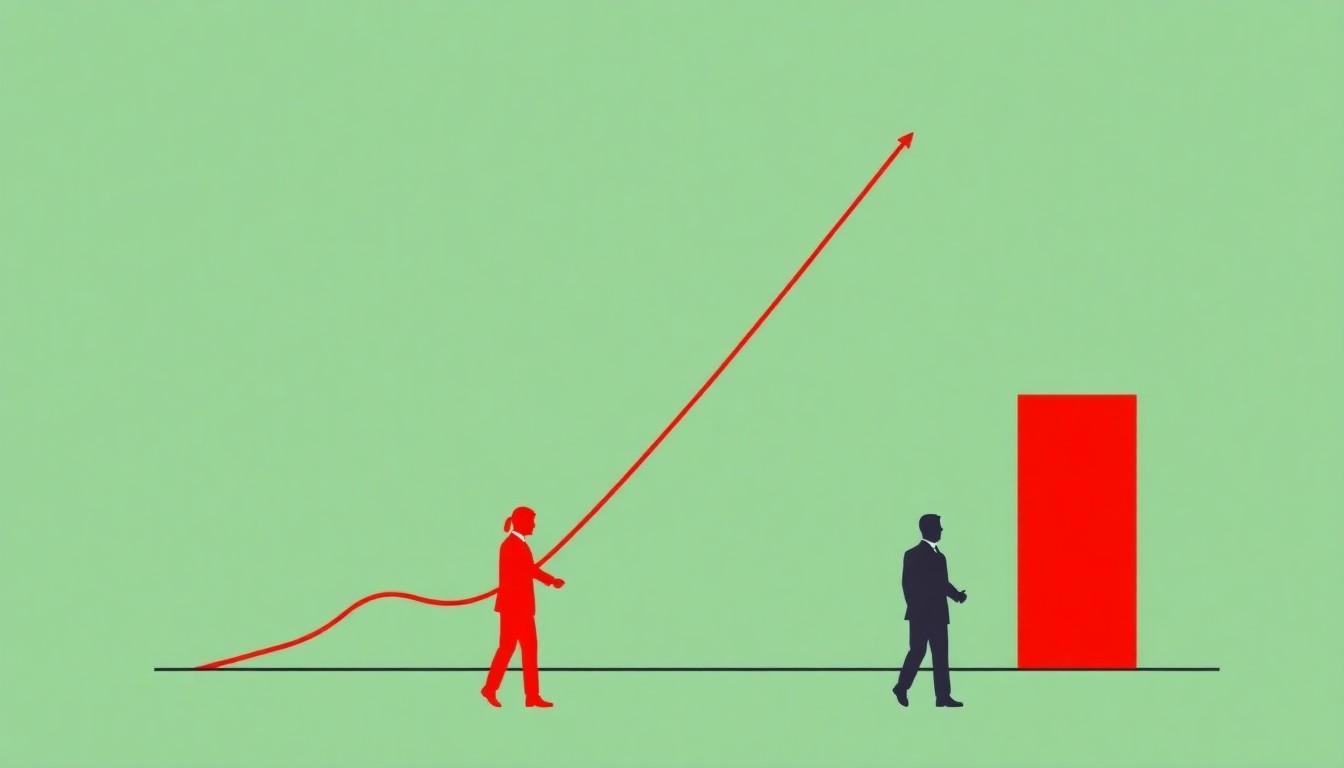 Uneven wage gains amid rising prices signal a shifting economic landscape that rewards tech-savvy workers while leaving many traditional jobs behind.Bristol Today
The latest economic data suggests aggregate wages have kept up with inflation, but the story is more complex. While high-skilled, tech-enabled roles and high-wage sectors see faster wage gains, many traditional middle- and lower-wage occupations struggle to keep up, creating a K-shaped recovery that reinforces inequality.
Why it matters
The uneven nature of wage growth highlights how technological change and economic shocks can disproportionately benefit certain workers and industries, raising concerns about the social contract and the need for more inclusive policies to support workers.
The details
Analysts note that the benefits of rising wages have accrued unevenly, with high-skilled, AI-enabled roles and high-wage sectors experiencing faster gains compared to many traditional middle- and lower-wage occupations. This dynamic creates a K-shaped recovery, where the top tiers of the labor market pull away while others fall behind.
- The latest economic signals suggest aggregate wages kept pace with inflation on balance in 2026.
- However, pockets of the labor market have outpaced or lagged behind depending on industry and income tier.
The players
High-skilled, tech-enabled workers
Workers with specialized skills related to AI implementation are experiencing faster wage growth, creating a private wage premium for tech literacy.
Middle- and lower-wage workers
Many traditional middle- and lower-wage occupations are struggling to keep up with rising prices, falling behind the faster wage gains in high-wage sectors.
What’s next
Policymakers and educators will need to focus on more targeted upskilling programs and incentives for firms to invest in workers, rather than relying solely on broad-based wage growth to address inequality.
The takeaway
This economic moment highlights the need for a recalibration of the social contract, where wage growth is not solely tied to productivity surges that disproportionately benefit capital owners and top earners. Stronger collective bargaining, more robust wage-price governance, and smarter social insurance could help cushion the transition for mid- and lower-income workers.