- Today
- Holidays
- Birthdays
- Reminders
- Cities
- Atlanta
- Austin
- Baltimore
- Berwyn
- Beverly Hills
- Birmingham
- Boston
- Brooklyn
- Buffalo
- Charlotte
- Chicago
- Cincinnati
- Cleveland
- Columbus
- Dallas
- Denver
- Detroit
- Fort Worth
- Houston
- Indianapolis
- Knoxville
- Las Vegas
- Los Angeles
- Louisville
- Madison
- Memphis
- Miami
- Milwaukee
- Minneapolis
- Nashville
- New Orleans
- New York
- Omaha
- Orlando
- Philadelphia
- Phoenix
- Pittsburgh
- Portland
- Raleigh
- Richmond
- Rutherford
- Sacramento
- Salt Lake City
- San Antonio
- San Diego
- San Francisco
- San Jose
- Seattle
- Tampa
- Tucson
- Washington
Bristol Today
By the People, for the People
Crew Chiefs Prepare Strategies for Bristol NASCAR Race
Tire management, traction compounds, and pit stop tactics take center stage ahead of the Food City 500
Apr. 12, 2026 at 10:20am
Got story updates? Submit your updates here. ›
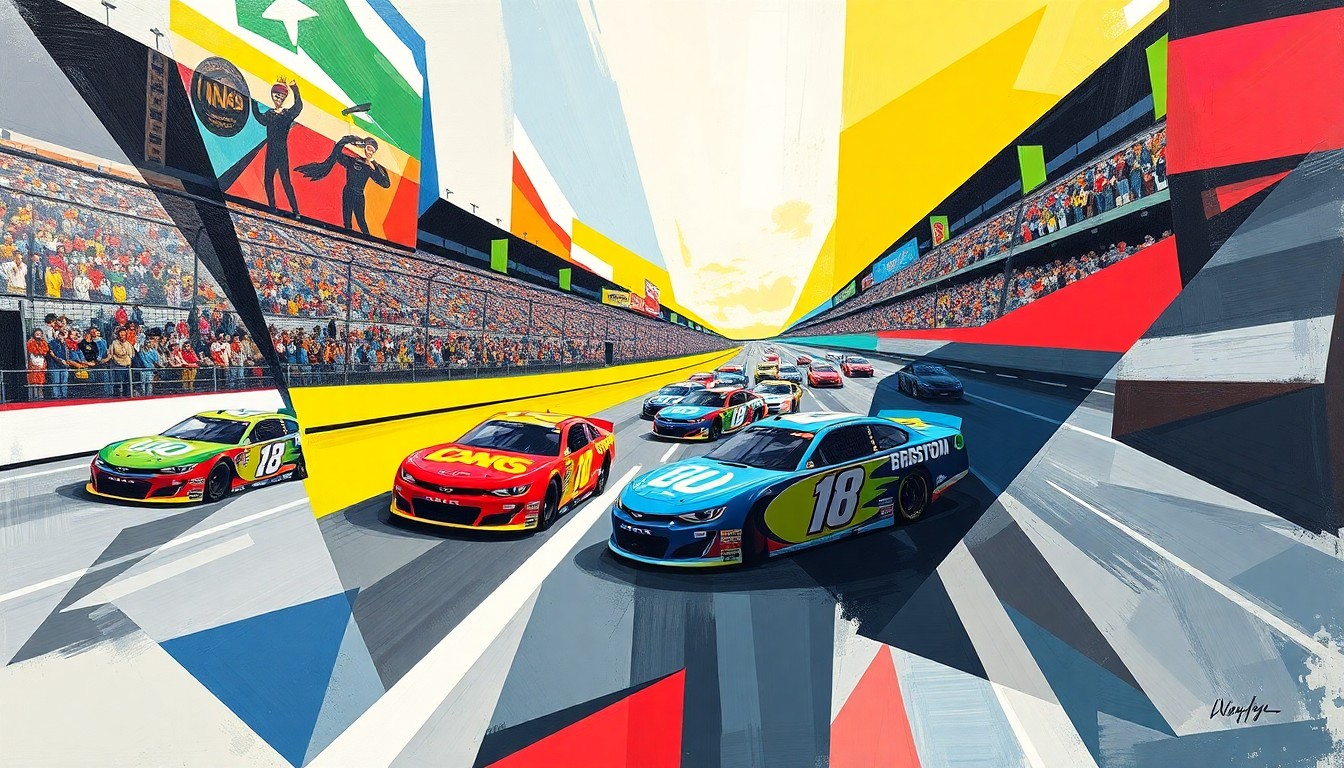 A cubist interpretation of the strategic complexities and high-octane action of the NASCAR Food City 500 at Bristol Motor Speedway.Bristol Today
The upcoming NASCAR Food City 500 at Bristol Motor Speedway has crew chiefs and teams focused on navigating the track's unique challenges, including Goodyear's new tire combination and the use of PJ1 traction compound. Strategies around tire management, lane selection, and pit stop optimization are key as teams aim to adapt to the evolving track conditions.
Why it matters
Bristol is one of NASCAR's most iconic short tracks, known for its high-banked turns and intense racing. The introduction of new tire and traction technologies adds an extra layer of complexity for crew chiefs, who must balance risk and reward to give their drivers the best chance of success.
The details
Goodyear has introduced a new tire combination for the Bristol race, aiming to reduce the impact of weather conditions on the track surface. The PJ1 traction compound, sprayed along the bottom of the corners, is expected to make the lower lane the dominant groove early on, before the top lane becomes preferred as the race progresses. Crew chiefs like Ryan Bergenty (No. 38) and Charles Denike (No. 23 23XI Racing) are studying how to adapt their strategies to these evolving track conditions.
- The Food City 500 at Bristol Motor Speedway is scheduled for April 12, 2026.
- Crew chiefs had the opportunity to test the new tire and high-horsepower short-track diffuser last November.
The players
Ryan Bergenty
Crew chief for the No. 38 team, focusing on anticipating the behavior of the PJ1 traction compound and the migration of drivers to the top lane.
Charles Denike
Crew chief for the No. 23 23XI Racing Toyota, drawing on the team's experience from testing the new tire and high-horsepower short-track diffuser last November.
Goodyear
The tire manufacturer that has introduced a new tire combination for the Bristol race, aiming to reduce the impact of weather conditions on the track surface.
What they’re saying
“The question on our minds is how the top lane will become the preferred lane as the race progresses. We're focused on anticipating the behavior of the PJ1 traction compound and adapting our strategy accordingly.”
— Ryan Bergenty, Crew chief, No. 38 team
“We had the advantage of testing the right-side tire and the new high-horsepower short-track diffuser last November. While there are differences between the test and the actual race conditions, we feel confident in our learnings and are ready to adapt to the unique characteristics of Bristol.”
— Charles Denike, Crew chief, No. 23 23XI Racing Toyota
What’s next
As the race unfolds, crew chiefs and drivers will continue to monitor the evolution of the track surface and make strategic decisions regarding tire management, lane selection, and pit stop timing to give their teams the best chance of success.
The takeaway
The upcoming Food City 500 at Bristol Motor Speedway promises an exciting display of crew chief strategy and adaptability as they navigate the complexities introduced by Goodyear's new tire combination and the PJ1 traction compound. The ability to read the track conditions and make timely adjustments will be crucial in determining the outcome of this iconic NASCAR event.