- Today
- Holidays
- Birthdays
- Reminders
- Cities
- Atlanta
- Austin
- Baltimore
- Berwyn
- Beverly Hills
- Birmingham
- Boston
- Brooklyn
- Buffalo
- Charlotte
- Chicago
- Cincinnati
- Cleveland
- Columbus
- Dallas
- Denver
- Detroit
- Fort Worth
- Houston
- Indianapolis
- Knoxville
- Las Vegas
- Los Angeles
- Louisville
- Madison
- Memphis
- Miami
- Milwaukee
- Minneapolis
- Nashville
- New Orleans
- New York
- Omaha
- Orlando
- Philadelphia
- Phoenix
- Pittsburgh
- Portland
- Raleigh
- Richmond
- Rutherford
- Sacramento
- Salt Lake City
- San Antonio
- San Diego
- San Francisco
- San Jose
- Seattle
- Tampa
- Tucson
- Washington
Iron-On Electronic Circuits Revolutionize Wearable Tech
Researchers develop stretchable, conductive patches that can be easily integrated into fabrics using a simple iron.
Apr. 11, 2026 at 7:28am
Got story updates? Submit your updates here. ›
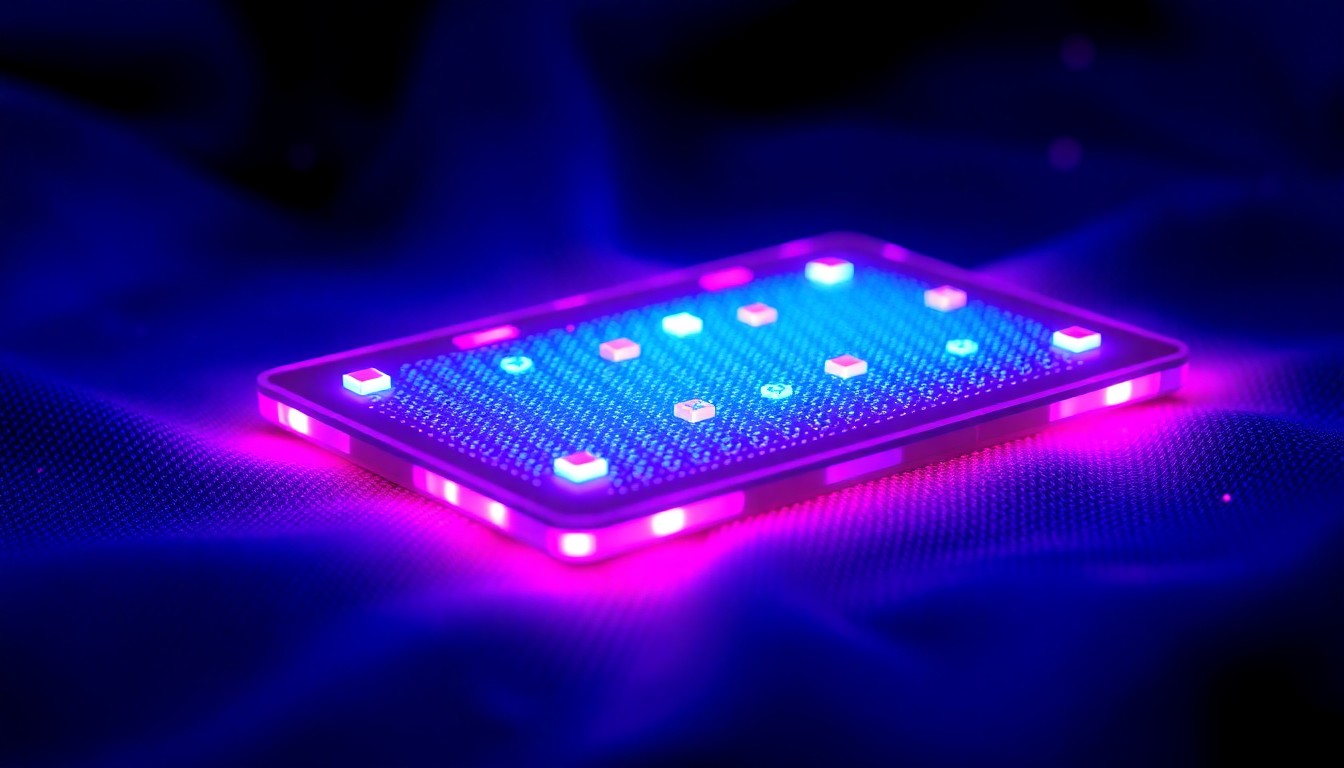 A glowing, high-tech fabric patch that could revolutionize wearable electronics and smart clothing.Blacksburg Today
Researchers at Virginia Tech have developed an innovative solution for integrating electronic circuits into fabrics - an electrically conductive patch that can be bonded to clothing with a simple iron. This breakthrough in e-textiles and wearable electronics showcases the potential for rapid and robust integration of soft electronics into a wide range of fabrics, paving the way for diverse applications in healthcare, environmental monitoring, robotics, and human-machine interfaces.
Why it matters
This technology could revolutionize the wearable tech industry by enabling the creation of comfortable, functional, and customizable smart clothing. The ability to easily integrate electronic components into fabrics opens up new possibilities for innovative wearable devices that can monitor health, track environmental data, and enhance human-machine interactions.
The details
The key innovation is a stretchable film created by combining liquid metals and rubber, which can be ironed onto fabric to form a strong bond and conduct electricity. This solves the challenge of integrating rigid electronic components into flexible fabrics, as traditional methods like conductive ink often fail due to damage from stretching and folding. The researchers demonstrated the technology by ironing their university's logo onto a fabric square with five LEDs that remained lit even when the fabric was manipulated, as well as integrating a stretchable wire microphone into a shirt.
- The research was published in April 2026 in the journal ACS Applied Materials & Interfaces.
The players
Michael D. Bartlett
A researcher at Virginia Tech who led the team that developed the innovative iron-on electronic circuit technology.
Virginia Tech
The university where the research on iron-on electronic circuits was conducted.
What they’re saying
“The challenge with fabric, as Bartlett explains, is its flexibility. Traditional methods of integrating electric circuitry, like conductive ink, often fall short due to their susceptibility to damage. And while liquid metal circuits offer protection, they lack the stretchability needed for comfortable wear.”
— Michael D. Bartlett, Researcher, Virginia Tech
What’s next
The researchers envision the integration of this technology into soft circuits, soft robots, and other wearable devices, opening up a world of possibilities for innovative, comfortable, and functional wearables.
The takeaway
This breakthrough in e-textiles and wearable electronics showcases the potential for rapid and robust integration of soft electronics into a wide range of fabrics, paving the way for diverse applications in healthcare, environmental monitoring, robotics, and human-machine interfaces. The ability to easily customize and personalize smart clothing could revolutionize the wearable tech industry.