- Today
- Holidays
- Birthdays
- Reminders
- Cities
- Atlanta
- Austin
- Baltimore
- Berwyn
- Beverly Hills
- Birmingham
- Boston
- Brooklyn
- Buffalo
- Charlotte
- Chicago
- Cincinnati
- Cleveland
- Columbus
- Dallas
- Denver
- Detroit
- Fort Worth
- Houston
- Indianapolis
- Knoxville
- Las Vegas
- Los Angeles
- Louisville
- Madison
- Memphis
- Miami
- Milwaukee
- Minneapolis
- Nashville
- New Orleans
- New York
- Omaha
- Orlando
- Philadelphia
- Phoenix
- Pittsburgh
- Portland
- Raleigh
- Richmond
- Rutherford
- Sacramento
- Salt Lake City
- San Antonio
- San Diego
- San Francisco
- San Jose
- Seattle
- Tampa
- Tucson
- Washington
Texas Education Board Approves Controversial Reading List
The list includes biblical material, drawing criticism over lack of diversity and religious focus.
Apr. 10, 2026 at 3:54am
Got story updates? Submit your updates here. ›
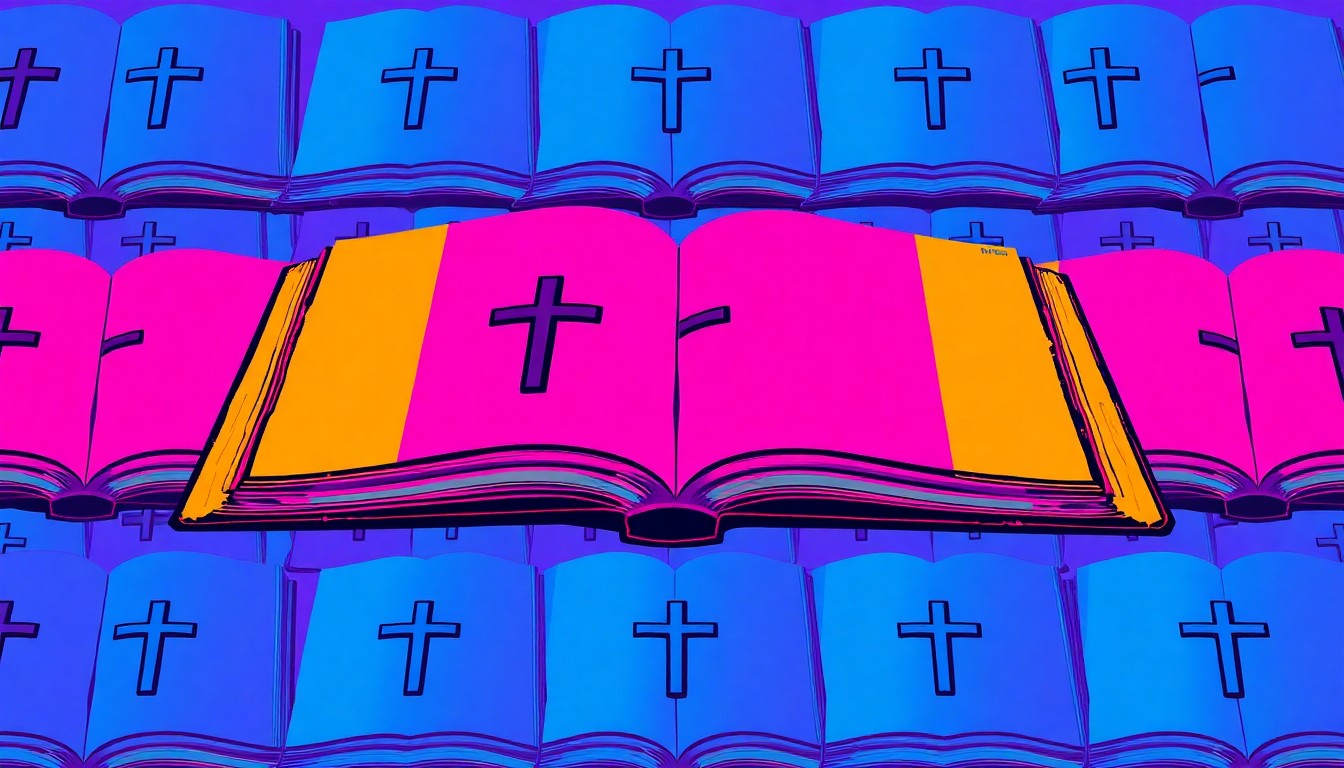 A pop art interpretation of the religious influence on Texas' proposed mandatory reading list for public schools.San Antonio Today
The Texas State Board of Education has given preliminary approval to a mandatory reading list for public schools starting in 2030. The original list, which included over 300 books, faced criticism for its length, lack of diversity, and emphasis on Christian texts. The revised list, proposed by a Republican member, cuts about 100 readings but still includes biblical material. Educators have raised concerns about the feasibility of teaching the full list within a school year, and some have called for more teacher input in the process.
Why it matters
The reading list decision is significant as it reflects ongoing debates over the role of religion and diversity in public education curricula. Critics argue the list's Christian focus and exclusion of certain authors could alienate non-Christian students and limit exposure to diverse perspectives. Supporters believe the biblical material will help students understand the influence of Christianity in U.S. history.
The details
The Texas Education Agency initially recommended around 300 books for the reading list, far exceeding the state's requirement of at least one literary work per grade. The original list included childhood favorites as well as biblical texts like "The Parable of the Prodigal Son" and "The Road to Damascus". Critics raised concerns about the underrepresentation of women, Hispanic, and Black authors. The revised list, proposed by Republican member Keven Ellis, cut about 100 readings, though it still includes Bible texts. Educators have argued the full list would be "mathematically impossible" to teach within a typical school year.
- The Texas State Board of Education gave preliminary approval to the reading list on Thursday, April 10, 2026.
- The board will have multiple opportunities to revise the list before a final vote in June 2026.
The players
Keven Ellis
Republican member of the Texas State Board of Education who proposed the revised reading list.
Julie Pickren
Republican member of the Texas State Board of Education who expressed concern over the removal of writings from Douglass and Washington.
Brandon Hall
Republican member of the Texas State Board of Education who views the list as a "starting place".
Markesha Tisby
President of the Texas Council of Teachers of English Language Arts, who argued the list should be created with more teacher expertise.
Sumya Paruchuri
A recent graduate of the Texas public school system who expressed concerns about the standardization of readings.
What they’re saying
“There are other states, many other states, who have recommended reading lists. To my knowledge, there is not one that will have a required reading list as robust as this, that will be common for every student across the state.”
— Keven Ellis, Republican member, Texas State Board of Education
“I believe that an acceptable list would be one that's created with teacher expertise, leaning on the strengths of everyone involved in this work. There's still time. There's no prize for making this decision quickly. We have time to build something great for our Texas students, and they deserve it.”
— Markesha Tisby, President, Texas Council of Teachers of English Language Arts
“As a recent graduate of the Texas public school system, I care deeply about the curriculum my friends and family will be taught. The best taught English classes that I had were when the teachers were passionate about the text they were teaching, whether they were fans of the work or understood the educational opportunities they presented for students. The required reading list's attempt to standardize readings is unhelpful and counterproductive to the real needs of students and educators.”
— Sumya Paruchuri, Freshman, University of North Texas
What’s next
The Texas State Board of Education will have additional opportunities to suggest changes and offer feedback on the reading list before the final vote in June 2026.
The takeaway
The Texas reading list decision highlights the ongoing debate over the role of religion, diversity, and teacher input in public education curricula. While the board aims to create a robust, standardized reading list, critics argue the current proposal fails to adequately reflect the needs and perspectives of students and educators.
San Antonio top stories



San Antonio events

Apr. 10, 2026
Disney On Ice presents Jump In!
Apr. 10, 2026
San Antonio Spurs vs. Dallas Mavericks
Apr. 10, 2026
Godfrey