- Today
- Holidays
- Birthdays
- Reminders
- Cities
- Atlanta
- Austin
- Baltimore
- Berwyn
- Beverly Hills
- Birmingham
- Boston
- Brooklyn
- Buffalo
- Charlotte
- Chicago
- Cincinnati
- Cleveland
- Columbus
- Dallas
- Denver
- Detroit
- Fort Worth
- Houston
- Indianapolis
- Knoxville
- Las Vegas
- Los Angeles
- Louisville
- Madison
- Memphis
- Miami
- Milwaukee
- Minneapolis
- Nashville
- New Orleans
- New York
- Omaha
- Orlando
- Philadelphia
- Phoenix
- Pittsburgh
- Portland
- Raleigh
- Richmond
- Rutherford
- Sacramento
- Salt Lake City
- San Antonio
- San Diego
- San Francisco
- San Jose
- Seattle
- Tampa
- Tucson
- Washington
Rio Grande City Today
By the People, for the People
U.S. Military Using Drones to Install Border Barriers
Autonomous aircraft now aiding in physical fortification of southern border
Mar. 31, 2026 at 8:05am
Got story updates? Submit your updates here. ›
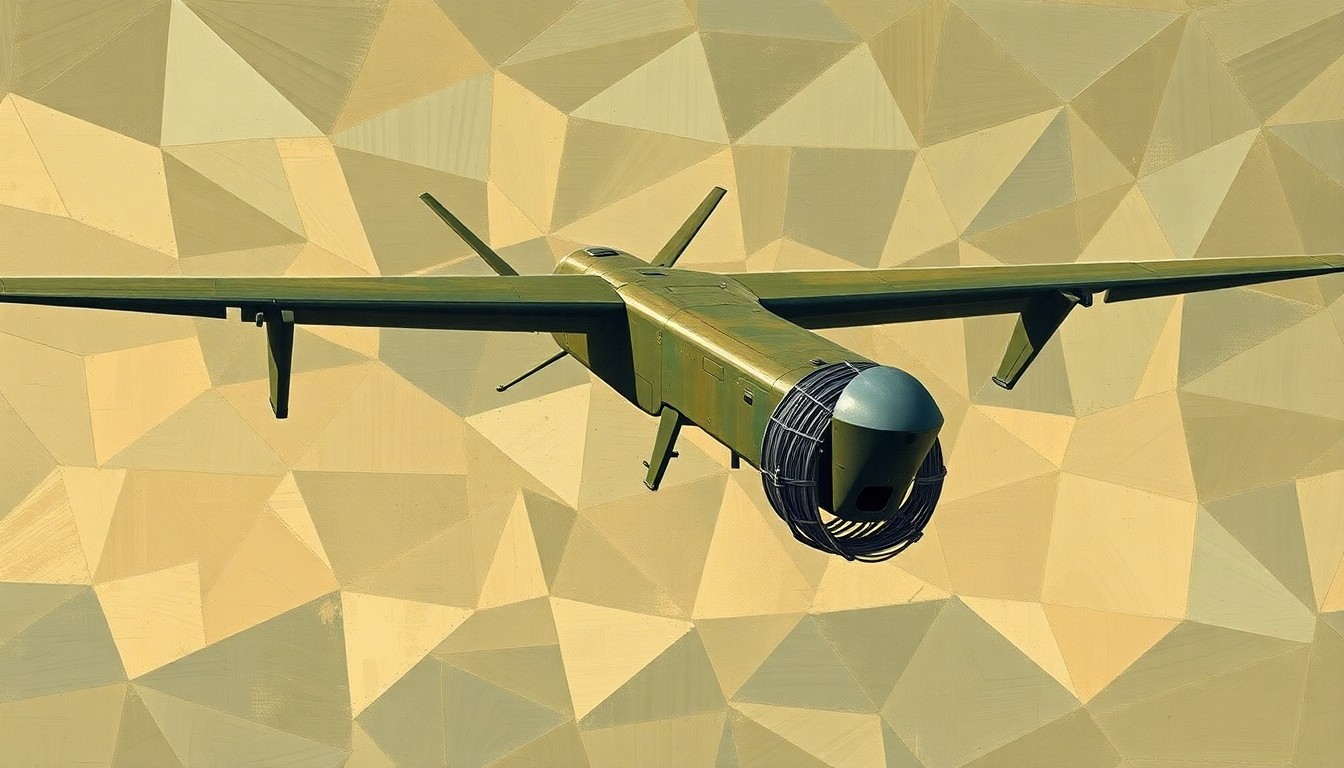 Autonomous drones are now being used to transport and install physical border barriers, expanding their role in homeland security operations.Rio Grande City Today
The U.S. Joint Task Force-Southern Border is expanding the use of unmanned aerial vehicles (UAVs) beyond surveillance and resupply, now employing them to help install concertina wire and other physical barriers along the U.S.-Mexico border. This marks a shift in the role of autonomous systems, which are now being integrated directly into border fortification operations.
Why it matters
The deployment of drones for border barrier emplacement represents an evolution in how autonomous systems are being leveraged for homeland security. It expands their role from just monitoring and logistics to actively shaping the physical terrain, creating a more layered and technology-enabled border security framework.
The details
The task force is using the Tactical Resupply Unmanned Aircraft System (TRUAS), specifically the TRV-150C quadcopter, to transport and position rolls of concertina wire and other barrier materials in hard-to-access areas. This allows border units to quickly establish or reinforce obstacles without exposing personnel to open terrain for prolonged periods. The drones can carry up to 150 pounds, making them capable of transporting not just supplies but also the physical materials needed for rapid barrier emplacement.
- The expanded drone deployment began in March 2026.
The players
Joint Task Force–Southern Border (JTF-SB)
A U.S. military task force responsible for security operations along the southern border.
Tactical Resupply Unmanned Aircraft System (TRUAS)
A quadcopter-style unmanned aerial vehicle used by the JTF-SB for autonomous cargo transport and now also for border barrier emplacement.
Marine Gunnery Sgt. Abrahim Bosch
The operations chief for Combat Logistics Company within the JTF-SB.
What they’re saying
“The TRV is a game-changer for the last tactical mile. By putting autonomous resupply directly into the hands of our ground squads, we ensure they remain sustained and mission-ready without waiting on traditional logistics chains.”
— Marine Gunnery Sgt. Abrahim Bosch, Operations chief, Combat Logistics Company, JTF-SB
What’s next
The JTF-SB plans to continue expanding the use of drones for border barrier emplacement in the coming months, integrating the technology more deeply into its overall border security operations.
The takeaway
The deployment of drones for physical border fortification marks a significant evolution in how autonomous systems are being leveraged for homeland security, expanding their role from just monitoring and logistics to actively shaping the terrain and creating a more layered, technology-enabled border security framework.