- Today
- Holidays
- Birthdays
- Reminders
- Cities
- Atlanta
- Austin
- Baltimore
- Berwyn
- Beverly Hills
- Birmingham
- Boston
- Brooklyn
- Buffalo
- Charlotte
- Chicago
- Cincinnati
- Cleveland
- Columbus
- Dallas
- Denver
- Detroit
- Fort Worth
- Houston
- Indianapolis
- Knoxville
- Las Vegas
- Los Angeles
- Louisville
- Madison
- Memphis
- Miami
- Milwaukee
- Minneapolis
- Nashville
- New Orleans
- New York
- Omaha
- Orlando
- Philadelphia
- Phoenix
- Pittsburgh
- Portland
- Raleigh
- Richmond
- Rutherford
- Sacramento
- Salt Lake City
- San Antonio
- San Diego
- San Francisco
- San Jose
- Seattle
- Tampa
- Tucson
- Washington
Port Arthur Today
By the People, for the People
Trump's LNG Ultimatum Targets Europe's Gas Dependence
As Iran strikes cripple Qatar's LNG exports, U.S. leverages Europe's energy vulnerability
Mar. 29, 2026 at 10:38am
Got story updates? Submit your updates here. ›
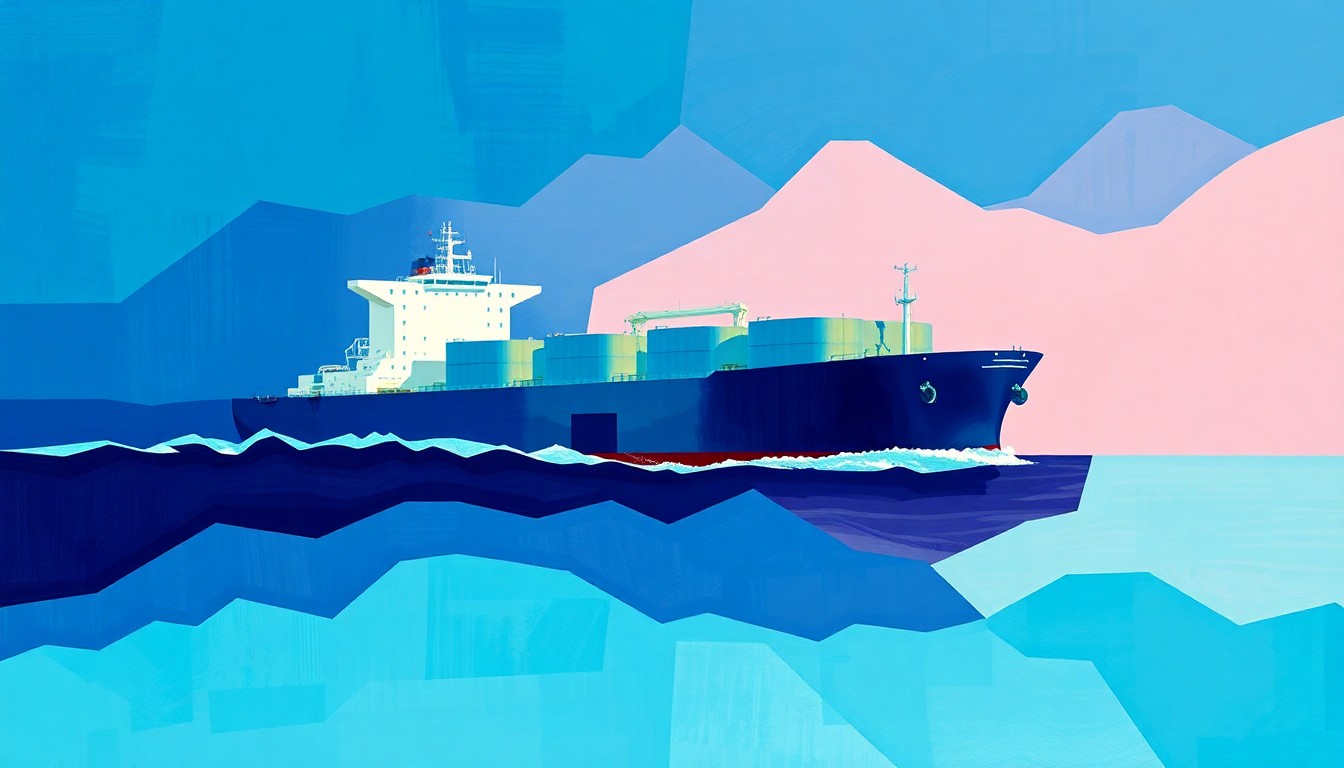 As the war in the Gulf disrupts global gas supply, the scramble for energy security is reshaping the geopolitical landscape.Port Arthur Today
A series of Iranian attacks have knocked out an estimated 17% of Qatar's LNG export capacity at the critical Ras Laffan facility, tightening an already panicked global gas market. At the same time, the Strait of Hormuz crisis has exposed Europe's growing dependence on U.S. liquefied natural gas (LNG) after its pivot away from Russian pipeline gas. Amid this turmoil, the Trump administration has issued a stark warning to the EU - pass the Turnberry trade deal or lose favorable access to American LNG exports.
Why it matters
This crisis highlights how the illegal U.S.-Israeli war on Iran is accelerating a planned transition in global gas markets, shifting leverage from Qatar and the Gulf to U.S. LNG exporters and an Israeli-linked Eastern Mediterranean gas corridor. Europe's battered consumers face the prospect of higher energy prices and reduced supply options as this new gas order takes shape.
The details
Long before the current conflict, North America was quietly preparing to dominate global LNG exports, with U.S. and Canadian terminals scheduled to add over 17 bcf/d of new liquefaction capacity by 2029. The destruction of Qatar's Ras Laffan complex and the closure of the Strait of Hormuz have now created a brutal opportunity for this infrastructure. Meanwhile, the EU has formalized an Eastern Mediterranean gas corridor through Israel and Egypt as a diversification strategy, a framework that is now being aggressively promoted as a security imperative.
- In March 2026, Iranian strikes knocked out an estimated 17% of Qatar's LNG export capacity at Ras Laffan for 3-5 years.
- The Strait of Hormuz crisis erupted around the same time, exposing Europe's growing dependence on U.S. LNG.
The players
Venture Global LNG
A U.S. LNG exporter that had its CP2 terminal in Louisiana approved for exports by the Trump administration in 2025.
Cheniere Energy
The largest U.S. LNG exporter, which received $370 million in 'alternative fuel' tax credits under the Trump administration.
European Union
Has formalized an Eastern Mediterranean gas corridor through Israel and Egypt as a diversification strategy, now being promoted as a security imperative.
Israel, Greece, and Cyprus
Participate in the '3+1' format with the U.S. to promote energy cooperation and infrastructure protection in the Eastern Mediterranean.
Trump administration
Approved new LNG export projects, provided tax credits to major exporters, and leveraged Europe's energy vulnerability to push the Turnberry trade deal.
What they’re saying
“If the European Parliament amended or rejected the Turnberry legislation, 'the terms may not be as favourable' and there were 'other buyers out there'.”
— Andrew Puzder, U.S. ambassador
What’s next
The European Parliament, national parliaments, and oversight bodies should demand full transparency on long-term LNG contracts signed since 2022, open inquiries into the role of U.S. and Israeli officials in shaping EU energy policy, and press for publication of pre-war risk assessments on Hormuz, Ras Laffan, and Eastern Mediterranean infrastructure.
The takeaway
This crisis highlights how the illegal U.S.-Israeli war on Iran is accelerating a planned transition in global gas markets, shifting leverage from Qatar and the Gulf to U.S. LNG exporters and an Israeli-linked Eastern Mediterranean gas corridor. Europe's battered consumers face the prospect of higher energy prices and reduced supply options as this new gas order takes shape.