- Today
- Holidays
- Birthdays
- Reminders
- Cities
- Atlanta
- Austin
- Baltimore
- Berwyn
- Beverly Hills
- Birmingham
- Boston
- Brooklyn
- Buffalo
- Charlotte
- Chicago
- Cincinnati
- Cleveland
- Columbus
- Dallas
- Denver
- Detroit
- Fort Worth
- Houston
- Indianapolis
- Knoxville
- Las Vegas
- Los Angeles
- Louisville
- Madison
- Memphis
- Miami
- Milwaukee
- Minneapolis
- Nashville
- New Orleans
- New York
- Omaha
- Orlando
- Philadelphia
- Phoenix
- Pittsburgh
- Portland
- Raleigh
- Richmond
- Rutherford
- Sacramento
- Salt Lake City
- San Antonio
- San Diego
- San Francisco
- San Jose
- Seattle
- Tampa
- Tucson
- Washington
New 3-Pill Treatment Could Eliminate Centuries-Old Sleeping Sickness
Acoziborole, a single-dose treatment, cleared EU regulatory review and could be in use for sleeping sickness patients by 2027.
Apr. 8, 2026 at 7:00am
Got story updates? Submit your updates here. ›
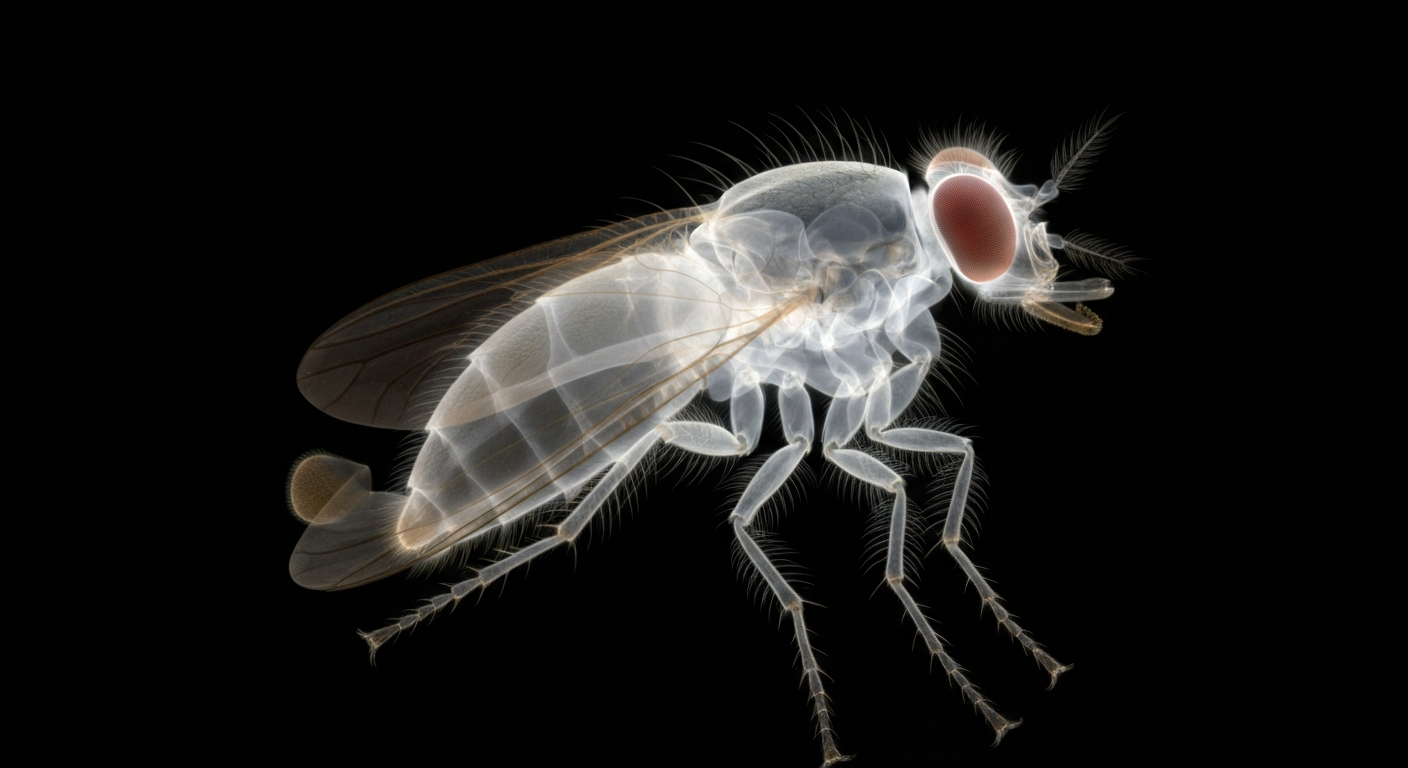 A ghostly X-ray view of the internal anatomy of a tsetse fly, the insect vector that spreads the sleeping sickness parasite.Houston Today
After decades of dangerous treatments for sleeping sickness, a new three-pill, single-dose treatment called acoziborole has been cleared for use in the EU. The treatment, developed by the Drugs for Neglected Diseases Initiative (DNDi), is well-tolerated with only mild side effects and could help eliminate the disease by 2030 according to the World Health Organization.
Why it matters
Sleeping sickness, which is spread by tsetse flies, has long been a major health issue in remote, rural areas of Africa where healthcare access is limited. Previous treatments were difficult to administer and came with serious side effects, deterring many patients from seeking care. The new acoziborole treatment could dramatically simplify patient care and improve access, accelerating progress toward the elimination of this centuries-old disease.
The details
Acoziborole is the first single-dose treatment for sleeping sickness, requiring just three pills taken together. In clinical trials, the only side effect found was a mild to moderate headache. This is a major improvement over previous treatments, one of which caused a burning sensation in the veins and killed about 1 in 20 patients. The new treatment works on both stages of the illness, unlike some earlier drugs that only targeted one stage.
- In March 2026, a committee of the European Medicines Agency cleared acoziborole for use.
- The drug is expected to be in use for sleeping sickness patients by 2027.
The players
Drugs for Neglected Diseases Initiative (DNDi)
A nonprofit organization founded in 2003 to develop treatments for illnesses that primarily affect low-income countries, where pharmaceutical companies lack financial incentive to invest. DNDi partnered with Sanofi to develop acoziborole, with funding from sources including the Gates Foundation.
Dr. Gerardo Priotto
Leads the World Health Organization's efforts against sleeping sickness. He says acoziborole is a "transformative tool" that can "dramatically simplify patient care, improve access to treatment and accelerate progress toward the elimination of sleeping sickness."
Dr. Wilfried Mutombo Kalonji
Head of West and Central Africa Clinical Operations for DNDi, who helped lead the clinical trials of acoziborole in the remote South Ubangi province of the Democratic Republic of Congo.
Dr. Peter Hotez
Dean of the National School of Tropical Medicine at Baylor College of Medicine in Houston, who notes that "like many tropical diseases, sleeping sickness is a disease of the poor" and that funding will be crucial for the drug's reach.
Dr. Stéphane Hugonnet
Worked on the clinical trials of acoziborole and leads DNDi's sleeping sickness response. He notes that fear of the previous difficult treatments kept many patients from seeking care, even when they knew they were sick.
What they’re saying
“For decades, available treatments were difficult to use. These challenges were especially severe in remote, rural areas, where most cases occur and health services are limited.”
— Dr. Gerardo Priotto, Leads the World Health Organization's efforts against sleeping sickness
“Its single-dose, well-tolerated regimen can dramatically simplify patient care, improve access to treatment and accelerate progress toward the elimination of sleeping sickness. It is a transformative tool for both patients and public health programs.”
— Dr. Gerardo Priotto, Leads the World Health Organization's efforts against sleeping sickness
“We can't dream to have better than this.”
— Dr. Wilfried Mutombo Kalonji, Head of West and Central Africa Clinical Operations for DNDi
What’s next
Acoziborole still needs review by the DRC Ministry of Health and the WHO before treatment guidelines can be updated and other countries can authorize the drug. Global health experts are also watching the funding picture, as much of the progress so far has relied on international funding, and cuts to US and Western global health programs could limit the drug's reach.
The takeaway
This new three-pill, single-dose treatment for sleeping sickness represents a major breakthrough that could help eliminate this centuries-old disease by 2030. By dramatically simplifying patient care and improving access to treatment, especially in remote rural areas, acoziborole has the potential to transform the fight against sleeping sickness and save countless lives.