- Today
- Holidays
- Birthdays
- Reminders
- Cities
- Atlanta
- Austin
- Baltimore
- Berwyn
- Beverly Hills
- Birmingham
- Boston
- Brooklyn
- Buffalo
- Charlotte
- Chicago
- Cincinnati
- Cleveland
- Columbus
- Dallas
- Denver
- Detroit
- Fort Worth
- Houston
- Indianapolis
- Knoxville
- Las Vegas
- Los Angeles
- Louisville
- Madison
- Memphis
- Miami
- Milwaukee
- Minneapolis
- Nashville
- New Orleans
- New York
- Omaha
- Orlando
- Philadelphia
- Phoenix
- Pittsburgh
- Portland
- Raleigh
- Richmond
- Rutherford
- Sacramento
- Salt Lake City
- San Antonio
- San Diego
- San Francisco
- San Jose
- Seattle
- Tampa
- Tucson
- Washington
Strait of Hormuz Oil Crisis Spreads Westward
Surging prices, fuel shortages, and demand destruction ripple across the globe as the closure of a key oil chokepoint enters its second month.
Mar. 30, 2026 at 10:04pm
Got story updates? Submit your updates here. ›
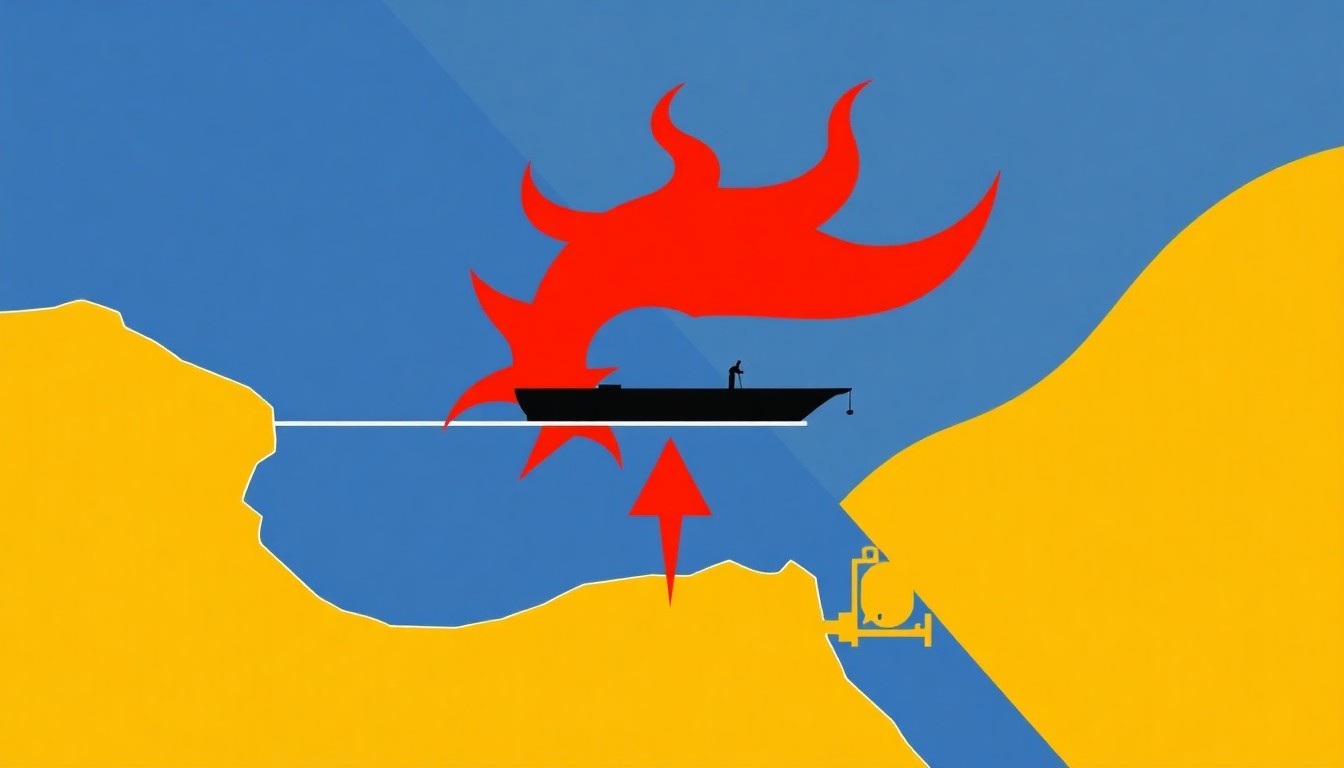 As the Strait of Hormuz crisis enters its second month, the global economy faces the prospect of a prolonged energy supply shock that could reshape geopolitics and central bank policies.Houston Today
A major oil supply shock from the closure of the Strait of Hormuz has now reached the one-month mark, with prices surging, growth forecasts being cut worldwide, and fuel shortages emerging across Asia. Industry experts warn the crisis is only beginning, as the impact spreads westward to Europe and the global economy faces the prospect of a prolonged, 1970s-style oil shock.
Why it matters
The Strait of Hormuz closure has removed a significant portion of global oil and gas supply, creating a massive supply-demand imbalance that is forcing painful adjustments around the world. This crisis has the potential to trigger a severe economic downturn if the strait remains closed for an extended period, with major implications for inflation, central bank policies, and political stability.
The details
The closure of the Strait of Hormuz is estimated to be reducing global oil flows by around 11 million barrels per day, leaving a roughly 9 million-barrel shortfall compared to pre-war demand levels. Emergency stockpile releases and sanctions waivers have provided temporary relief, but these interventions are finite. As these buffers are depleted, oil prices are expected to surge, potentially reaching unprecedented levels of $200 per barrel if the crisis persists.
- The Strait of Hormuz closure entered its one-month mark on March 30, 2026.
- The International Energy Agency coordinated a record release of strategic oil reserves in the first month of the crisis.
- The U.S. government temporarily lifted sanctions on Russian and Iranian oil to increase global supply.
- Asian countries have already begun curbing fuel exports and rationing consumption due to shortages.
- European nations are bracing for potential diesel shortages and surging prices in the coming weeks.
The players
Patrick Pouyanne
Chief Executive Officer of TotalEnergies SE.
Greg Sharenow
Head of Pimco's commodity portfolio investment team.
Mike Sommers
CEO of the American Petroleum Institute.
Jeff Currie
Chief strategy officer of energy pathways at Carlyle Group Inc.
Aldo Spanjer
Head of energy strategy at BNP Paribas.
What they’re saying
“We cannot have 20% of the crude oil, which is exported globally, stranded in the Gulf and 20% of the LNG capacity stranded, without any consequence.”
— Patrick Pouyanne, Chief Executive Officer, TotalEnergies SE
“When you start talking about what price that is, we're venturing into the unknown. If that is the adjustment that the market has to make, you're going to find pain the hard way.”
— Greg Sharenow, Head of Pimco's commodity portfolio investment team
“The playbook is pretty bare at this point.”
— Mike Sommers, CEO, American Petroleum Institute
“If you think about the magnitude of the shock coming out of the Gulf right now, you could lose between 5-10 million barrels a day of demand, which will have a significant impact similar to the seventies. The main message is that we're going to get the energy transition forced on us in a very painful way that's going to happen very quickly.”
— Jeff Currie, Chief strategy officer of energy pathways, Carlyle Group Inc.
“For as long as Hormuz remains closed, both oil and gas markets don't balance. The significant demand destruction we would require to balance oil and gas markets in a sustained Hormuz outage, will require significantly higher prices than today.”
— Aldo Spanjer, Head of energy strategy, BNP Paribas
What’s next
The judge in the case will decide on Tuesday whether or not to allow Walker Reed Quinn out on bail.
The takeaway
This crisis highlights the global economy's vulnerability to disruptions in critical energy chokepoints, raising urgent questions about energy security, the pace of the energy transition, and the ability of policymakers to manage severe supply shocks. The fallout could reshape geopolitics, central bank policies, and the political landscape in the months ahead.