- Today
- Holidays
- Birthdays
- Reminders
- Cities
- Atlanta
- Austin
- Baltimore
- Berwyn
- Beverly Hills
- Birmingham
- Boston
- Brooklyn
- Buffalo
- Charlotte
- Chicago
- Cincinnati
- Cleveland
- Columbus
- Dallas
- Denver
- Detroit
- Fort Worth
- Houston
- Indianapolis
- Knoxville
- Las Vegas
- Los Angeles
- Louisville
- Madison
- Memphis
- Miami
- Milwaukee
- Minneapolis
- Nashville
- New Orleans
- New York
- Omaha
- Orlando
- Philadelphia
- Phoenix
- Pittsburgh
- Portland
- Raleigh
- Richmond
- Rutherford
- Sacramento
- Salt Lake City
- San Antonio
- San Diego
- San Francisco
- San Jose
- Seattle
- Tampa
- Tucson
- Washington
Food-as-Medicine Program Boosts Quality of Life for Heart Failure Patients
FOOD-HF trial finds food supplementation improves patient wellbeing, though impact on hospitalization rates is limited
Apr. 12, 2026 at 8:39pm
Got story updates? Submit your updates here. ›
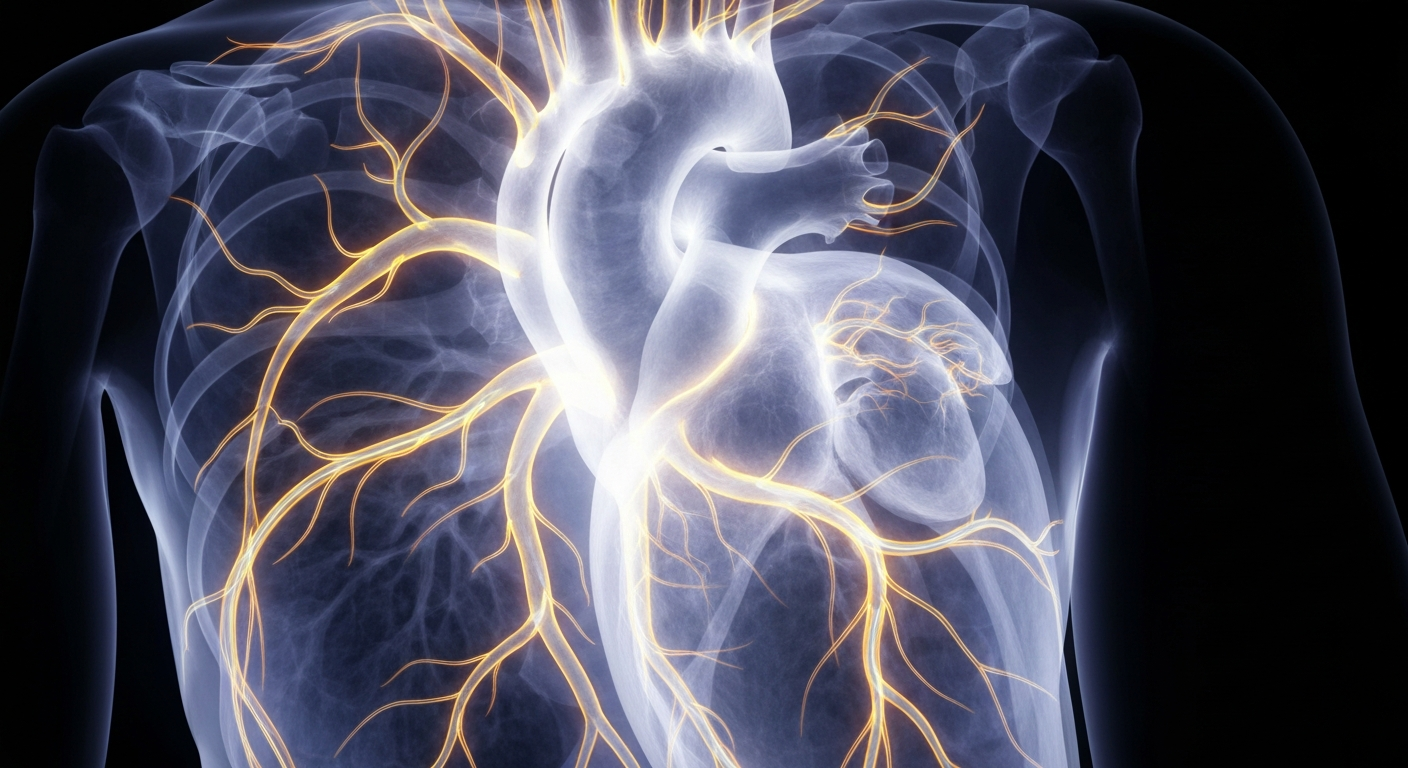 An X-ray-like visualization of the cardiovascular system highlights the critical role of nutrition in managing heart failure.Dallas Today
A clinical trial called FOOD-HF has found that providing heart failure patients with medically tailored meals or fresh produce supplementation can significantly improve their quality of life, even if it does not immediately reduce hospitalization rates. The study, conducted at UT Southwestern Medical Center and Parkland Hospital in Dallas, tested different food delivery models to evaluate the feasibility and efficacy of integrating nutrition into heart failure treatment.
Why it matters
Managing heart failure often requires strict dietary restrictions, but standard dietary counseling often fails to account for barriers like food insecurity or the difficulty of preparing low-sodium meals. The 'Food is Medicine' movement aims to bridge this gap by treating healthy food as a prescribed clinical intervention, but more research is needed to determine the long-term clinical impact of these programs.
The details
The FOOD-HF trial involved 150 patients hospitalized for acute heart failure. Participants were randomized into three groups: those receiving medically tailored meals, those receiving fresh produce supplementation, and a control group receiving usual care. The food-receiving groups were further split into 'conditional' and 'unconditional' subgroups, with the conditional group only receiving food if they adhered to medical follow-ups and pharmacy pickups. While the food supplementation groups saw a significant improvement in quality of life, there was no statistically significant difference in the rate of heart failure hospitalizations or emergency department visits compared to the control group.
- The FOOD-HF trial was conducted over a 90-day period.
- The results of the trial were presented at the American Heart Association (AHA) 2025 session.
The players
UT Southwestern Medical Center
A leading academic medical center in Dallas, Texas, where the FOOD-HF trial was conducted.
Parkland Hospital
A public hospital in Dallas, Texas, that also participated in the FOOD-HF trial.
American Heart Association (AHA)
The organization that has launched the Health Care by Food™ initiative to fund further research on the 'Food is Medicine' approach to treating diet-related chronic diseases.
What’s next
The next frontier of this research will likely focus on the 'conditional' delivery model, where food supplementation is used to increase medication adherence and clinic attendance, with the goal of indirectly improving clinical outcomes through better overall healthcare compliance.
The takeaway
While the 'miracle cure' for heart failure readmissions remains elusive, the FOOD-HF trial demonstrates that integrating nutrition into the clinical plan can significantly improve patient quality of life. As the 'Food is Medicine' movement continues to evolve, healthcare organizations will need to navigate the complexities of prescribing non-pharmaceutical interventions to achieve definitive clinical efficacy.
Dallas top stories



Dallas events

Apr. 13, 2026
Victor Jones
Apr. 14, 2026
Tedeschi Trucks Band: Future Soul 2026 Tour
Apr. 15, 2026
Escape the Fate Vip