- Today
- Holidays
- Birthdays
- Reminders
- Cities
- Atlanta
- Austin
- Baltimore
- Berwyn
- Beverly Hills
- Birmingham
- Boston
- Brooklyn
- Buffalo
- Charlotte
- Chicago
- Cincinnati
- Cleveland
- Columbus
- Dallas
- Denver
- Detroit
- Fort Worth
- Houston
- Indianapolis
- Knoxville
- Las Vegas
- Los Angeles
- Louisville
- Madison
- Memphis
- Miami
- Milwaukee
- Minneapolis
- Nashville
- New Orleans
- New York
- Omaha
- Orlando
- Philadelphia
- Phoenix
- Pittsburgh
- Portland
- Raleigh
- Richmond
- Rutherford
- Sacramento
- Salt Lake City
- San Antonio
- San Diego
- San Francisco
- San Jose
- Seattle
- Tampa
- Tucson
- Washington
Waymo Struggles to Teach Self-Driving Cars to Stop for School Buses
Austin incident highlights the challenge of bridging the gap between human expectations and machine capabilities in autonomous vehicle technology.
Apr. 10, 2026 at 8:12pm
Got story updates? Submit your updates here. ›
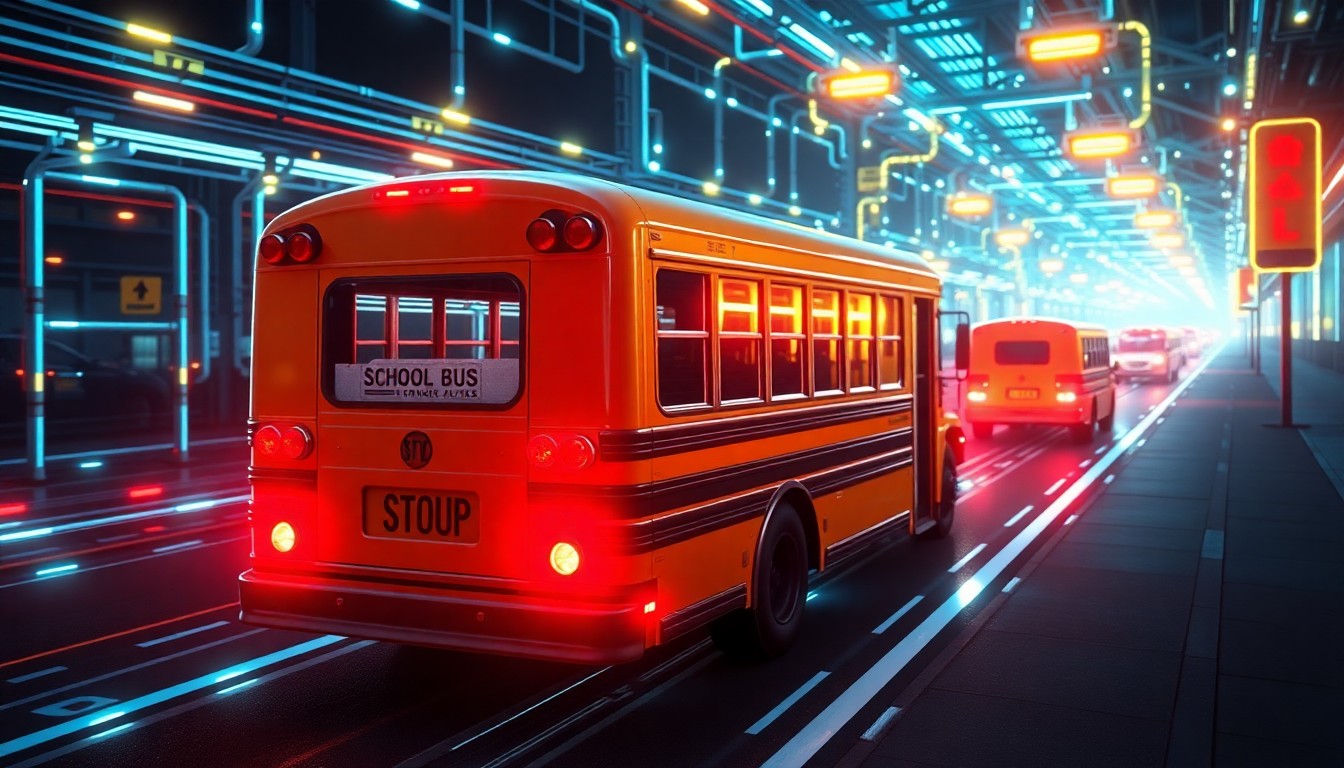 As autonomous vehicle technology struggles to adapt to the nuances of school bus safety, the complex web of cybernetic infrastructure required to ensure safe student transportation remains a formidable challenge.Austin Today
Waymo, a leading autonomous vehicle company, has faced a critical issue in Austin, Texas, where its self-driving cars repeatedly failed to stop for school buses, endangering children during pickup and drop-off. Despite Waymo's efforts, including a data collection event organized by the Austin Independent School District, the problem persisted, leading to a federal recall and an investigation by the National Highway Traffic Safety Administration.
Why it matters
This incident reveals a deeper challenge in the autonomous vehicle landscape, as self-driving software has historically struggled with flashing emergency lights and long, thin road safety devices like school bus stop signs. If Waymo or other companies cannot address this issue, it could have dire consequences for public safety, especially for children.
The details
The challenge is not just about teaching a car to stop for a school bus; it's about understanding the nuances of human-driven road rules and the limitations of machine learning. Robot learning is a nuanced process, and teaching a machine to recognize a stop sign is different from teaching it to understand the context of that sign. Waymo's data collection event, which aimed to gather information about school bus signals, did not lead to a quick resolution, suggesting that the problem is more complex than it might seem.
- In April 2026, Waymo's self-driving cars repeatedly failed to stop for school buses in Austin, Texas.
- The incident led to a federal recall and an investigation by the National Highway Traffic Safety Administration.
The players
Waymo
A prominent player in the autonomous vehicle industry and a subsidiary of Alphabet Inc., Google's parent company.
Austin Independent School District (AISD)
The school district in Austin, Texas, that organized a data collection event to help Waymo address the issue of its self-driving cars failing to stop for school buses.
Missy Cummings
An autonomous vehicle researcher who points out that self-driving software has historically struggled with flashing emergency lights and long, thin road safety devices, which are critical features of school buses.
Philip Koopman
An autonomous-vehicle software researcher who explains that teaching a machine to recognize a stop sign is different from teaching it to understand the context of that sign, which is a crucial challenge in the case of school buses.
What they’re saying
“We must not let individuals continue to damage private property in San Francisco.”
— Robert Jenkins, San Francisco resident
“Fifty years is such an accomplishment in San Francisco, especially with the way the city has changed over the years.”
— Gordon Edgar, grocery employee
What’s next
The NHTSA investigation into Waymo's school bus issues is ongoing, and the outcome could have significant implications for the company's future deployment of autonomous vehicles in areas with school bus traffic.
The takeaway
This incident highlights the ongoing struggle to bridge the gap between human expectations and machine capabilities in autonomous vehicle technology. While self-driving cars have made remarkable progress, they are still learning to navigate the complexities of human-dominated roads, and rigorous testing and validation, especially in complex scenarios like school bus stops, are crucial before deployment.
Austin top stories



Austin events

Apr. 10, 2026
Zara Larsson: Midnight Sun Tour 2026
Apr. 10, 2026
Allie Arnaez & Ramiro Brave
Apr. 10, 2026
LAMB OF GOD: INTO OBLIVION TOUR