- Today
- Holidays
- Birthdays
- Reminders
- Cities
- Atlanta
- Austin
- Baltimore
- Berwyn
- Beverly Hills
- Birmingham
- Boston
- Brooklyn
- Buffalo
- Charlotte
- Chicago
- Cincinnati
- Cleveland
- Columbus
- Dallas
- Denver
- Detroit
- Fort Worth
- Houston
- Indianapolis
- Knoxville
- Las Vegas
- Los Angeles
- Louisville
- Madison
- Memphis
- Miami
- Milwaukee
- Minneapolis
- Nashville
- New Orleans
- New York
- Omaha
- Orlando
- Philadelphia
- Phoenix
- Pittsburgh
- Portland
- Raleigh
- Richmond
- Rutherford
- Sacramento
- Salt Lake City
- San Antonio
- San Diego
- San Francisco
- San Jose
- Seattle
- Tampa
- Tucson
- Washington
What You Need to Know About Cicada, the New Covid Variant
The latest Omicron offshoot has an unusually high number of mutations, raising concerns about immune evasion.
Apr. 8, 2026 at 9:41pm
Got story updates? Submit your updates here. ›
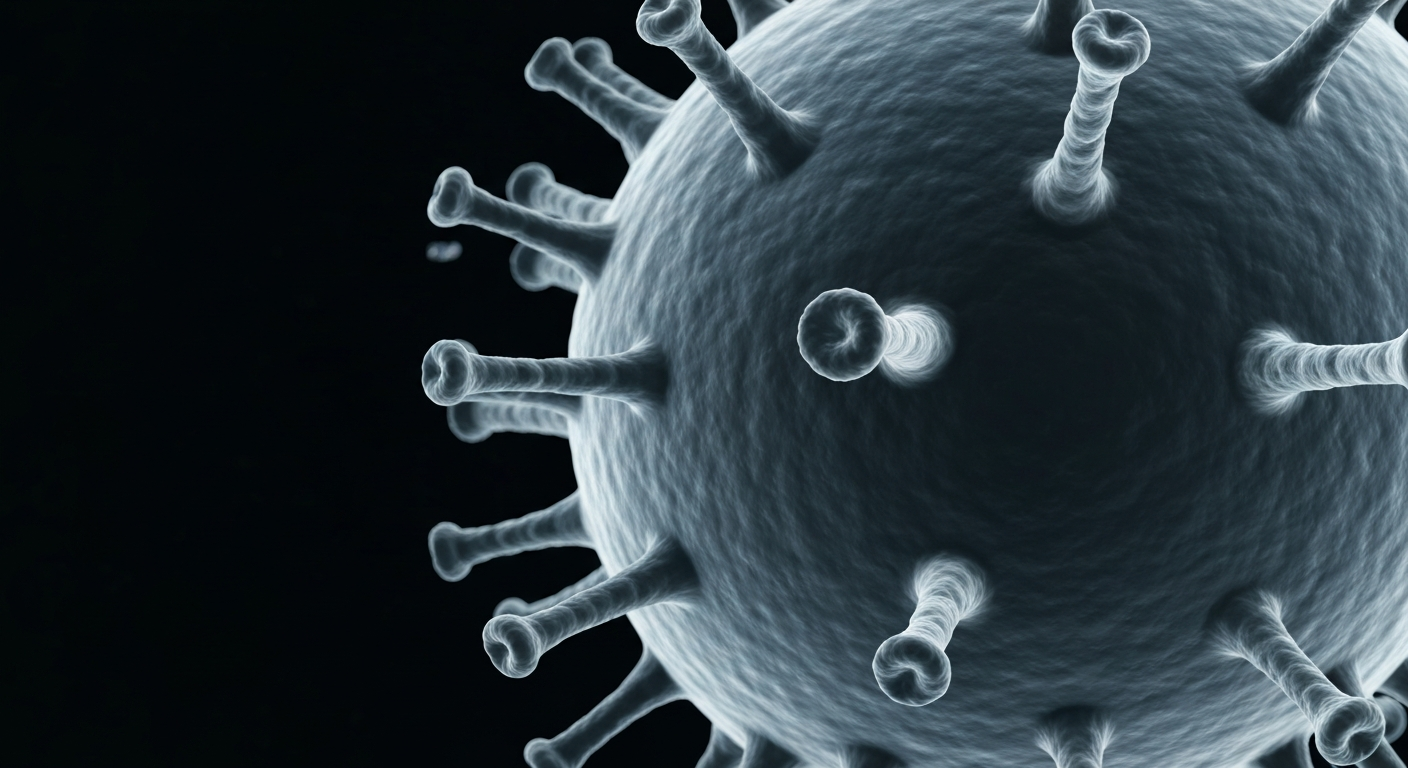 An X-ray view of the SARS-CoV-2 virus reveals the complex internal structures that continue to evolve, posing new challenges in the fight against COVID-19.Today in Nashville
A new COVID-19 variant called Cicada (BA.3.2) has emerged, characterized by an unusually high number of mutations in the Spike protein. Experts warn this could make the variant more capable of evading existing immunity from prior infection or vaccines. While Cicada causes similar symptoms to previous variants, there are concerns it may be less susceptible to current vaccines.
Why it matters
The continued evolution of SARS-CoV-2 variants like Cicada highlights the ongoing challenges of the pandemic, even as many countries have lifted major restrictions. Highly mutated variants raise the possibility of reduced vaccine effectiveness, potentially requiring updated shots to maintain protection against severe disease.
The details
Cicada, also known as BA.3.2, has around 70-75 mutations in its Spike protein, significantly more than previous Omicron subvariants. This high mutation rate could allow the variant to partially bypass existing immunity, whether from prior infection or vaccines. Experts warn current vaccines may not be as effective against Cicada, though they are still expected to provide protection against severe illness.
- Cicada was first detected in South Africa in 2024.
- By February 2026, Cicada had spread to 23 countries.
- Cicada first appeared in Switzerland in the fall of 2025 and is now circulating alongside other SARS-CoV-2 variants.
The players
Robert H. Hopkins
An American infectious disease specialist who commented on Cicada's potential to evade immunity.
Kyle B. Enfield
A University of Virginia epidemiologist who wrote about how Cicada's mutations make it more difficult for the immune system to recognize the virus.
William Schaffner
An infectious disease specialist from Vanderbilt University Medical Center in Nashville, Tennessee, who shared his opinion that Cicada does not appear to cause increased severity, hospitalizations or deaths.
What they’re saying
“The number of mutations makes it less likely that current vaccines will be very effective against this variant.”
— Robert H. Hopkins, Infectious disease specialist
“Mutations make it more difficult for the immune system to recognize the virus.”
— Kyle B. Enfield, Epidemiologist
What’s next
According to the World Health Organization, currently authorized COVID-19 vaccines are expected to continue providing protection against severe disease from the Cicada variant.
The takeaway
The emergence of highly mutated COVID-19 variants like Cicada underscores the ongoing need for vigilance, continued monitoring, and potentially updated vaccines to maintain robust protection against the evolving virus.