- Today
- Holidays
- Birthdays
- Reminders
- Cities
- Atlanta
- Austin
- Baltimore
- Berwyn
- Beverly Hills
- Birmingham
- Boston
- Brooklyn
- Buffalo
- Charlotte
- Chicago
- Cincinnati
- Cleveland
- Columbus
- Dallas
- Denver
- Detroit
- Fort Worth
- Houston
- Indianapolis
- Knoxville
- Las Vegas
- Los Angeles
- Louisville
- Madison
- Memphis
- Miami
- Milwaukee
- Minneapolis
- Nashville
- New Orleans
- New York
- Omaha
- Orlando
- Philadelphia
- Phoenix
- Pittsburgh
- Portland
- Raleigh
- Richmond
- Rutherford
- Sacramento
- Salt Lake City
- San Antonio
- San Diego
- San Francisco
- San Jose
- Seattle
- Tampa
- Tucson
- Washington
Nationwide 'No Kings' Protests Draw Millions to Oppose Trump
Rallies, speeches, and some arrests mark nationwide demonstrations against the former president's policies and authority.
Mar. 31, 2026 at 2:38am
Got story updates? Submit your updates here. ›
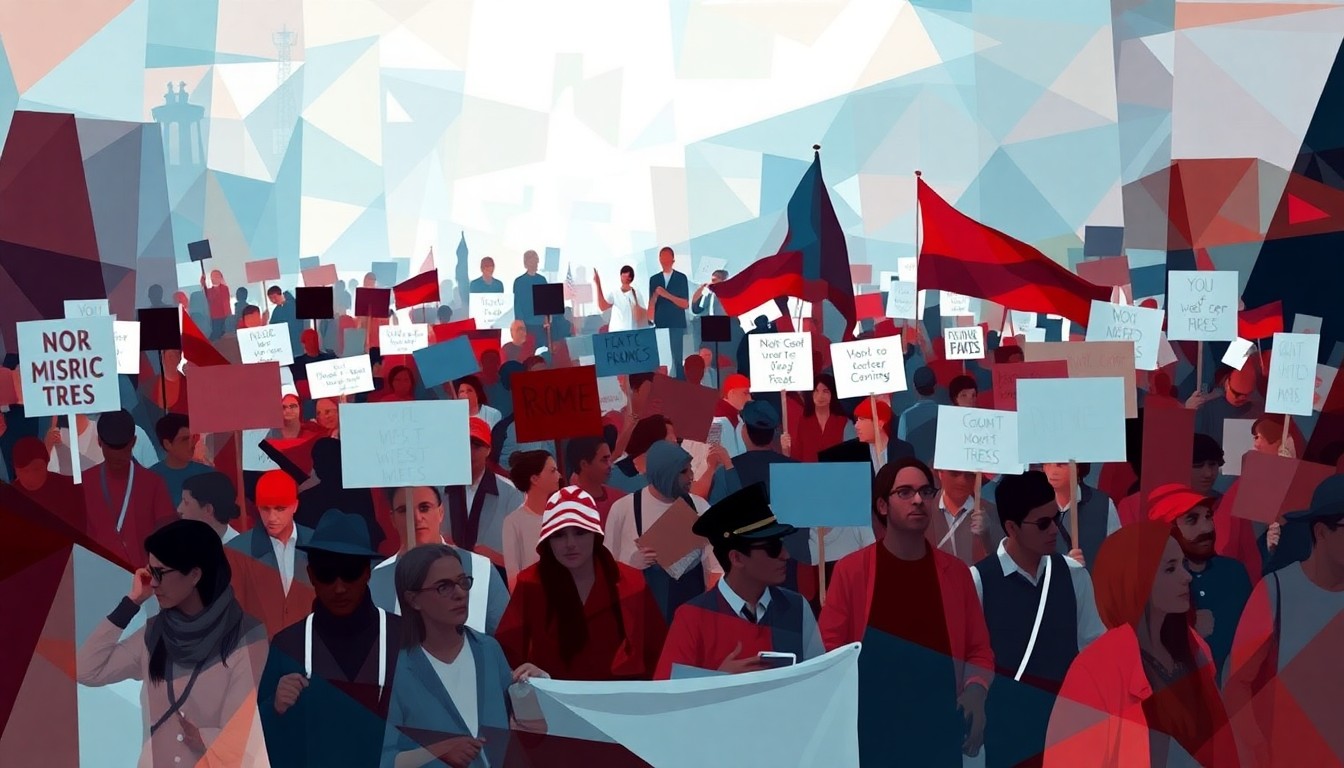 The massive nationwide 'No Kings' protests against the former president's policies and authority reflect the deep divisions in American politics.Today in Nashville
Thousands of demonstrations were held across the United States on Saturday as part of the 'No Kings' protests, with organizers estimating that over 8 million Americans participated in the nationwide events opposing former President Donald Trump. The protests featured speeches, music, and chants, with signs criticizing Trump's policies and executive authority. While most events were peaceful, tensions escalated in Los Angeles, leading to arrests.
Why it matters
The 'No Kings' protests represent a significant grassroots movement against the perceived overreach of executive power and policies of the former Trump administration. The large turnout and coordinated events across the country demonstrate the depth of opposition to Trump and the desire of many Americans to reassert democratic principles.
The details
Demonstrations took place in major cities and smaller communities, with protesters lining streets, waving signs, and chanting in unison. In St. Paul, Minnesota, one of the largest rallies featured speeches from Sen. Bernie Sanders (I-Vt.) and Rep. Ilhan Omar (D-Minnesota), along with a performance by Bruce Springsteen. In Houston, demonstrators carried a large replica of the U.S. Constitution through downtown streets. While most events were peaceful, tensions escalated in Los Angeles, where authorities declared an unlawful assembly and multiple protesters were detained with zip ties.
- The protests took place on Saturday, March 30, 2026.
The players
Donald Trump
The former president whose policies and executive authority were the focus of the 'No Kings' protests.
Bernie Sanders
A U.S. Senator from Vermont who spoke at one of the largest rallies in St. Paul, Minnesota.
Ilhan Omar
A U.S. Representative from Minnesota who spoke at the St. Paul rally.
Bruce Springsteen
A musician who performed at the St. Paul rally.
Robin Gillis
A protester who attended a rally in West Bloomfield, Michigan, holding a sign that read 'We the People have had enough!'
What they’re saying
“'We love America, and we are the real patriots, here.'”
— Robin Gillis, Protester
“'I hope when people are signing this that they feel empowered that it's a declaration to take back their power and to know that we're all together and we are not alone in this.'”
— Lucy Jackson, Activist with the Backbone Campaign
“'The only people who care about these Trump Derangement Therapy Sessions are the reporters who are paid to cover them.'”
— Abigail Jackson, White House Spokesperson
What’s next
The protests have sparked renewed calls for legislative and judicial checks on executive power, as well as increased scrutiny of the former president's policies and actions.
The takeaway
The 'No Kings' protests demonstrate the deep divisions in American politics and the ongoing efforts by many citizens to resist what they perceive as an overreach of presidential authority. The large turnout and coordinated nature of the events suggest that opposition to the former administration remains strong, and that the fight to uphold democratic principles will continue.