- Today
- Holidays
- Birthdays
- Reminders
- Cities
- Atlanta
- Austin
- Baltimore
- Berwyn
- Beverly Hills
- Birmingham
- Boston
- Brooklyn
- Buffalo
- Charlotte
- Chicago
- Cincinnati
- Cleveland
- Columbus
- Dallas
- Denver
- Detroit
- Fort Worth
- Houston
- Indianapolis
- Knoxville
- Las Vegas
- Los Angeles
- Louisville
- Madison
- Memphis
- Miami
- Milwaukee
- Minneapolis
- Nashville
- New Orleans
- New York
- Omaha
- Orlando
- Philadelphia
- Phoenix
- Pittsburgh
- Portland
- Raleigh
- Richmond
- Rutherford
- Sacramento
- Salt Lake City
- San Antonio
- San Diego
- San Francisco
- San Jose
- Seattle
- Tampa
- Tucson
- Washington
Darlington Today
By the People, for the People
NASCAR Darlington Raceway: New Package Review - Is It a Success?
Exploring the nuanced impact of NASCAR's latest short-track package experiment at Darlington Raceway.
Apr. 11, 2026 at 1:11am
Got story updates? Submit your updates here. ›
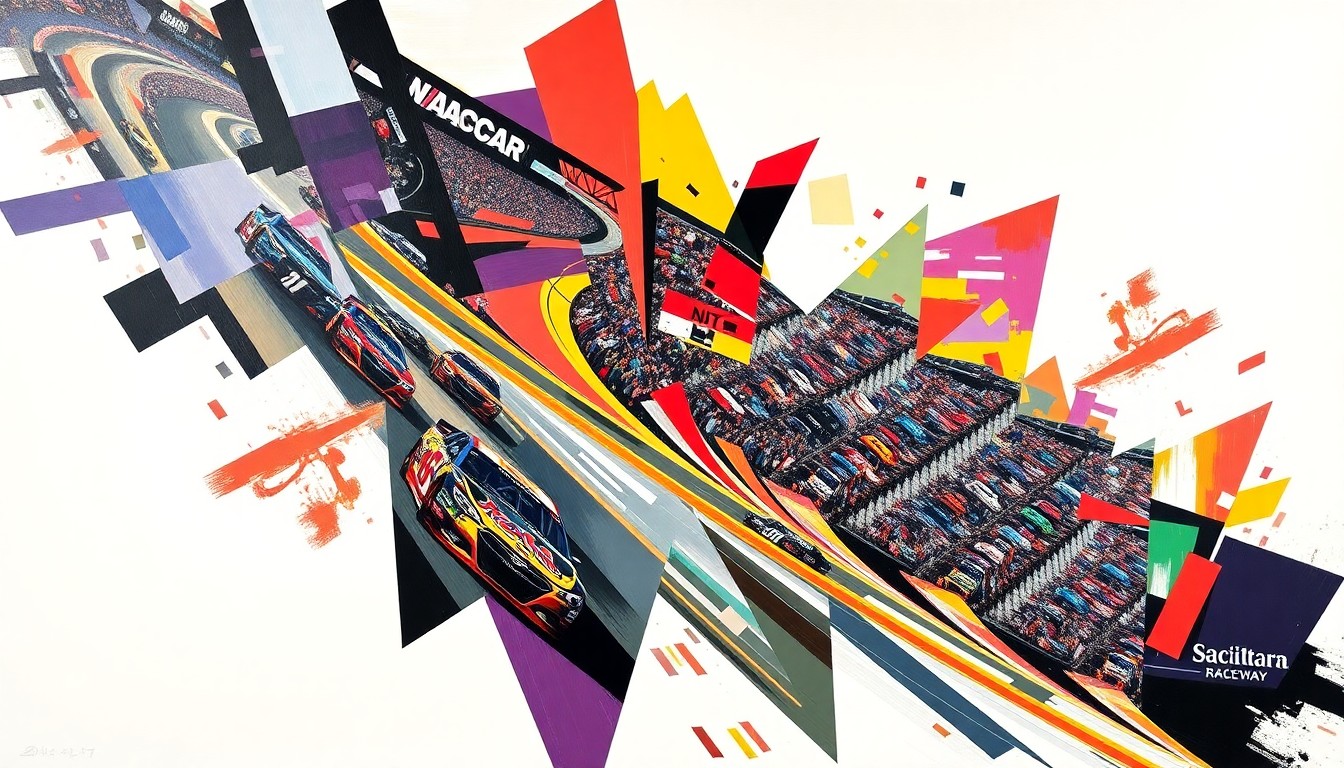 NASCAR's latest short-track package experiment at Darlington Raceway reveals the sport's nuanced approach to innovation, balancing tradition and progress through measured risk-taking.Darlington Today
NASCAR's recent short-track package update at Darlington Raceway has sparked debate over its impact on racing strategy, team adaptability, and fan expectations. While the changes didn't revolutionize the racing, they did expose the sport's willingness to carefully experiment and recalibrate the fundamentals of grip, wake interaction, and passing dynamics on a notoriously unforgiving circuit.
Why it matters
This Darlington test represents NASCAR's broader approach to innovation, where incremental shifts can redefine what 'exciting' racing looks like without abandoning the sport's core identity. By analyzing driver feedback, team adaptations, and fan reception, this story explores how NASCAR is steering toward a model of progress defined by intelligent risk-taking and a progressive patience to iterate over time.
The details
The new short-track package didn't dramatically alter the racing, as the best cars still held an advantage in passing and track position remained crucial. However, the changes did demand new tactical thinking from teams, as less overall grip required smoother, more calculated moves rather than pure aggression. Drivers noted easier proximity to the leader but also more front-end wash, suggesting a refinement in aero behavior rather than a revolution. Additionally, the reduction in the ability to 'air block' forced drivers to defend moves more precisely, hinting at a future where strategic patience and analytics-driven decisions become more valuable than raw speed.
- The new short-track package was implemented at the Darlington Raceway event on April 9, 2026.
The players
Denny Hamlin
A veteran NASCAR driver who commented that the best cars still pass and the rest cling to track position, speaking to the enduring importance of speed differentials and execution under pressure on a tight circuit like Darlington.
Ryan Preece
A NASCAR driver who raised the trio of variables - downforce, horsepower, and tires - as the key factors governing the future of better racing, highlighting the importance of Goodyear's tire strategy in balancing fall-off and speed sustainability.
Tyler Reddick
The winner of the Darlington race, who noted the inability to 'air block' as previously possible, pointing to a shift toward more calculated, maneuvering-based defense rather than pure aggression.
Brad Keselowski
A veteran NASCAR driver who provided a practical assessment that the new cars are harder to drive yet better in traffic, signaling NASCAR's focus on improving the quality of wheel-to-wheel action rather than just raw speed.
Ryan Blaney
A NASCAR driver who observed that following a leader became somewhat easier, albeit with front-end wash, revealing a nuanced evolution in aero behavior rather than a revolution.
What they’re saying
“The best cars still pass and the rest cling to track position.”
— Denny Hamlin, NASCAR Driver
“Tires, downforce, and horsepower - those are the three levers.”
— Ryan Preece, NASCAR Driver
“You can't air block as much as you used to.”
— Tyler Reddick, NASCAR Driver and Race Winner
“These cars are harder to drive, yet better in traffic.”
— Brad Keselowski, NASCAR Driver
“Following a leader became somewhat easier, albeit with front-end wash.”
— Ryan Blaney, NASCAR Driver
What’s next
NASCAR will continue to monitor driver and fan feedback as it considers further refinements to the short-track package for future races at Darlington and other similar circuits.
The takeaway
This Darlington experiment highlights NASCAR's willingness to carefully calibrate its racing product through measured risk-taking and progressive iteration. Rather than seeking a revolutionary breakthrough, the sport is steering toward a model of progress defined by intelligent adaptations that balance authenticity and exhilaration for both teams and fans.