- Today
- Holidays
- Birthdays
- Reminders
- Cities
- Atlanta
- Austin
- Baltimore
- Berwyn
- Beverly Hills
- Birmingham
- Boston
- Brooklyn
- Buffalo
- Charlotte
- Chicago
- Cincinnati
- Cleveland
- Columbus
- Dallas
- Denver
- Detroit
- Fort Worth
- Houston
- Indianapolis
- Knoxville
- Las Vegas
- Los Angeles
- Louisville
- Madison
- Memphis
- Miami
- Milwaukee
- Minneapolis
- Nashville
- New Orleans
- New York
- Omaha
- Orlando
- Philadelphia
- Phoenix
- Pittsburgh
- Portland
- Raleigh
- Richmond
- Rutherford
- Sacramento
- Salt Lake City
- San Antonio
- San Diego
- San Francisco
- San Jose
- Seattle
- Tampa
- Tucson
- Washington
Middletown Turkey Gravy Relocated After Repeat Road Incidents
The infamous turkey known for chasing cars has been captured by the Rhode Island Department of Environmental Management for the second time this year.
Apr. 8, 2026 at 10:08pm
Got story updates? Submit your updates here. ›
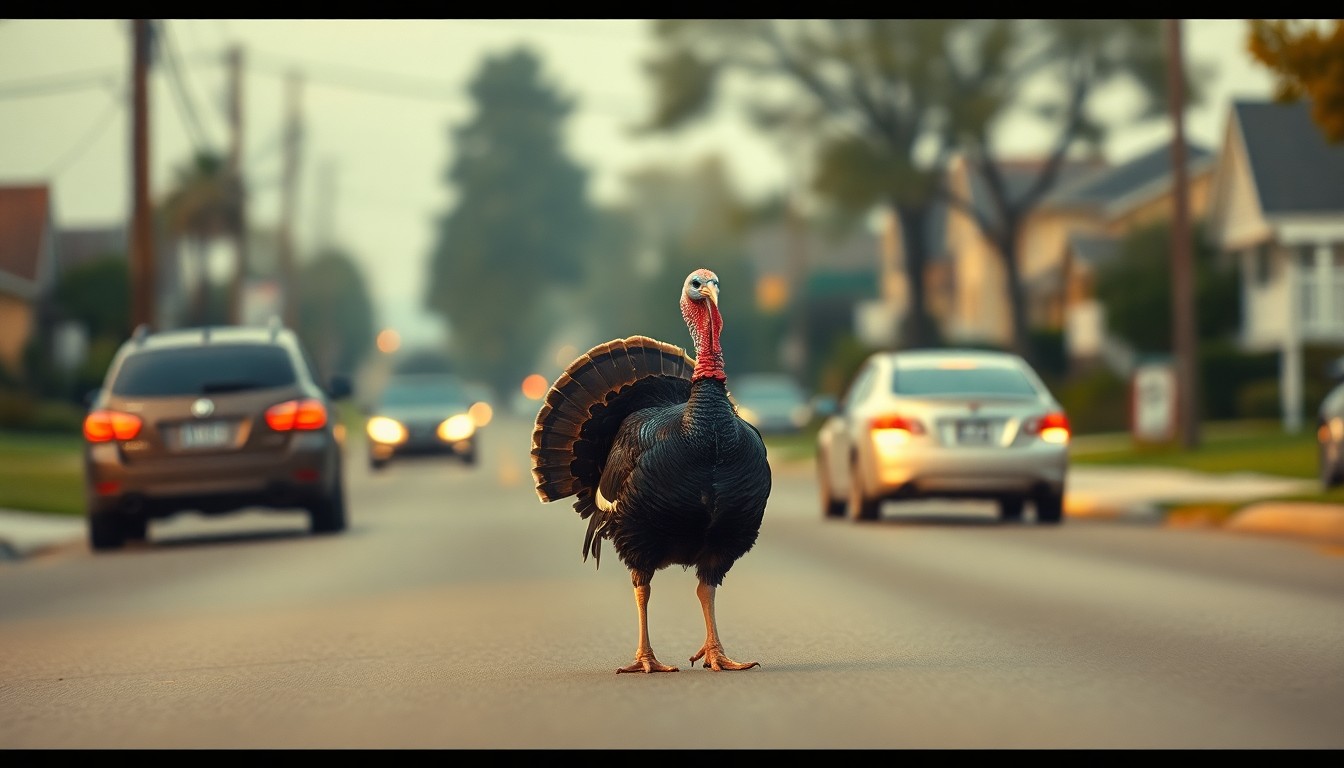 As Middletown's famous turkey Gravy continues his perilous dance with traffic, the community grapples with how to coexist responsibly with urban wildlife.Providence Today
Gravy, a wild turkey that has become a local celebrity in Middletown, Rhode Island for his habit of chasing cars through busy intersections, has been relocated by the state's Department of Environmental Management after being hit by a car and repeatedly returning to the roads. The turkey was first rehabilitated at a wildlife clinic in January after being struck by a vehicle, but upon release, he went right back to his car-chasing ways, prompting officials to capture him again to protect both Gravy and public safety.
Why it matters
Gravy's case highlights the challenges of managing urban wildlife, especially when an animal becomes a social media sensation. While wild turkeys living in cities is not uncommon, Gravy's dangerous behavior towards vehicles has raised concerns about public safety and the best way to handle the situation without causing undue stress or harm to the animal.
The details
After being hit by a car in January, Gravy spent time recovering at the Congress of the Birds wildlife rehabilitation center. Once deemed healthy enough, he was released back into his home range, but quickly returned to chasing cars through busy Middletown intersections. Authorities say Gravy's car-seeking behavior is likely due to 'dominance' as he perceives his own reflection in the vehicles as a rival mate, especially during mating season. The Rhode Island Department of Environmental Management has now recaptured Gravy a second time to protect both the turkey and public safety.
- In January 2026, Gravy was hit by a car and brought to the Congress of the Birds wildlife clinic for rehabilitation.
- After being released in January, Gravy immediately returned to chasing cars in Middletown.
- On April 8, 2026, the Rhode Island Department of Environmental Management recaptured Gravy for the second time this year.
The players
Gravy
A wild turkey that has become a local celebrity in Middletown, Rhode Island for his habit of chasing cars through busy intersections.
Sheida Soleimani
The founder and executive director of the Congress of the Birds wildlife rehabilitation center and clinic.
Evan LaCross
A spokesperson for the Rhode Island Department of Environmental Management.
Carrie Oakey
A Middletown resident who runs an Instagram account that posts Gravy updates and was the person who originally gave Gravy his name.
What they’re saying
“Car accidents are some of the most common injuries for large ground birds.”
— Sheida Soleimani, Founder and Executive Director, Congress of the Birds
“Because the bird attracts significant public attention, DEM staff conducted the release to protect the turkey and to respect nearby residents' privacy.”
— Evan LaCross, Spokesperson, Rhode Island Department of Environmental Management
“I feel bad because obviously Gravy is extremely confused. All he's ever really known is the street.”
— Carrie Oakey, Middletown Resident
What’s next
The Rhode Island Department of Environmental Management has not yet announced where Gravy will be relocated or what his long-term fate will be.
The takeaway
Gravy's case highlights the challenges of managing urban wildlife, especially when an animal becomes a local celebrity. While relocation may be necessary to protect public safety, it can also cause stress and disorientation for the animal. Experts say the focus should be on learning how to share space responsibly and reduce harm, rather than simply pushing wildlife out of populated areas.
Providence top stories

Providence events
Apr. 10, 2026
Two Feet
Apr. 11, 2026
Providence Bruins vs. Rochester Americans
Apr. 11, 2026
Nico Zaca