- Today
- Holidays
- Birthdays
- Reminders
- Cities
- Atlanta
- Austin
- Baltimore
- Berwyn
- Beverly Hills
- Birmingham
- Boston
- Brooklyn
- Buffalo
- Charlotte
- Chicago
- Cincinnati
- Cleveland
- Columbus
- Dallas
- Denver
- Detroit
- Fort Worth
- Houston
- Indianapolis
- Knoxville
- Las Vegas
- Los Angeles
- Louisville
- Madison
- Memphis
- Miami
- Milwaukee
- Minneapolis
- Nashville
- New Orleans
- New York
- Omaha
- Orlando
- Philadelphia
- Phoenix
- Pittsburgh
- Portland
- Raleigh
- Richmond
- Rutherford
- Sacramento
- Salt Lake City
- San Antonio
- San Diego
- San Francisco
- San Jose
- Seattle
- Tampa
- Tucson
- Washington
Kingston Today
By the People, for the People
Experts Explain Slim Odds of Earth Being Consumed by Black Hole
Astronomers say a random encounter between Earth and a black hole is extremely unlikely, even with nearby stellar remnants.
Apr. 10, 2026 at 3:55pm
Got story updates? Submit your updates here. ›
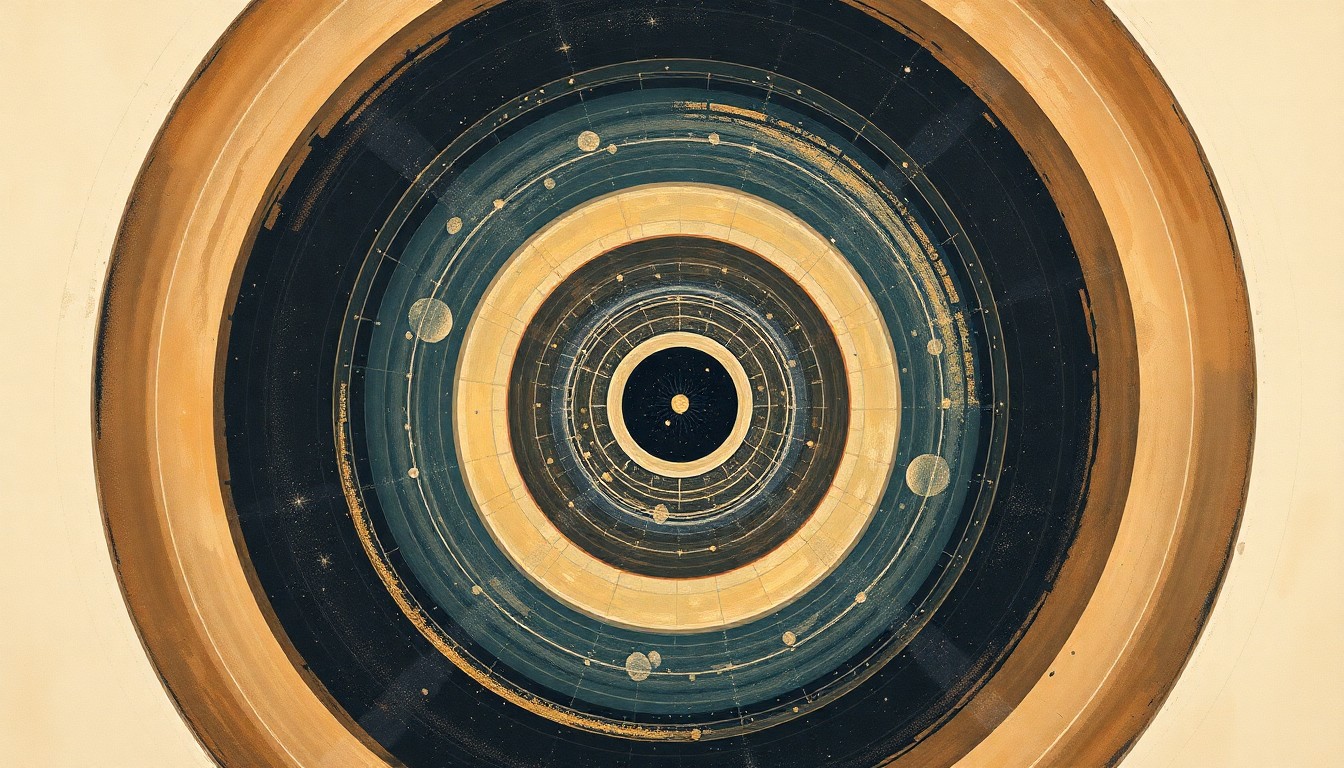 An abstract artistic rendering of the vast, empty space between distant celestial bodies, highlighting the astronomical improbability of a random encounter between Earth and a black hole.Kingston Today
Experts say there is practically zero chance of Earth ever colliding with a black hole before it is eventually consumed by the Sun in around five billion years. While black holes have a reputation for being cosmic vacuum cleaners, they are actually highly inefficient at consuming matter. Even the closest known black holes to our solar system, located thousands of light-years away, pose no threat to Earth.
Why it matters
Black holes are some of the most mysterious and powerful objects in the universe, so understanding the true risks they pose to our planet is important for separating fact from fiction. This story helps provide scientific context around the extremely low probability of Earth being pulled into a black hole, addressing common misconceptions about the destructive capabilities of these celestial phenomena.
The details
According to experts, the overall average density of luminous matter in the universe is about one proton per cubic meter, making large, dense objects like planets, stars, and stellar remnants relatively rare. Random encounters between these objects are also extremely unlikely due to the immense distances between them. Even the closest known black hole to our solar system, V616 Monocerotis, is located over 3,000 light-years away and would have no impact on Earth. For a black hole to significantly affect our planet, it would need to be closer than the orbit of Neptune, which is an astronomically improbable scenario.
- The closest known black hole to our solar system, V616 Monocerotis, is located over 3,000 light-years away.
- The star Betelgeuse, located about 500 light-years from Earth, is nearing the end of its life and could produce a supernova and black hole within the next 10,000 years.
The players
Doug Gobielle
A professor in the physics department at the University of Rhode Island.
Jonathan Zrake
An assistant professor of physics and astronomy at Clemson University.
What they’re saying
“Short of a hyper-advanced civilization with near-unlimited resources and energy that would purposefully 'launch' a black hole towards the solar system, such an encounter is so unlikely as to be close to zero.”
— Doug Gobielle, Professor of Physics
“Energy released from the plunging gas would drive powerful winds of plasma into space, and produce high-energy radiation. That light could probably be detected as a brief flash of hard X-rays by nearby extra-terrestrial astronomers.”
— Jonathan Zrake, Assistant Professor of Physics and Astronomy
The takeaway
While black holes are some of the most powerful and mysterious objects in the universe, the chances of Earth being consumed by one are infinitesimally small. Experts say even the closest known black holes pose no threat to our planet, and a random encounter that could significantly impact Earth's orbit or climate is an astronomically unlikely scenario.