- Today
- Holidays
- Birthdays
- Reminders
- Cities
- Atlanta
- Austin
- Baltimore
- Berwyn
- Beverly Hills
- Birmingham
- Boston
- Brooklyn
- Buffalo
- Charlotte
- Chicago
- Cincinnati
- Cleveland
- Columbus
- Dallas
- Denver
- Detroit
- Fort Worth
- Houston
- Indianapolis
- Knoxville
- Las Vegas
- Los Angeles
- Louisville
- Madison
- Memphis
- Miami
- Milwaukee
- Minneapolis
- Nashville
- New Orleans
- New York
- Omaha
- Orlando
- Philadelphia
- Phoenix
- Pittsburgh
- Portland
- Raleigh
- Richmond
- Rutherford
- Sacramento
- Salt Lake City
- San Antonio
- San Diego
- San Francisco
- San Jose
- Seattle
- Tampa
- Tucson
- Washington
Mike Tomlin's Legacy: Race, Football, and the Pittsburgh Steelers
The complex dynamics of race intersected with Tomlin's tenure as head coach of the legendary Steelers franchise.
Apr. 11, 2026 at 4:31pm
Got story updates? Submit your updates here. ›
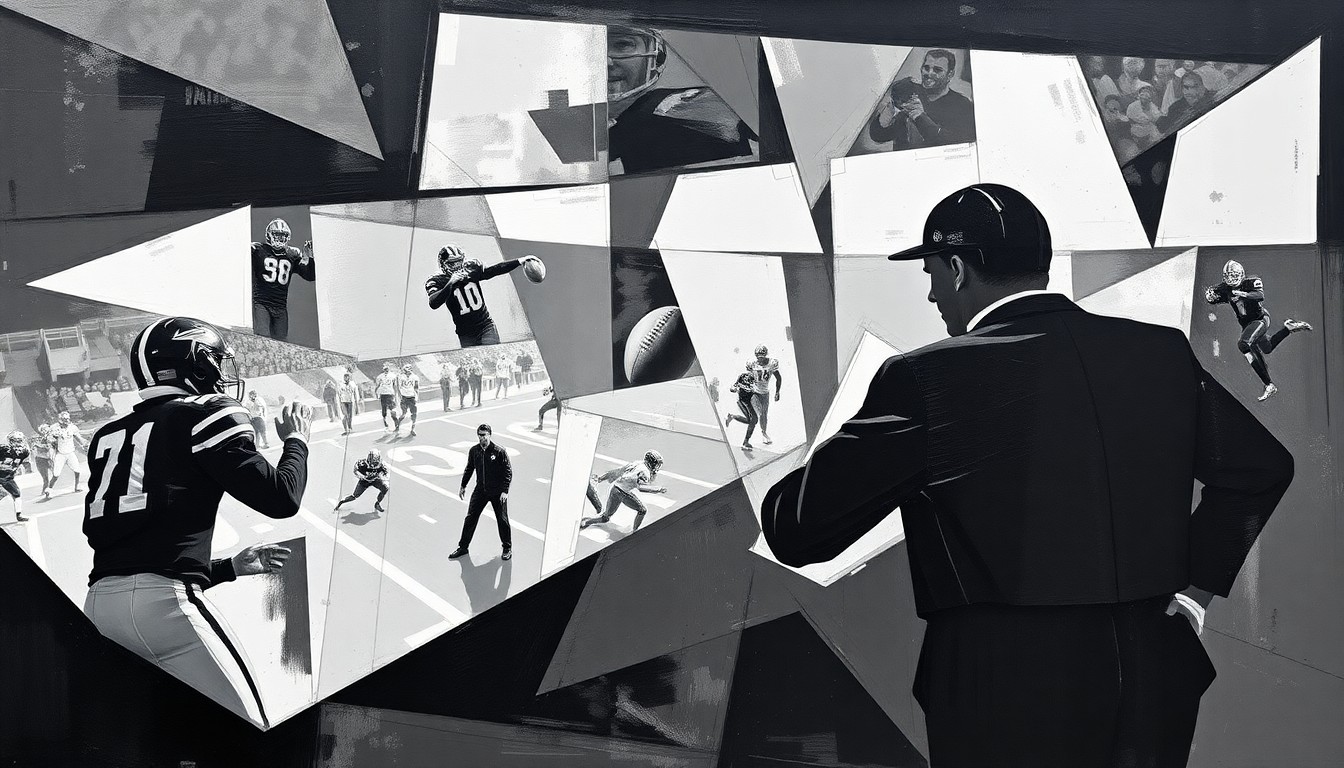 A cubist interpretation of the complex racial dynamics that shaped Mike Tomlin's tenure as head coach of the Pittsburgh Steelers.Washington Today
In the heart of Pittsburgh, Mike Tomlin's journey as a coach was forever intertwined with the complex dynamics of race. Tomlin's farewell statement hinted at the unique challenges he faced, as the topic of racial dynamics and their intersection with his tenure took center stage. While Tomlin's departure was not solely due to his race, the shadow of race was ever-present in his experience leading the beloved Steelers franchise.
Why it matters
Tomlin's appointment as a Black head coach in the predominantly white-run NFL was a groundbreaking moment, but it also placed him under intense scrutiny in a city like Pittsburgh, where subtle biases and deeply entrenched attitudes about race and racism were ingrained in the culture. The political climate, with attacks on the Rooney Rule that advanced Black coaches, also shaped Tomlin's experience.
The details
Tomlin's journey began in 2007, and for many, it was a surprising development. The Steelers franchise has been at the forefront of Black advancement in the NFL, but being Black at a Steelers game can still feel like "being a fly in milk." Tomlin faced casual disrespect, with the press corps often referring to him as "Mike," and fan anger, with "fire Tomlin" chants echoing in the stadium, played a significant role in his departure.
- Tomlin became the Steelers' head coach in 2007.
- Tomlin led the Steelers to a Super Bowl win in 2009.
- Tomlin announced his departure from the Steelers in 2026.
The players
Mike Tomlin
The former head coach of the Pittsburgh Steelers, whose journey was forever intertwined with the complex dynamics of race in the city and the NFL.
Art Rooney
The founder of the Pittsburgh Steelers, who inspired the team's history of Black advancement in the NFL.
Dan Rooney
The former owner of the Pittsburgh Steelers, who led the NFL's efforts to promote equal opportunity for Black coaches, resulting in the Rooney Rule.
Bill Nunn
A Black journalist who was hired by the Steelers to scout talent from historically Black colleges, contributing to the team's Steel Curtain dynasty.
Damon Young
A writer born and raised in Pittsburgh, who discussed the city's racial dynamics and their impact on Tomlin's tenure.
What they’re saying
“Some of it was due to Tomlin's relative anonymity, but there's also the Pittsburgh factor. People don't realize how white Pittsburgh is until they experience it firsthand.”
— Damon Young, Writer
“Being Black at a Steelers game can feel like 'being a fly in milk.' I've had a guarded feeling, depending on where you sit in the stadium.”
— Ed Dawson, Head Football Coach, Cornell High School
“Did he jump, or was he pushed? While understanding the complaints about results and the ultimate goal of championship success, fans often fail to see the bigger picture.”
— Ed Dawson, Head Football Coach, Cornell High School
“I don't think Tomlin left because of Washington, but the power of the bully pulpit cannot be ignored. It gives people the power to be their worst selves instead of striving for something better.”
— Damon Young, Writer
What’s next
The NFL and the Steelers organization will likely face continued scrutiny and calls for further progress in promoting racial diversity and inclusion among coaches and leadership positions.
The takeaway
Mike Tomlin's legacy as the Steelers' head coach highlights the complex intersection of race, sports, and the broader societal dynamics in a city like Pittsburgh. His departure serves as a reminder of the persistent challenges in achieving true racial equality, even within institutions that have made progress, and the need for sustained efforts to create more inclusive and equitable environments.