- Today
- Holidays
- Birthdays
- Reminders
- Cities
- Atlanta
- Austin
- Baltimore
- Berwyn
- Beverly Hills
- Birmingham
- Boston
- Brooklyn
- Buffalo
- Charlotte
- Chicago
- Cincinnati
- Cleveland
- Columbus
- Dallas
- Denver
- Detroit
- Fort Worth
- Houston
- Indianapolis
- Knoxville
- Las Vegas
- Los Angeles
- Louisville
- Madison
- Memphis
- Miami
- Milwaukee
- Minneapolis
- Nashville
- New Orleans
- New York
- Omaha
- Orlando
- Philadelphia
- Phoenix
- Pittsburgh
- Portland
- Raleigh
- Richmond
- Rutherford
- Sacramento
- Salt Lake City
- San Antonio
- San Diego
- San Francisco
- San Jose
- Seattle
- Tampa
- Tucson
- Washington
For Many Patients Leaving the ICU, the Struggle Has Only Just Begun
Intensive care survivors often face lasting physical, mental and cognitive challenges known as 'post-intensive care syndrome'.
Apr. 13, 2026 at 1:22am
Got story updates? Submit your updates here. ›
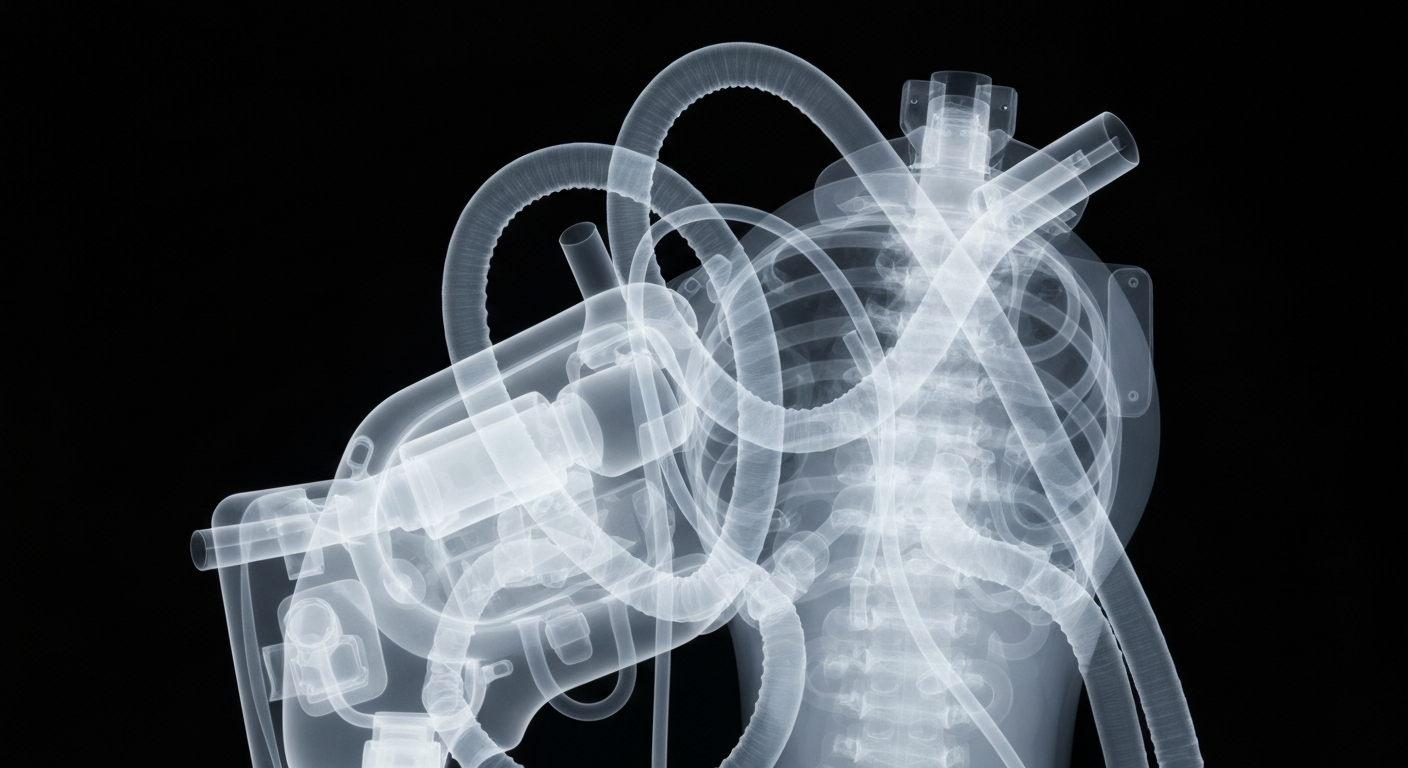 An X-ray view of the medical equipment that saved a patient's life in the ICU, now a symbol of the lasting challenges they face in recovery.Today in Pittsburgh
The article explores the challenges faced by many patients after being discharged from the intensive care unit (ICU), a condition known as 'post-intensive care syndrome' (PICS). It profiles the case of Joseph Masterson, a 63-year-old lawyer who suffered cardiac arrest and spent 18 days in the ICU, 14 of them on a ventilator. Despite his survival, Masterson has struggled with lingering physical, mental and cognitive issues, including weakness, memory loss and depression. The article discusses how aggressive ICU treatments that save lives can also contribute to PICS, which affects more than half of all ICU patients. It highlights the growing awareness of PICS and the establishment of post-ICU clinics to help guide patients through their recovery.
Why it matters
As more people survive critical illnesses thanks to advances in intensive care, the population dealing with the lasting effects of PICS is growing. This syndrome can have a profound impact on patients' quality of life and ability to return to their normal routines, highlighting the need for greater awareness and support for ICU survivors.
The details
Patients in intensive care often face a range of challenges after discharge, including physical weakness, pain, malnutrition, anxiety, depression, and cognitive difficulties like memory loss and trouble concentrating. These symptoms, collectively known as post-intensive care syndrome (PICS), can persist for months or years. Factors that contribute to PICS include the aggressive treatments that save lives, such as ventilators and sedation, as well as the disruptive environment of the ICU with constant alarms and bright lights. Doctors say the belief that patients will 'bounce back' after leaving the ICU is often not the reality.
- On November 16, Joseph Masterson suffered cardiac arrest while driving and crashed into a guardrail.
- Masterson spent 18 days in the ICU at UPMC Mercy hospital, 14 of them on a ventilator.
- Masterson was discharged from the hospital on February 1 and returned home.
The players
Joseph Masterson
A 63-year-old lawyer who suffered cardiac arrest and spent 18 days in the ICU, where he developed delirium and lost significant weight.
Ron Dedes
Masterson's brother-in-law, who expressed concerns about Masterson's long-term recovery.
Patti Dedes
Masterson's sister, who noted his cognitive impairments like forgetting conversations and being unable to operate a microwave.
Brad Butcher
Masterson's doctor, who wrote about post-intensive care syndrome in the medical journal JAMA.
Lauren Ferrante
A pulmonary critical-care doctor and researcher at the Yale School of Medicine who co-authored a study on the long-term functional ability of older ICU patients.
What they’re saying
“We honestly weren't confident that he would pull through.”
— Ron Dedes, Masterson's brother-in-law
“The belief is that they'll be discharged from the hospital and in two or three weeks, they'll be back to normal. That doesn't comport with reality.”
— Brad Butcher, Masterson's doctor
“For many people, surviving a critical illness is a life-altering experience.”
— Brad Butcher, Masterson's doctor
“One day, I thought a doctor was an assassin — I could see the rifle. So I jumped out of bed.”
— Gregory Matthews, Retired accountant
“PTSD is pretty common, similar to what's seen in combat veterans or sexual assault survivors.”
— Carla Sevin, Pulmonary critical-care doctor
What’s next
Masterson is working diligently with several kinds of therapists to continue his recovery, and his family remains hopeful but also worried about his long-term prognosis. Doctors say Masterson's previous fitness and cognitively demanding work bode well for his further progress, but the future for post-ICU patients often depends on their health before their admission.
The takeaway
As more people survive critical illnesses thanks to advances in intensive care, the population dealing with the lasting effects of post-intensive care syndrome (PICS) is growing. This syndrome can have a profound impact on patients' quality of life, highlighting the need for greater awareness and support for ICU survivors as they navigate the long road to recovery.
Pittsburgh top stories



Pittsburgh events
Apr. 13, 2026
Good Kid w/ INOHA
Apr. 13, 2026
Pittsburgh Pirates vs. Washington Nationals
Apr. 14, 2026
PPG Paints Arena Tours