- Today
- Holidays
- Birthdays
- Reminders
- Cities
- Atlanta
- Austin
- Baltimore
- Berwyn
- Beverly Hills
- Birmingham
- Boston
- Brooklyn
- Buffalo
- Charlotte
- Chicago
- Cincinnati
- Cleveland
- Columbus
- Dallas
- Denver
- Detroit
- Fort Worth
- Houston
- Indianapolis
- Knoxville
- Las Vegas
- Los Angeles
- Louisville
- Madison
- Memphis
- Miami
- Milwaukee
- Minneapolis
- Nashville
- New Orleans
- New York
- Omaha
- Orlando
- Philadelphia
- Phoenix
- Pittsburgh
- Portland
- Raleigh
- Richmond
- Rutherford
- Sacramento
- Salt Lake City
- San Antonio
- San Diego
- San Francisco
- San Jose
- Seattle
- Tampa
- Tucson
- Washington
Khartoum Becomes a City of Graves Amid Brutal Conflict
Years of vicious fighting between Sudan's army and a rival paramilitary faction have left the capital scarred and filled with makeshift burial sites.
Apr. 12, 2026 at 11:55am
Got story updates? Submit your updates here. ›
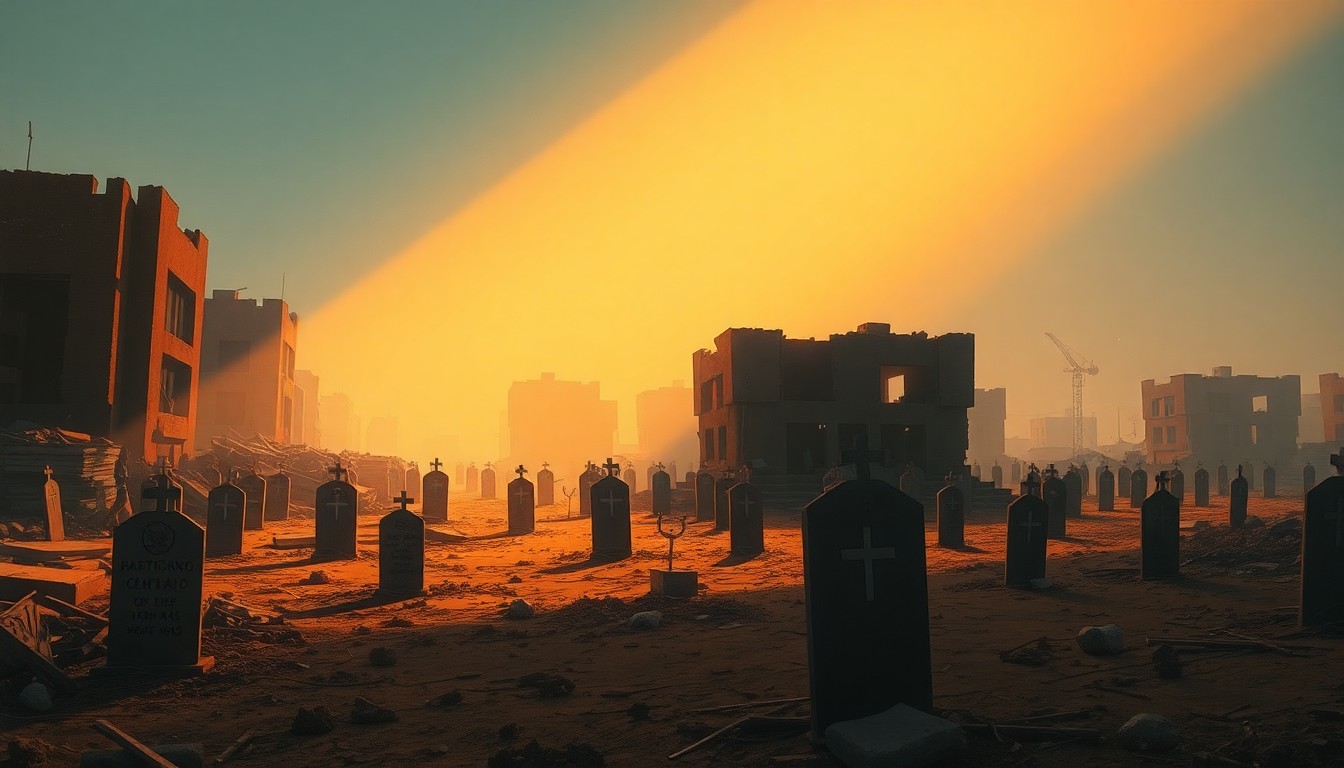 The proliferation of makeshift graves across Khartoum's war-torn neighborhoods reflects the immense human tragedy of Sudan's civil conflict.Today in Pittsburgh
More than a year after Sudan's army seized control of Khartoum, the city bears the scars of the fierce battles that turned its streets into a 'charnel house.' Hundreds, if not thousands, of makeshift graves have sprung up across the capital as residents were forced to bury their dead in schools, mosques, and backyards due to the inaccessibility of cemeteries. The scale of the death toll, estimated to be in the tens of thousands, has overwhelmed authorities, who are struggling to identify and properly rebury the victims.
Why it matters
The transformation of Khartoum into a city of graves highlights the devastating human toll of the conflict in Sudan, which has become one of the world's worst displacement crises. The inability to properly bury and identify the dead adds to the trauma experienced by residents and raises concerns about the long-term psychological and social impacts of the war.
The details
The fighting between Sudan's army and the Rapid Support Forces (RSF) militia was so intense that many corpses were left on the streets. Forensic experts have collected over 23,000 bodies from roads, homes, and looted areas, but untold numbers remain. Some estimates put the total death toll at 400,000 since the conflict began four years ago. Exhuming and reburying the bodies has been hampered by shortages of equipment and resources, while the destruction of DNA analysis labs has made identifying the victims a daunting challenge.
- The conflict in Sudan erupted in April 2023.
- In July 2026, forensic experts began a search for hundreds of mass graves in Khartoum.
- Since then, over 23,000 corpses have been collected and reburied in cemeteries.
The players
Hisham Zain al-Abidin
Head of the State Forensics Authority, who has overseen the efforts to locate and rebury the victims of the conflict in Khartoum.
Omar Abdullah
A resident who fled his hometown of El Fasher and discovered two unmarked graves near his rented house in Khartoum, unable to afford the cost of having the bodies transferred.
Mohammad Izzo
A school caretaker who was forced to become a groundskeeper for a makeshift cemetery at the campus, where more than 20 graves now line the outer wall.
What they’re saying
“I saw everything: detainees, bound and executed. RSF militiamen buried with their bedroll as their shroud. Corpses half-eaten by dogs, cats, rodents, birds.”
— Hisham Zain al-Abidin, Head of the State Forensics Authority
“I couldn't bring my kids to that. They already saw enough in El Fasher.”
— Omar Abdullah
“We had no choice. No one would let us pass. What else could we do?”
— Ikhlass
What’s next
The State Forensics Authority plans to launch fundraising campaigns in the coming months to secure the resources needed to exhume and properly rebury the remaining corpses around Khartoum. Identifying the victims will also be a long-term challenge, as the conflict has destroyed the agency's DNA analysis labs.
The takeaway
The transformation of Khartoum into a city of graves is a tragic testament to the immense human toll of the conflict in Sudan. The inability to properly bury and identify the victims adds to the trauma experienced by residents and raises concerns about the long-term social and psychological impacts of the war. Addressing this crisis will require a concerted effort by the government and international community to provide the necessary resources and support.
Pittsburgh top stories



Pittsburgh events

Apr. 13, 2026
Good Kid w/ INOHA
Apr. 13, 2026
Pittsburgh Pirates vs. Washington Nationals
Apr. 14, 2026
PPG Paints Arena Tours