- Today
- Holidays
- Birthdays
- Reminders
- Cities
- Atlanta
- Austin
- Baltimore
- Berwyn
- Beverly Hills
- Birmingham
- Boston
- Brooklyn
- Buffalo
- Charlotte
- Chicago
- Cincinnati
- Cleveland
- Columbus
- Dallas
- Denver
- Detroit
- Fort Worth
- Houston
- Indianapolis
- Knoxville
- Las Vegas
- Los Angeles
- Louisville
- Madison
- Memphis
- Miami
- Milwaukee
- Minneapolis
- Nashville
- New Orleans
- New York
- Omaha
- Orlando
- Philadelphia
- Phoenix
- Pittsburgh
- Portland
- Raleigh
- Richmond
- Rutherford
- Sacramento
- Salt Lake City
- San Antonio
- San Diego
- San Francisco
- San Jose
- Seattle
- Tampa
- Tucson
- Washington
Butler Today
By the People, for the People
White House Fights to Resume Ballroom Construction, Citing Trump Family Safety
The administration argues the project is critical to security as legal challenges and political criticism mount.
Apr. 10, 2026 at 5:41pm
Got story updates? Submit your updates here. ›
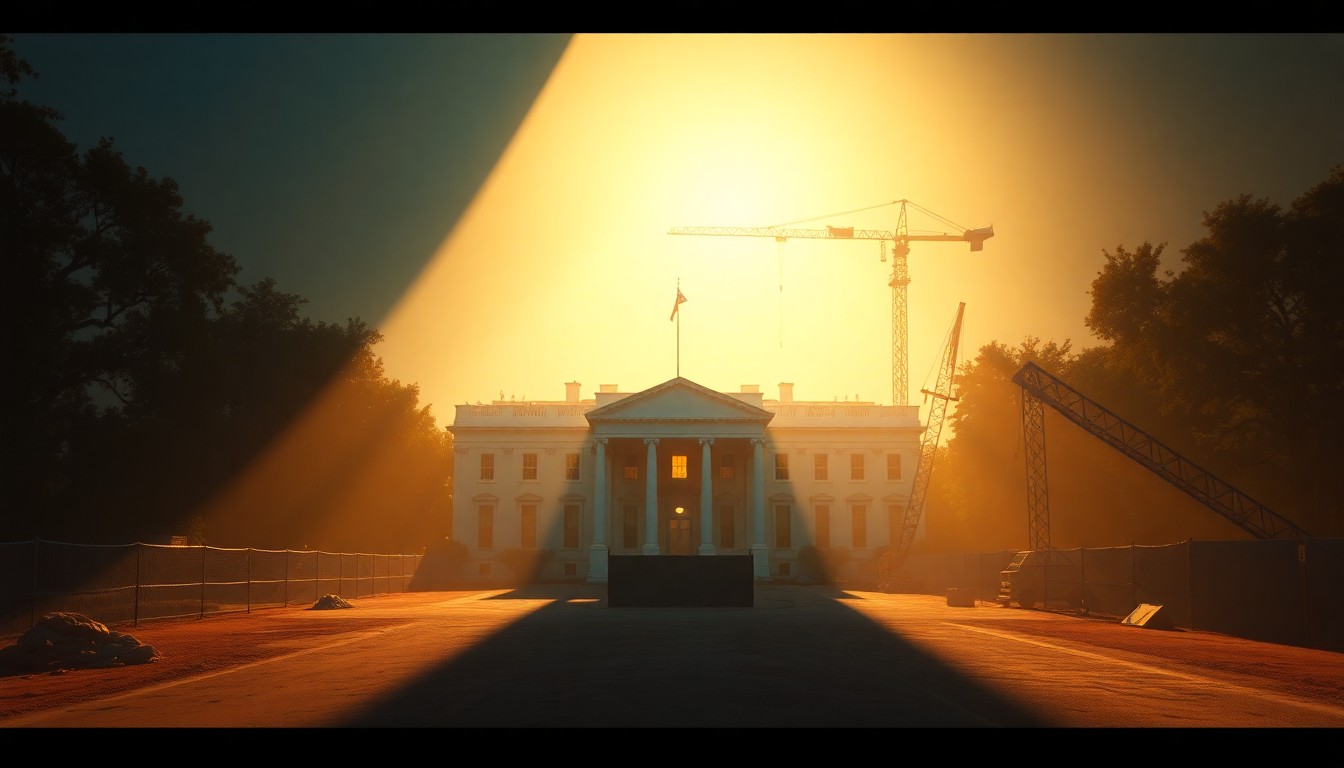 As the White House battles in court to resume construction on a new ballroom, the project's security implications and political fallout continue to cast a long shadow.Butler Today
The White House is pressing a federal appeals court to allow construction to continue on President Donald Trump's planned White House ballroom, arguing that halting the project would endanger the Trump family amid what officials describe as persistent and evolving security threats.
Why it matters
The legal fight over the ballroom has become a flashpoint for broader questions about presidential authority, national security, and how far a sitting president can go to permanently reshape the White House. The administration's push comes against a backdrop that includes the July 2024 assassination attempt on Trump near Butler, Pennsylvania, where a gunman opened fire at a campaign rally, killing one attendee and wounding others.
The details
The proposed ballroom would replace the former East Wing with a roughly 90,000-square-foot structure, part of a larger project estimated to cost about $400 million and which the administration says is funded by private donations. Administration lawyers argued in their emergency court motion that the ballroom cannot be separated from the extensive security work underway beneath it, warning that pausing construction would leave unfinished fortifications next to the residence where the Trump family lives.
- In July 2024, a gunman opened fire at a Trump campaign rally near Butler, Pennsylvania, killing one attendee and wounding others.
- In April 2026, U.S. District Judge Richard Leon issued a preliminary injunction ordering most work on the ballroom halted while allowing construction deemed necessary for immediate security to proceed.
The players
Donald Trump
The former President of the United States whose family's safety is cited as the reason for the ballroom construction.
Richard Leon
A Republican-appointed U.S. District Judge who issued a preliminary injunction halting most work on the ballroom project.
National Trust for Historic Preservation
A nonprofit organization that sued the Trump administration to halt construction, arguing the project has not been authorized by Congress as required by law.
What they’re saying
“A president is the 'steward of the White House for future generations,' not its owner—language widely read as a warning against personalizing the project around Trump himself.”
— Richard Leon, U.S. District Judge
What’s next
The D.C. Circuit Court is expected to decide soon whether full construction can resume while the legal challenge proceeds. The Trump administration has indicated it will seek emergency relief from the Supreme Court if the appeals court does not rule in its favor.
The takeaway
This case highlights the tension between a president's authority to renovate the White House and concerns over using public resources to benefit a specific administration. It also raises questions about balancing legitimate security needs with the risk of personalizing White House projects around a single president.