- Today
- Holidays
- Birthdays
- Reminders
- Cities
- Atlanta
- Austin
- Baltimore
- Berwyn
- Beverly Hills
- Birmingham
- Boston
- Brooklyn
- Buffalo
- Charlotte
- Chicago
- Cincinnati
- Cleveland
- Columbus
- Dallas
- Denver
- Detroit
- Fort Worth
- Houston
- Indianapolis
- Knoxville
- Las Vegas
- Los Angeles
- Louisville
- Madison
- Memphis
- Miami
- Milwaukee
- Minneapolis
- Nashville
- New Orleans
- New York
- Omaha
- Orlando
- Philadelphia
- Phoenix
- Pittsburgh
- Portland
- Raleigh
- Richmond
- Rutherford
- Sacramento
- Salt Lake City
- San Antonio
- San Diego
- San Francisco
- San Jose
- Seattle
- Tampa
- Tucson
- Washington
Oklahoma Senate Narrowly Passes $12.8 Billion Budget Bill
Measure heads to House after divisive vote in upper chamber
Apr. 7, 2026 at 10:50pm
Got story updates? Submit your updates here. ›
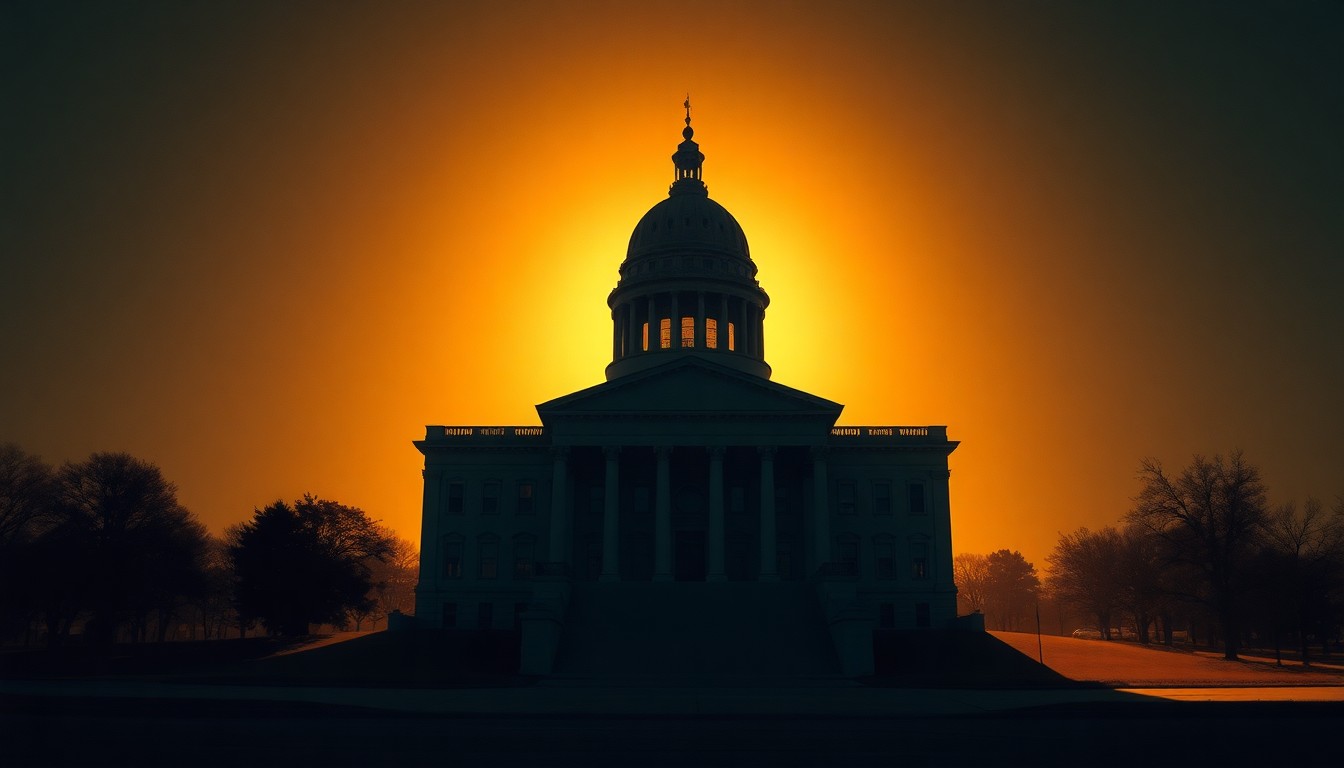 The Oklahoma State Capitol stands as a symbol of the state's political landscape, where budget debates and partisan divides play out against a backdrop of economic challenges.Oklahoma City Today
The Oklahoma Senate on Tuesday narrowly passed a $12.8 billion budget for fiscal year 2027, with the Democratic minority joining far-right Republicans to vote against it. The measure, which is a slight increase from the existing fiscal year's nearly $12.6 billion budget, now heads to the House for consideration.
Why it matters
The passage of the budget bill sets up a scenario where lawmakers could end the legislative session early and hit the campaign trail. The divisive vote highlights the political tensions in the state, with Democrats criticizing the bill for not doing enough to help working Oklahomans, while some Republicans argue it spends too much money and caters to special interests.
The details
Senate Bill 1177, the general appropriations bill, passed by a vote of 28-17, slightly above the 25 votes needed to secure passage in the upper chamber. Democrats said the measure didn't contain enough to help working Oklahomans, such as providing more funding for child care and health services, and that it was largely crafted behind closed doors without their input. Republican Sen. Shane Jett, who chairs the Freedom Caucus, called the measure an "embarrassment" that spends too much money.
- The Oklahoma Senate passed the $12.8 billion budget bill on Tuesday, April 7, 2026.
- The budget is for fiscal year 2027, which begins on July 1, 2026.
The players
Shane Jett
A Republican state senator who chairs the Freedom Caucus, he criticized the budget bill as an "embarrassment" that spends too much money.
Nikki Nice
A Democratic state senator who said it is difficult to explain to minimum wage workers making $7.25 an hour that the budget has $12.8 billion in taxpayer expenses.
Dusty Deevers
A Republican state senator who said some of the criticism of the budget could have been avoided had the process been more transparent and included all lawmakers.
Carri Hicks
A Democratic state senator who said she was voting against the budget because it lacked strategic and targeted investments that strengthen Oklahoma families.
Chuck Hall
The Republican chairman of the Senate Appropriations Committee, he said the budget invests $450 million in health care and $280 million in education.
What they’re saying
“When we say yes to special interests and lobbyists and state agencies, we are saying no to the people back home who are struggling to pay for fuel at the gas pump, struggling to pay mortgages.”
— Shane Jett, Republican State Senator, Freedom Caucus Chair
“This budget is a shame to any conservative who puts conservative on their campaign flyers back home. This is not a conservative vote. This is not a conservative bill.”
— Shane Jett, Republican State Senator, Freedom Caucus Chair
“It is difficult to explain to those making the minimum wage of $7.25 an hour, who are trying to make ends meet that the budget has $12.8 billion in taxpayer expenses.”
— Nikki Nice, Democratic State Senator
What’s next
The $12.8 billion budget bill now heads to the Oklahoma House of Representatives for consideration. Lawmakers could potentially end the legislative session early and begin campaigning for the next election.
The takeaway
The narrow passage of the Oklahoma Senate's $12.8 billion budget bill highlights the deep political divisions in the state, with Democrats and some Republicans criticizing the measure for not doing enough to help working families and for catering to special interests. The budget's fate in the House remains to be seen, but the early end to the legislative session could allow lawmakers to shift their focus to the upcoming elections.
Oklahoma City top stories



Oklahoma City events

Apr. 7, 2026
Oklahoma City Comets vs. Round Rock Express
Apr. 8, 2026
Oklahoma City Comets vs. Round Rock Express
Apr. 8, 2026
Oklahoma City Comets vs. Round Rock Express