- Today
- Holidays
- Birthdays
- Reminders
- Cities
- Atlanta
- Austin
- Baltimore
- Berwyn
- Beverly Hills
- Birmingham
- Boston
- Brooklyn
- Buffalo
- Charlotte
- Chicago
- Cincinnati
- Cleveland
- Columbus
- Dallas
- Denver
- Detroit
- Fort Worth
- Houston
- Indianapolis
- Knoxville
- Las Vegas
- Los Angeles
- Louisville
- Madison
- Memphis
- Miami
- Milwaukee
- Minneapolis
- Nashville
- New Orleans
- New York
- Omaha
- Orlando
- Philadelphia
- Phoenix
- Pittsburgh
- Portland
- Raleigh
- Richmond
- Rutherford
- Sacramento
- Salt Lake City
- San Antonio
- San Diego
- San Francisco
- San Jose
- Seattle
- Tampa
- Tucson
- Washington
Ohio Proposes Sodium Warnings on Chain Restaurant Menus
New legislation aims to inform diners about high-sodium meals at major restaurant chains.
Apr. 12, 2026 at 4:03am
Got story updates? Submit your updates here. ›
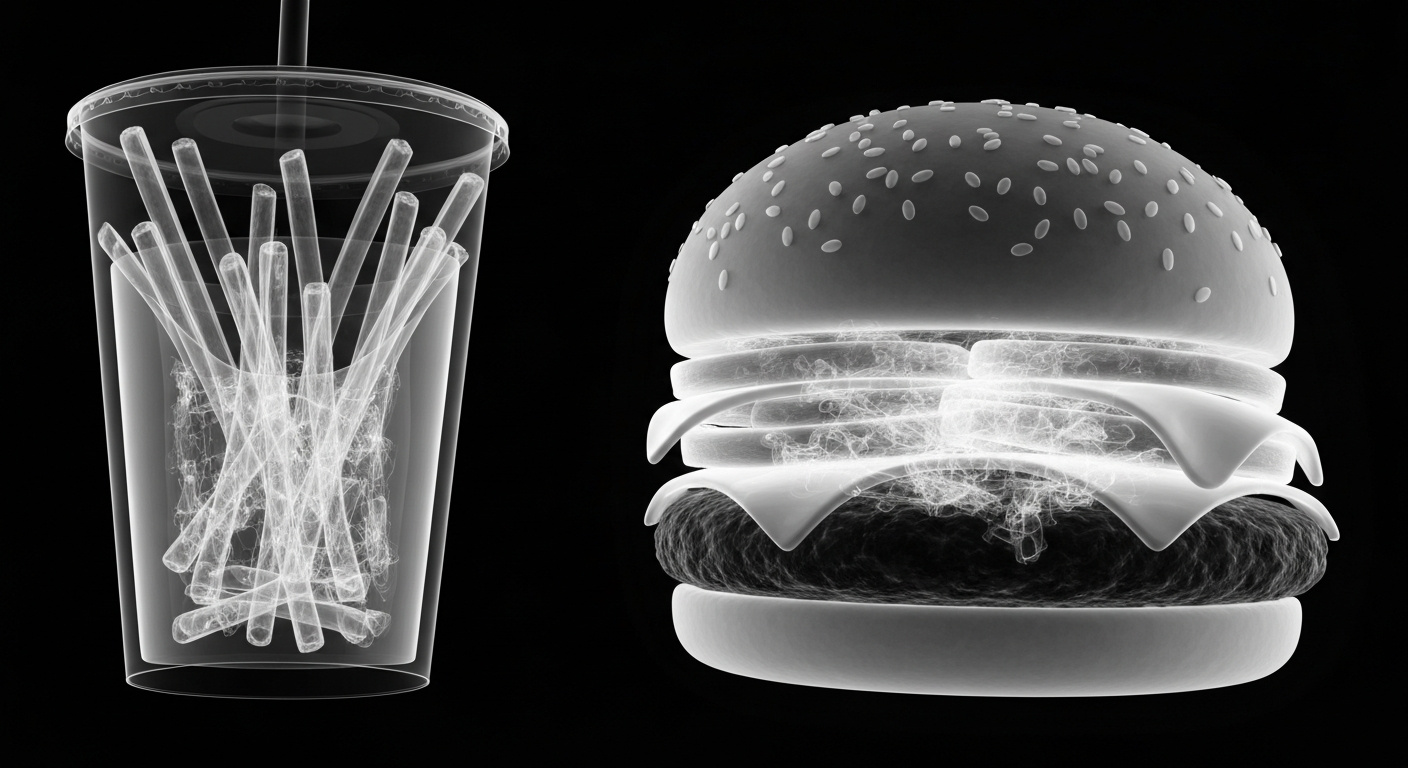 An X-ray view exposes the high sodium content hidden within popular fast food menu items.Toledo Today
Ohio legislators are considering a bill that would require chain restaurants with 20 or more locations to add a sodium warning icon to menu items containing more than half the recommended daily sodium intake. The bill is supported by the American Heart Association, which cites high sodium levels in many restaurant meals as a major public health concern.
Why it matters
Excessive sodium consumption is linked to increased risk of heart disease, high blood pressure, and other health issues. This legislation aims to empower consumers to make more informed choices when dining out at major restaurant chains, which are a significant source of sodium in the average American diet.
The details
The proposed amendment to House Bill 364 would mandate that chain restaurants mark menu items containing over 1,150 milligrams of sodium, or half the recommended daily limit, with a simple warning icon. This is in response to data showing that many popular restaurant meals, even at casual dining chains, can contain over 5,000 milligrams of sodium - more than double the daily recommendation.
- The Ohio House Agriculture Committee unanimously approved the sodium warning amendment on February 25, 2026.
- House Bill 364, which includes the sodium warning provision, remains in committee as of April 2026.
The players
Dustin Holfinger
Government relations director for the American Heart Association in Ohio, who supports the sodium warning legislation.
Allison DeRoberts
Director of government relations and public affairs for the Ohio Restaurant & Hospitality Alliance, who opposes the sodium warning amendment.
Dr. Surender Neravetla
Member of the American Heart Association state advocacy committee and director of cardiac surgery at Mercy Health Springfield Regional Medical Center, who wrote in support of the sodium warning amendment.
Erika Rapp
Chef at Registry Bistro in Toledo, who believes the sodium warning legislation could be helpful for consumers.
What they’re saying
“If a meal at a chain restaurant, which we define as 20 or more locations, has more than half of your daily recommended level ... [it] would require a simple sodium warning icon.”
— Dustin Holfinger, Government relations director, American Heart Association in Ohio
“Much of this bill would force restaurants to needlessly change their menus in a way that is obtrusive and unlikely to improve health outcomes.”
— Allison DeRoberts, Director of government relations and public affairs, Ohio Restaurant & Hospitality Alliance
“It provides consumers with information to make healthier choices at the point of selection, empowering them to protect their heart health.”
— Dr. Surender Neravetla, Member, American Heart Association state advocacy committee
“Part of me, I understand it because I think that people don't realize when they go to chain restaurants how much salt is used as a primary flavoring profile.”
— Erika Rapp, Chef, Registry Bistro
What’s next
The Ohio House Agriculture Committee will continue to consider House Bill 364, including the sodium warning amendment, in the coming months.
The takeaway
This proposed legislation highlights the growing awareness of the health risks associated with excessive sodium consumption, particularly in restaurant meals. If enacted, the sodium warning requirement could empower Ohioans to make more informed dining choices and motivate restaurant chains to reformulate high-sodium menu items.
Toledo top stories


Toledo events
Apr. 12, 2026
Toledo Mudhens vs. St. Paul Saints
Apr. 12, 2026
The Great Gatsby (Touring)
Apr. 12, 2026
The Great Gatsby (Touring)