- Today
- Holidays
- Birthdays
- Reminders
- Cities
- Atlanta
- Austin
- Baltimore
- Berwyn
- Beverly Hills
- Birmingham
- Boston
- Brooklyn
- Buffalo
- Charlotte
- Chicago
- Cincinnati
- Cleveland
- Columbus
- Dallas
- Denver
- Detroit
- Fort Worth
- Houston
- Indianapolis
- Knoxville
- Las Vegas
- Los Angeles
- Louisville
- Madison
- Memphis
- Miami
- Milwaukee
- Minneapolis
- Nashville
- New Orleans
- New York
- Omaha
- Orlando
- Philadelphia
- Phoenix
- Pittsburgh
- Portland
- Raleigh
- Richmond
- Rutherford
- Sacramento
- Salt Lake City
- San Antonio
- San Diego
- San Francisco
- San Jose
- Seattle
- Tampa
- Tucson
- Washington
Parma Today
By the People, for the People
Italy's MotoGP Champions: A Legacy of Speed and Glory
From Agostini's dominance to Rossi's iconic status, Italy's influence on MotoGP is undeniable.
Apr. 11, 2026 at 10:42am
Got story updates? Submit your updates here. ›
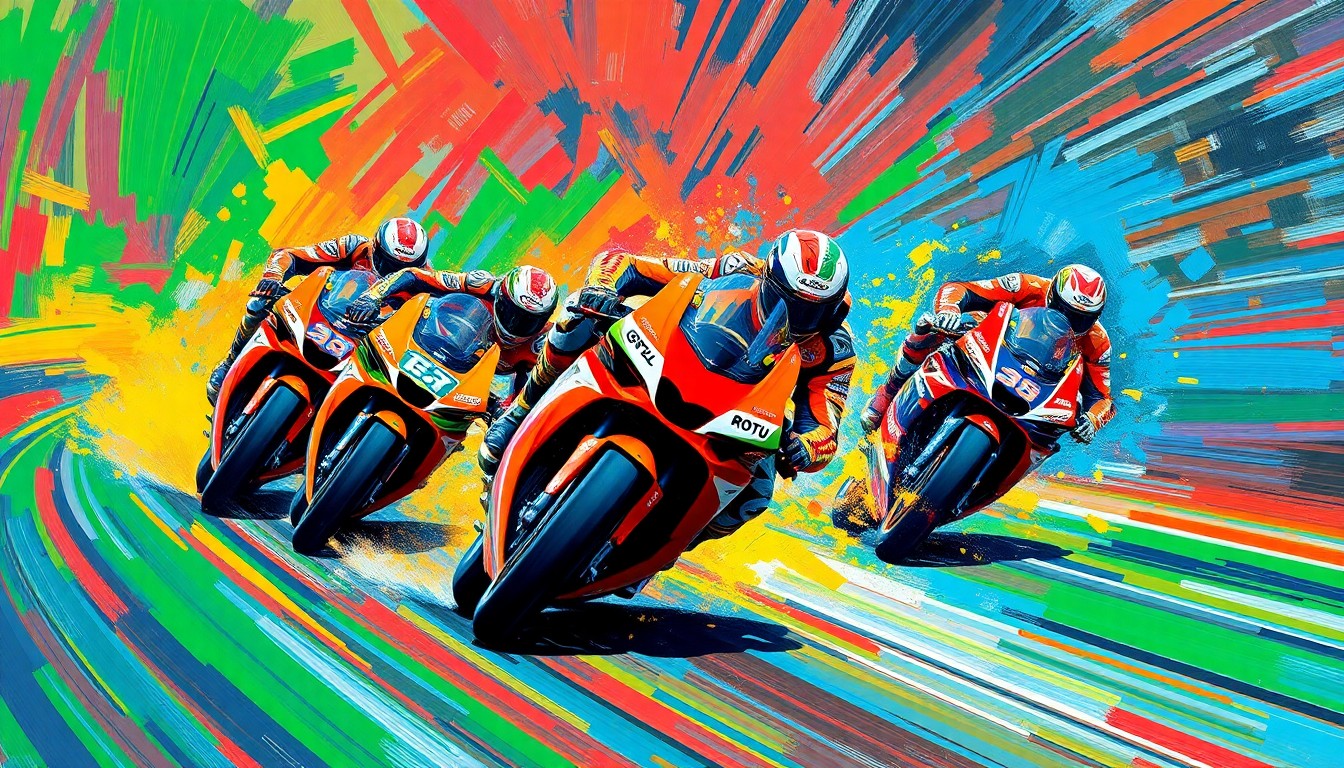 Italy's MotoGP champions have left an indelible mark on the sport, with their passion, skill, and innovation inspiring generations of riders.Parma Today
Italy's rich history in MotoGP is a captivating tale of dominance, innovation, and iconic riders. With seven premier class world titles, Italy stands as a powerhouse in the sport, rivaling the United States in its success. The story begins in the 1950s with Umberto Masetti and Libero Liberati, followed by the legendary Giacomo Agostini's reign in the 1960s and 1970s. The 1980s saw a shift in the landscape, but Italian riders like Marco Lucchinelli and Franco Uncini continued to excel. Valentino Rossi's arrival in the early 2000s reignited Italy's MotoGP dominance, and the VR46 Riders Academy has produced talents like Pecco Bagnaia, who won back-to-back titles in 2022 and 2023. As Marco Bezzecchi aims to become the eighth Italian premier class champion in 2026, the nation's racing spirit remains strong.
Why it matters
Italy's MotoGP legacy is a story of resilience, innovation, and cultural impact. The country's riders and manufacturers have not only dominated the tracks but have also shaped the sport's global appeal. From Agostini's record-breaking reign to Rossi's iconic status, Italy's influence on MotoGP is undeniable, making it a captivating chapter in the sport's history.
The details
The early dominance of Italian brands Gilera and MV Agusta in the 1950s laid the foundation for the country's racing prowess. Umberto Masetti and Libero Liberati's world titles in the 1950s showcased Italy's mastery of motorcycle engineering. Then came Giacomo Agostini, who achieved an astonishing eight MotoGP titles between 1966 and 1975, a record that still stands today. The 1980s saw a shift in the landscape, with Italian riders like Marco Lucchinelli and Franco Uncini continuing to excel, but facing stiffer competition from American and Japanese manufacturers. Valentino Rossi's arrival in the early 2000s reignited Italy's MotoGP dominance, and the VR46 Riders Academy has produced talents like Pecco Bagnaia, who won back-to-back titles in 2022 and 2023.
- Umberto Masetti became Italy's first MotoGP champion in 1950.
- Libero Liberati claimed the title in 1957.
- Giacomo Agostini's reign spanned from 1966 to 1972, and again in 1975.
- Marco Lucchinelli and Franco Uncini won world titles in 1981 and 1982, respectively.
- Valentino Rossi won seven premier class titles, with his final title coming in 2009.
The players
Umberto Masetti
An Italian rider who became Italy's first MotoGP champion in 1950, riding for Gilera.
Libero Liberati
An Italian rider who claimed the MotoGP title in 1957, also riding for Gilera.
Giacomo Agostini
An Italian rider who dominated the MotoGP scene, winning eight premier class world titles between 1966 and 1975, a record that still stands today.
Marco Lucchinelli
An Italian rider who won the MotoGP world title in 1981.
Franco Uncini
An Italian rider who won the MotoGP world title in 1982.
What’s next
As we anticipate Marco Bezzecchi's quest for the MotoGP title in 2026, the future of Italian racing remains bright, with the country's passion for the sport continuing to shine.
The takeaway
Italy's MotoGP legacy is a testament to the country's resilience, innovation, and cultural impact on the sport. From the early dominance of Gilera and MV Agusta to the iconic status of riders like Agostini and Rossi, Italy's influence on MotoGP is undeniable and continues to inspire the next generation of Italian champions.