- Today
- Holidays
- Birthdays
- Reminders
- Cities
- Atlanta
- Austin
- Baltimore
- Berwyn
- Beverly Hills
- Birmingham
- Boston
- Brooklyn
- Buffalo
- Charlotte
- Chicago
- Cincinnati
- Cleveland
- Columbus
- Dallas
- Denver
- Detroit
- Fort Worth
- Houston
- Indianapolis
- Knoxville
- Las Vegas
- Los Angeles
- Louisville
- Madison
- Memphis
- Miami
- Milwaukee
- Minneapolis
- Nashville
- New Orleans
- New York
- Omaha
- Orlando
- Philadelphia
- Phoenix
- Pittsburgh
- Portland
- Raleigh
- Richmond
- Rutherford
- Sacramento
- Salt Lake City
- San Antonio
- San Diego
- San Francisco
- San Jose
- Seattle
- Tampa
- Tucson
- Washington
Ernie Davis' Heisman Trophy Mysteriously Vanishes, Then Returned 50 Years Later
The iconic award's theft and recovery shook the Syracuse University community and highlighted the symbolic power of sports memorabilia.
Apr. 10, 2026 at 2:58am
Got story updates? Submit your updates here. ›
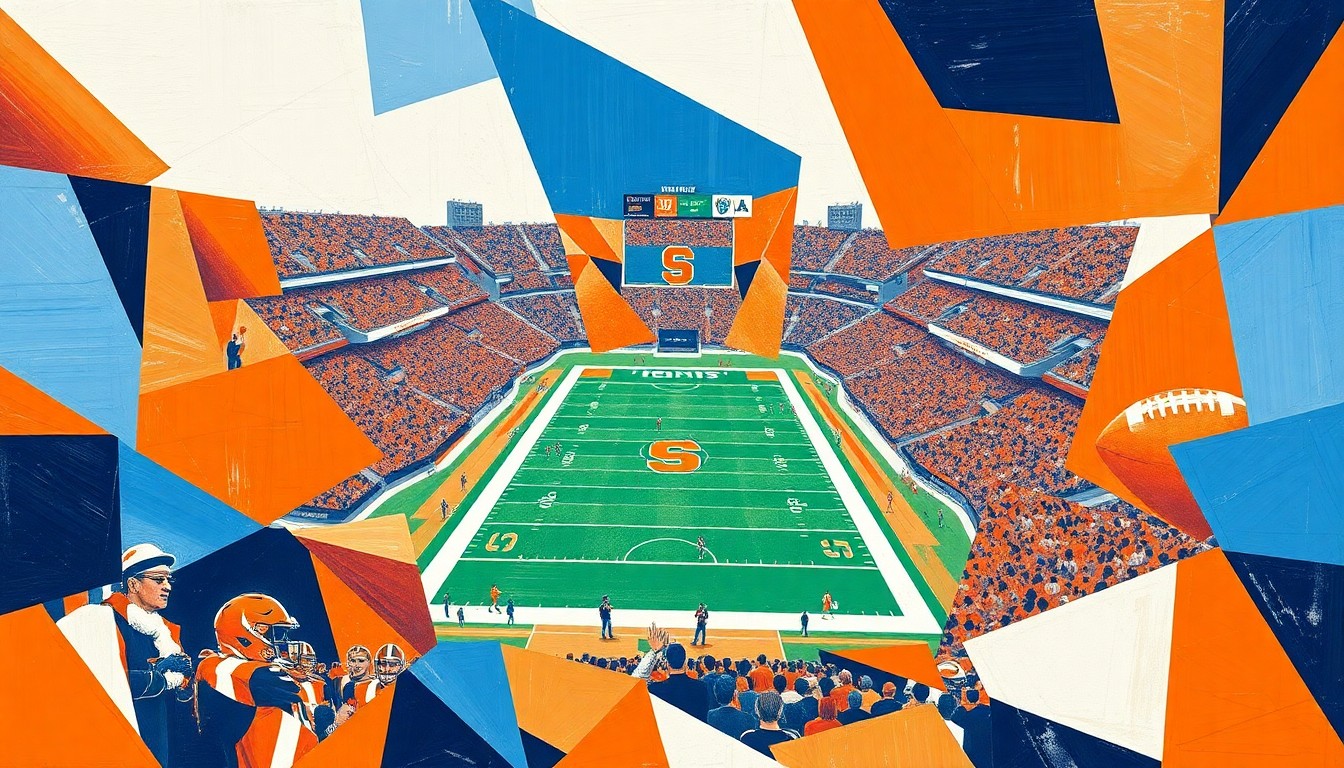
 The iconic Heisman Trophy, a symbol of athletic excellence and racial progress, is fractured and deconstructed in a cubist painting that reflects the complex emotions and significance surrounding its mysterious disappearance and return.Syracuse Today
Fifty years ago, the Heisman Trophy awarded to Syracuse University football legend Ernie Davis was stolen from its display on campus, sending shockwaves through the community. The trophy's disappearance and eventual anonymous return highlighted the deep emotional attachment and symbolic value that sports memorabilia can hold for a university and its fans.
Why it matters
Ernie Davis was the first Black athlete to win the Heisman Trophy, making the award a symbol of racial progress and a source of pride for the Syracuse community. The theft of this iconic trophy struck at the heart of the university's legacy and connection to its storied football history.
The details
In the early hours of March 31, 1976, the 45-pound bronze Heisman Trophy was stolen from its display at Manley Field House on the Syracuse University campus. The trophy held immense significance, not just as a symbol of athletic excellence, but also as a representation of Ernie Davis' pioneering achievement as the first Black player to win the award. After an extensive police investigation involving over 100 interviews, the trophy was anonymously returned to a local newspaper's newsroom, with a woman silently placing it on a table and leaving.
- The trophy was stolen on March 31, 1976.
- The trophy was anonymously returned 50 years later, in 2026.
The players
Ernie Davis
The first Black athlete to win the Heisman Trophy, Davis had an extraordinary 1961 season at Syracuse University, rushing for 823 yards and scoring 15 touchdowns. His tragic early death from leukemia only added to the trophy's significance.
Marie Fleming
Ernie Davis' mother, who donated the trophy to Syracuse University as a lasting tribute to her son's legacy.
Bill Spencer
An assistant coach at Syracuse University, who emphasized the trophy's value in recruiting.
Tom Coughlin
A future Super Bowl-winning coach, who expressed outrage at the trophy's theft, calling it "one of the sickest things" he'd ever heard.
Frank Maloney
The head coach of the Syracuse University football team, who noted the trophy's special meaning for Black players, almost like a symbol of their achievements and a connection to Davis' legacy.
What they’re saying
“One of the sickest things I've ever heard.”
— Tom Coughlin, Future Super Bowl-winning coach
“The trophy's special meaning for Black players, almost like a symbol of their achievements and a connection to Davis' legacy.”
— Frank Maloney, Head coach, Syracuse University football team
What’s next
The Syracuse University community continues to celebrate Ernie Davis' legacy and the return of his iconic Heisman Trophy, with plans for a special 50th-anniversary commemoration event on campus.
The takeaway
The theft and return of Ernie Davis' Heisman Trophy underscores the deep emotional and symbolic significance that sports memorabilia can hold for a university community. This story serves as a powerful reminder of the lasting impact that pioneering athletes and their achievements can have, transcending the field of play and becoming cherished symbols of progress and identity.
Syracuse top stories


Syracuse events



Apr. 11, 2026
Syracuse Crunch vs. Utica Comets