- Today
- Holidays
- Birthdays
- Reminders
- Cities
- Atlanta
- Austin
- Baltimore
- Berwyn
- Beverly Hills
- Birmingham
- Boston
- Brooklyn
- Buffalo
- Charlotte
- Chicago
- Cincinnati
- Cleveland
- Columbus
- Dallas
- Denver
- Detroit
- Fort Worth
- Houston
- Indianapolis
- Knoxville
- Las Vegas
- Los Angeles
- Louisville
- Madison
- Memphis
- Miami
- Milwaukee
- Minneapolis
- Nashville
- New Orleans
- New York
- Omaha
- Orlando
- Philadelphia
- Phoenix
- Pittsburgh
- Portland
- Raleigh
- Richmond
- Rutherford
- Sacramento
- Salt Lake City
- San Antonio
- San Diego
- San Francisco
- San Jose
- Seattle
- Tampa
- Tucson
- Washington
Eyck Freymann on Defending Taiwan
The academic and writer talks about what it will take to deter Xi Jinping from taking over Taiwan and what he makes of Trump's approach so far.
Apr. 19, 2026 at 9:00pm
Got story updates? Submit your updates here. ›
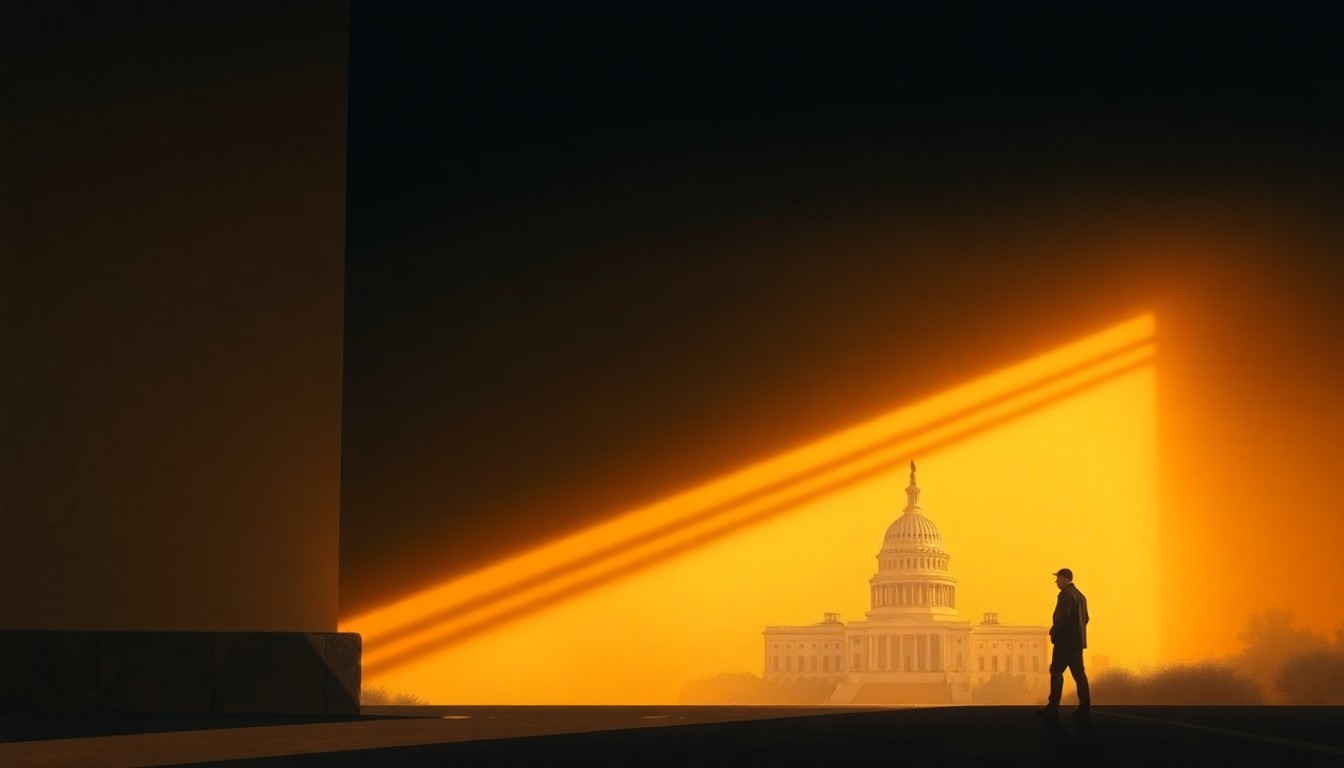 As tensions over Taiwan's future escalate, a somber political scene reflects the high stakes and uncertainty surrounding the island's status.NYC Today
Eyck Freymann, a Hoover Fellow at Stanford University and a Non-Resident Research Fellow at several institutions, argues in his new book 'Defending Taiwan' that the U.S. needs a far more comprehensive strategy to deter China's multifaceted threats to Taiwan and maintain peace. He discusses the core of his argument, why Taiwan's future matters to the U.S., and how the U.S. should adjust its strategic ambiguity policy and economic deterrence strategy.
Why it matters
Taiwan's fate is critical for the U.S. due to its importance for the global semiconductor supply chain, China's ability to project naval power in the Pacific, and the broader implications for U.S. credibility and the type of international order the U.S. wants to preserve. Freymann argues the status quo can be maintained, but it requires integrating all the tools of U.S. national power to deter China's multifaceted threats.
The details
Freymann argues that Xi Jinping has a coherent grand strategy to take Taiwan, using military, political, economic, and technological tools. He proposes a concept of 'structured ambiguity' where the U.S. signals it will proportionately redefine the status quo if China incrementally tries to change it. Freymann also advocates an 'avalanche decoupling' economic strategy to reduce reliance on China in critical supply chains. He believes the U.S. has major gaps in understanding Taiwan's domestic politics that China has exploited, and discusses other potential Chinese moves like a blockade or coercive mobilization that the U.S. must be prepared to deter.
- Freymann's book 'Defending Taiwan' is set to publish on April 15, 2026.
- In July 2025, Taiwanese President Lai Ching-te attended a naval defensive mine-laying drill and live-fire exercise in Kaohsiung.
- In August 2023, Taiwan's Dongyin Area Command conducted an island-wide joint anti-landing exercise.
- In December 2025, Chinese Foreign Minister Wang Yi gave a statement at a symposium on the international situation and China's foreign relations.
- In December 2025, U.S. President Donald Trump met with Chinese President Xi Jinping in Busan, South Korea.
The players
Eyck Freymann
A Hoover Fellow at Stanford University, a Non-Resident Research Fellow at the U.S. Naval War College, China Maritime Studies Institute, Columbia Center on Global Energy Policy, and the Institute of Geoeconomics in Tokyo. He is the author of the book 'Defending Taiwan'.
Xi Jinping
The President of China who Freymann argues has a coherent grand strategy to take control of Taiwan.
Donald Trump
The former President of the United States whose approach to Taiwan policy Freymann assesses.
Lai Ching-te
The President of Taiwan who has overseen military exercises aimed at defending the island.
Wang Yi
The Foreign Minister of China who has made statements regarding the country's foreign relations.
What they’re saying
“The argument is Xi Jinping has a highly coherent grand strategy to take Taiwan that marshals every tool of China's national power: military, political, economic, technological. The United States does not have an equivalent strategy to deter conflict and therefore we are barreling towards a crisis, if not a war.”
— Eyck Freymann
“If deciding to have the war would mean economic mutually assured destruction, maybe we're actually deterring ourselves.”
— Eyck Freymann
“Taiwan has a robust, vibrant democracy — there's a diversity of views. Taiwan's two main political parties are big tents. I think there's very limited understanding in Washington of the role of factions.”
— Eyck Freymann
What’s next
The judge in the case will decide on Tuesday whether or not to allow Walker Reed Quinn out on bail.
The takeaway
This case highlights growing concerns in the community about repeat offenders released on bail, raising questions about bail reform, public safety on SF streets, and if any special laws to govern autonomous vehicles in residential and commercial areas.