- Today
- Holidays
- Birthdays
- Reminders
- Cities
- Atlanta
- Austin
- Baltimore
- Berwyn
- Beverly Hills
- Birmingham
- Boston
- Brooklyn
- Buffalo
- Charlotte
- Chicago
- Cincinnati
- Cleveland
- Columbus
- Dallas
- Denver
- Detroit
- Fort Worth
- Houston
- Indianapolis
- Knoxville
- Las Vegas
- Los Angeles
- Louisville
- Madison
- Memphis
- Miami
- Milwaukee
- Minneapolis
- Nashville
- New Orleans
- New York
- Omaha
- Orlando
- Philadelphia
- Phoenix
- Pittsburgh
- Portland
- Raleigh
- Richmond
- Rutherford
- Sacramento
- Salt Lake City
- San Antonio
- San Diego
- San Francisco
- San Jose
- Seattle
- Tampa
- Tucson
- Washington
How America's First Statue Controversy Toppled King George III
The story of the colonists' fiery battle over a public monument in New York City
Apr. 12, 2026 at 6:10am
Got story updates? Submit your updates here. ›
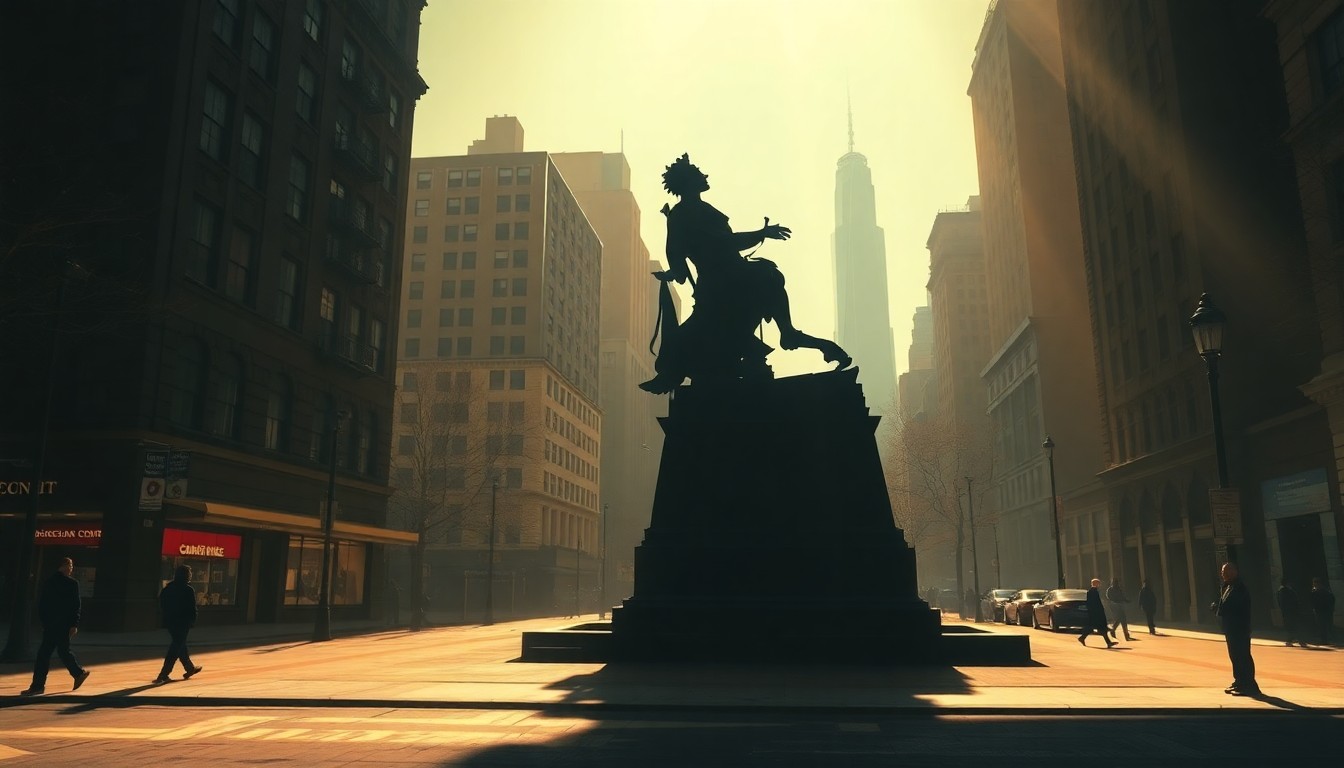 The destruction of King George III's statue in New York City marked an early symbolic victory for the American colonists in their fight for independence.NYC Today
In 1766, the Province of New York ordered a gilt-covered lead equestrian statue of King George III to be erected in New York City. However, as the American Revolution began, colonists grew increasingly resentful of the British monarch. In 1776, after the Declaration of Independence was read to Washington's troops, a group of 40 soldiers and sailors tore down the statue, breaking it into pieces. The lead from the statue was then melted down and used to make musket balls to fire at the British troops.
Why it matters
This incident represents one of the earliest examples of 'statue politics' in America, where the removal of a public monument became a symbolic act of defiance against the ruling power. It also highlights how the American Revolution transformed public sentiment, as a statue that was once erected to honor the king was later destroyed and repurposed as ammunition against the British.
The details
In 1766, the Province of New York passed a resolution honoring King George III and ordered a gilt-covered lead equestrian statue of him to be erected in New York City's Bowling Green neighborhood. However, as the American Revolution began, colonists grew increasingly resentful of the British monarch. In 1775, the 'shot heard round the world' marked the opening battle of the Revolutionary War. The following year, when the Declaration of Independence was signed, George's reputation had dramatically deteriorated, going from 'our most gracious sovereign' to someone 'whose character is thus marked by every act which may define a Tyrant'.
- On July 9, 1776, Gen. George Washington ordered the Declaration of Independence to be read to his soldiers in New York City.
- That night, 40 soldiers and sailors tied ropes around the statue and pulled it down, breaking it into dozens of pieces.
The players
King George III
The British monarch whose statue was erected in New York City in 1766, but later torn down by colonists during the American Revolution.
Gen. George Washington
The American general who ordered the Declaration of Independence to be read to his troops in New York City, sparking the destruction of the King George III statue.
The takeaway
This incident represents one of the earliest examples of 'statue politics' in America, where the removal of a public monument became a symbolic act of defiance against the ruling power. It also highlights how the American Revolution transformed public sentiment, as a statue that was once erected to honor the king was later destroyed and repurposed as ammunition against the British.
New York top stories



New York events
Apr. 12, 2026
Wicked
Apr. 12, 2026
Candy Crafting at Cricket's Candy Creations
Apr. 12, 2026
The Gazillion Bubble Show