- Today
- Holidays
- Birthdays
- Reminders
- Cities
- Atlanta
- Austin
- Baltimore
- Berwyn
- Beverly Hills
- Birmingham
- Boston
- Brooklyn
- Buffalo
- Charlotte
- Chicago
- Cincinnati
- Cleveland
- Columbus
- Dallas
- Denver
- Detroit
- Fort Worth
- Houston
- Indianapolis
- Knoxville
- Las Vegas
- Los Angeles
- Louisville
- Madison
- Memphis
- Miami
- Milwaukee
- Minneapolis
- Nashville
- New Orleans
- New York
- Omaha
- Orlando
- Philadelphia
- Phoenix
- Pittsburgh
- Portland
- Raleigh
- Richmond
- Rutherford
- Sacramento
- Salt Lake City
- San Antonio
- San Diego
- San Francisco
- San Jose
- Seattle
- Tampa
- Tucson
- Washington
Massive Protests Across U.S. Challenge Trump's Authoritarian Moves
Millions march against Trump's efforts to seize control of elections and undermine democracy
Apr. 3, 2026 at 9:19pm
Got story updates? Submit your updates here. ›
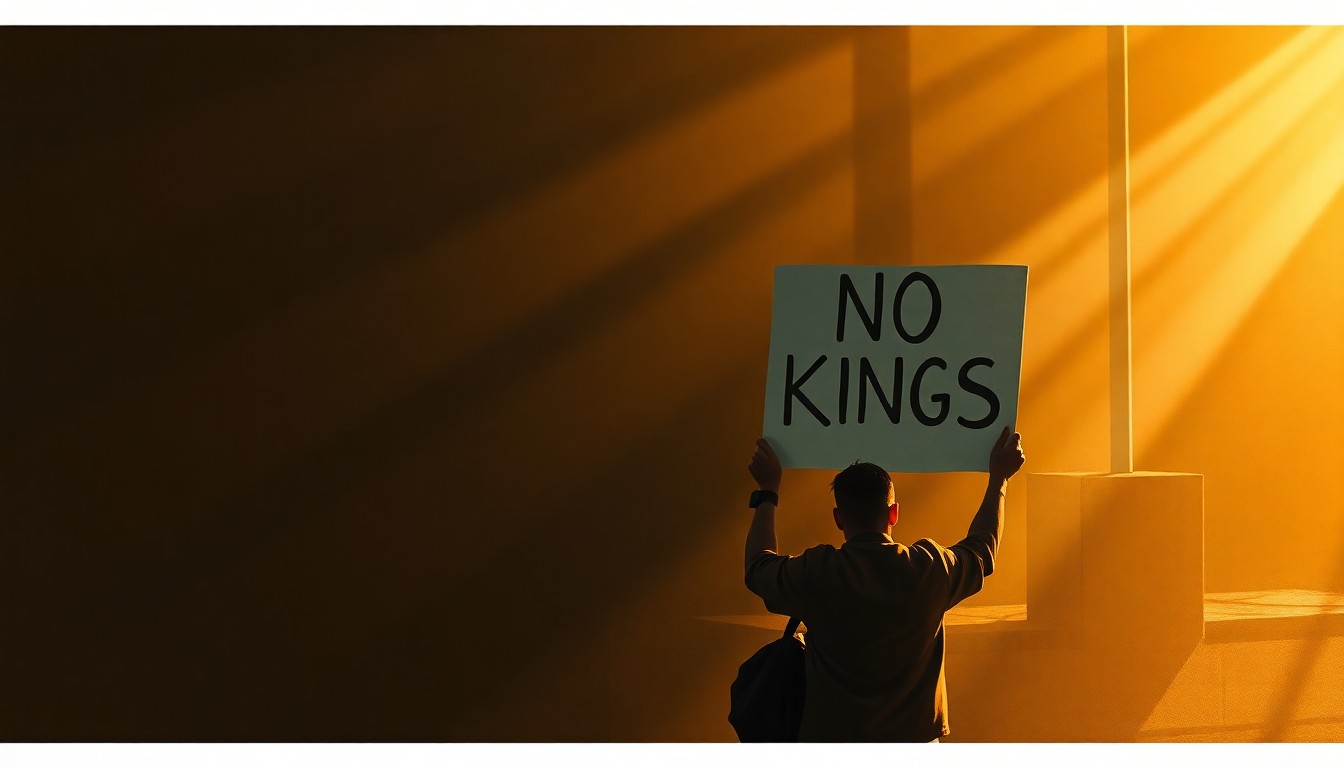 The massive 'No Kings' protests across the U.S. signal growing public opposition to President Trump's authoritarian actions.NYC Today
Hundreds of thousands of people across the U.S. and around the world participated in the largest single-day protest in American history, marching against President Trump's growing authoritarianism and attempts to seize control of elections. The protests came as Trump continued his assault on voting rights, signing an executive order to restrict mail-in voting and suing states that refuse to turn over sensitive voter data.
Why it matters
The massive protests demonstrate the widespread public opposition to Trump's undemocratic actions, which include undermining the Constitution, consolidating power, and attacking the integrity of elections. As Trump's second term progresses, these protests signal an energized resistance fighting to protect American democracy from his authoritarian tendencies.
The details
The 'No Kings' protests saw more than 3,300 rallies across all 50 states and in over a dozen countries, with an estimated 8 million participants. Organizers say this marks the largest single-day protest movement in U.S. history. The demonstrations came as Trump signed an executive order to restrict mail-in voting by creating a list of eligible voters and prohibiting the Postal Service from sending absentee ballots to anyone not on the list. The order also threatens to withhold federal funding from states that refuse to comply. Additionally, the Trump administration has sued dozens of states, including red states, to obtain unredacted voter rolls, in what appears to be an effort to consolidate control over elections.
- On March 28, 2026, hundreds of thousands marched in the 'No Kings' protests in New York City.
- On March 31, 2026, Trump signed an executive order to undermine mail-in voting.
The players
Donald Trump
The former president who is attempting to seize control of elections and undermine democracy in his second term.
Pam Bondi
The former Attorney General who was fired by Trump amid a controversy over the release of the Epstein files.
Todd Blanche
The Deputy Attorney General who was appointed by Trump to replace Bondi in an acting capacity.
What’s next
The Supreme Court is expected to rule on Trump's effort to end birthright citizenship in the coming weeks, which could further limit voting rights. Additionally, the Justice Department's handling of the Epstein files investigation and the firing of Attorney General Bondi remain ongoing issues that Congress is likely to continue scrutinizing.
The takeaway
The massive protests against Trump's authoritarian actions demonstrate the strength of the resistance movement fighting to protect American democracy. However, the president's continued efforts to consolidate power and undermine elections pose an ongoing threat that will require sustained public pressure and legal challenges to overcome.