- Today
- Holidays
- Birthdays
- Reminders
- Cities
- Atlanta
- Austin
- Baltimore
- Berwyn
- Beverly Hills
- Birmingham
- Boston
- Brooklyn
- Buffalo
- Charlotte
- Chicago
- Cincinnati
- Cleveland
- Columbus
- Dallas
- Denver
- Detroit
- Fort Worth
- Houston
- Indianapolis
- Knoxville
- Las Vegas
- Los Angeles
- Louisville
- Madison
- Memphis
- Miami
- Milwaukee
- Minneapolis
- Nashville
- New Orleans
- New York
- Omaha
- Orlando
- Philadelphia
- Phoenix
- Pittsburgh
- Portland
- Raleigh
- Richmond
- Rutherford
- Sacramento
- Salt Lake City
- San Antonio
- San Diego
- San Francisco
- San Jose
- Seattle
- Tampa
- Tucson
- Washington
Pope Leo Emerges as Vocal Critic of Trump's Iran War Strategy
The first American pope takes a firm stance against the escalating conflict, positioning himself as a moral counterweight to the U.S. president.
Apr. 2, 2026 at 7:20pm
Got story updates? Submit your updates here. ›
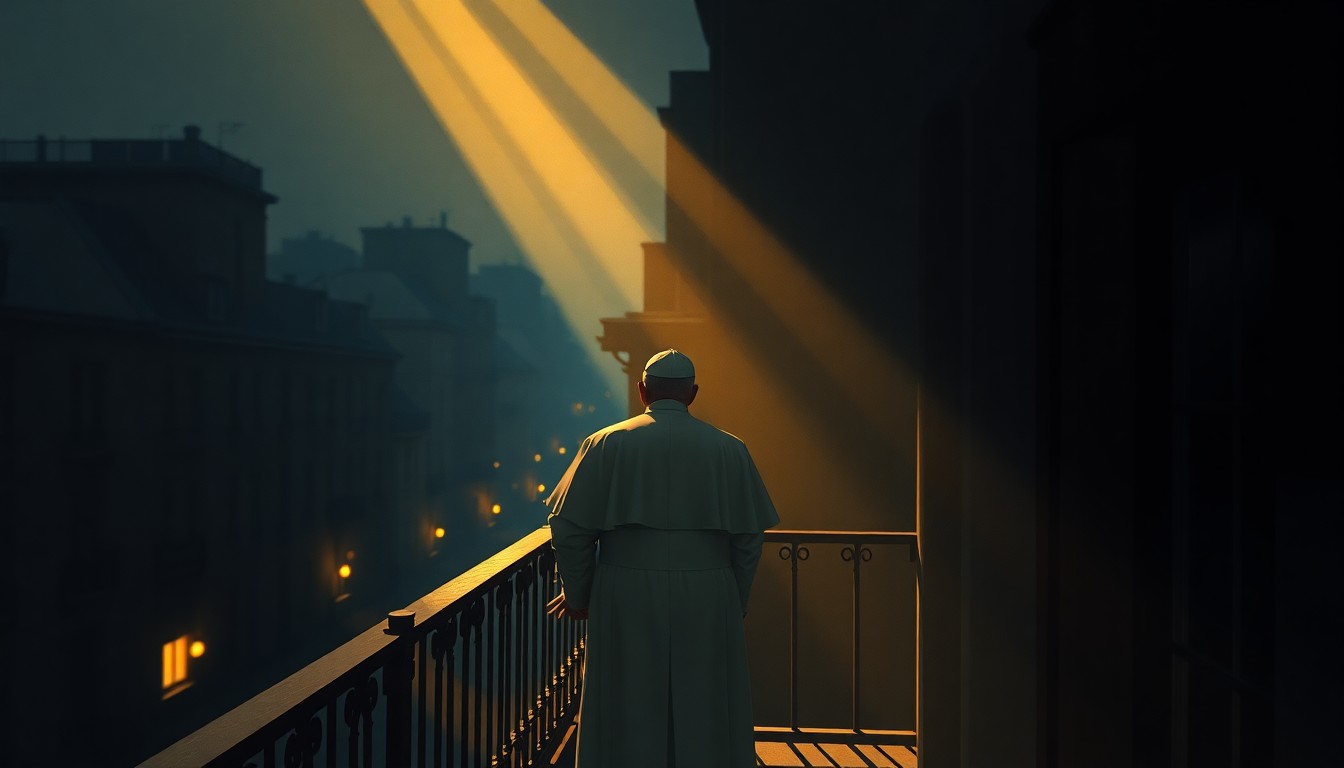 As tensions escalate between the Vatican and the White House, the Pope emerges as a moral voice challenging the U.S. president's foreign policy agenda.NYC Today
Pope Leo, the first American to lead the Roman Catholic Church, has transformed into one of the most outspoken global critics of the expanding Iran war, which President Trump has staunchly defended. After a period of deliberate distance from U.S. political affairs, the pontiff has now issued direct public appeals to Trump, urging him to seek an 'off-ramp' to end the escalating hostilities. Vatican experts say Leo's pivot away from neutrality marks a significant moment, as he appears willing to position himself as a moral counterweight to Trump's foreign policy agenda.
Why it matters
Pope Leo's confrontational stance toward the Trump administration represents a significant shift in the Vatican's traditional diplomatic approach. By directly challenging the morality of the Iran war, the pope is asserting the Church's moral authority on the global stage and seeking to shape the broader geopolitical landscape.
The details
In recent weeks, Pope Leo has delivered a series of strong moral rebukes of the Iran war, declaring that God rejects the prayers of leaders 'whose hands are full of blood' - a remark widely interpreted as aimed at top U.S. officials. The White House has pushed back, defending the administration's use of Christian rhetoric to justify military action. Leo's criticism of the war has been sustained and unmistakable, with the pontiff arguing that aerial strikes are inherently indiscriminate and should be banned.
- On March 13, Pope Leo said Christian leaders who launch wars should 'go to confession'.
- On March 23, he argued that aerial military strikes were inherently indiscriminate and 'should be banned'.
- On March 29, he condemned leaders with 'hands full of blood', asserting that God turns away from their prayers.
The players
Pope Leo
The first American ever to lead the Roman Catholic Church, who has transformed into one of the most outspoken global critics of the expanding Iran war.
President Donald Trump
The U.S. president who has staunchly defended the Iran war, prompting Pope Leo's direct public appeals for an 'off-ramp' to end the escalating hostilities.
Defense Secretary Pete Hegseth
A top U.S. official who has invoked Christian rhetoric to justify U.S.-Israeli strikes on Iran, drawing Pope Leo's moral rebuke.
Massimo Faggioli
A Vatican scholar based at Trinity College Dublin who says Pope Leo's pivot away from neutrality is striking but intentional.
Cardinal Blase Cupich
One of Pope Leo's closest allies, who says the pope's approach is in line with a long tradition of papal diplomacy, but with the unique resonance of an American voice.
What they’re saying
“I don't think he wants the Vatican to be accused of being soft on Trumpism simply because he's American. Leo speaks carefully. The use of an American expression like 'off-ramp' was no accident—it was a message crafted to be unmistakably heard in Washington.”
— Massimo Faggioli, Vatican scholar
“For the first time, Americans and much of the English-speaking world are hearing the Church's appeals for peace in the familiar voice of one of their own. It gives his words a unique resonance.”
— Cardinal Blase Cupich, One of Pope Leo's closest allies
“He is speaking from a heart broken by relentless violence. He is reaching out to people who are exhausted by war and hungry for courageous leadership.”
— Marie Dennis, Former co-president of the Catholic peace advocacy group Pax Christi
“People believe him when he says peace is possible. His credibility matters, especially now.”
— Cardinal Michael Czerny, A senior Vatican official
What’s next
All eyes will be on Pope Leo's Easter Sunday 'Urbi et Orbi' blessing from the balcony of St. Peter's Basilica, where he is expected to further expand on his pointed challenge to the United States over the Iran conflict.
The takeaway
Pope Leo's confrontational stance toward the Trump administration represents a significant shift in the Vatican's traditional diplomatic approach, as the first American pope asserts the Church's moral authority on the global stage and seeks to position himself as a counterweight to the U.S. president's foreign policy agenda.
New York top stories



New York events
Apr. 5, 2026
The Banksy Museum New York!
Apr. 5, 2026
The Banksy Museum New York!
Apr. 5, 2026
The Banksy Museum New York!