- Today
- Holidays
- Birthdays
- Reminders
- Cities
- Atlanta
- Austin
- Baltimore
- Berwyn
- Beverly Hills
- Birmingham
- Boston
- Brooklyn
- Buffalo
- Charlotte
- Chicago
- Cincinnati
- Cleveland
- Columbus
- Dallas
- Denver
- Detroit
- Fort Worth
- Houston
- Indianapolis
- Knoxville
- Las Vegas
- Los Angeles
- Louisville
- Madison
- Memphis
- Miami
- Milwaukee
- Minneapolis
- Nashville
- New Orleans
- New York
- Omaha
- Orlando
- Philadelphia
- Phoenix
- Pittsburgh
- Portland
- Raleigh
- Richmond
- Rutherford
- Sacramento
- Salt Lake City
- San Antonio
- San Diego
- San Francisco
- San Jose
- Seattle
- Tampa
- Tucson
- Washington
Researchers Create Visible Floating Time Crystal
NYU team develops a simple, compact device that showcases a self-oscillating time crystal
Mar. 23, 2026 at 2:24am
Got story updates? Submit your updates here. ›
Researchers at New York University have created a visible time crystal using an acoustic levitator device that suspends tiny styrofoam beads in the air. This breakthrough demonstrates the potential for practical applications of time crystals, which exhibit oscillations in their lowest energy state without requiring external energy input. The system is remarkably simple and compact compared to previous time crystal experiments, opening new avenues for research into these exotic quantum phenomena.
Why it matters
Time crystals challenge our fundamental understanding of equilibrium and the laws of thermodynamics, and this new visible time crystal system could lead to advancements in ultra-precise quantum clocks, advanced sensors, and novel computing paradigms. The research also suggests potential insights into biological timing systems like circadian rhythms.
The details
The time crystal is constructed from tiny styrofoam beads suspended by sound waves in an 'acoustic levitator' device about one foot tall. These beads interact by scattering sound waves, creating a self-sustaining oscillation. Crucially, the uneven forces at play here circumvent Newton's Third Law, allowing the beads to oscillate independently even while levitating.
- The research was published in Physical Review Letters in March 2026.
The players
David Grier
Physics Professor and director of NYU's Center for Soft Matter Research.
Mia Morrell
Graduate student who helped illustrate the uneven forces at play in the time crystal system.
Leela Elliott
NYU undergraduate who contributed to the study.
New York University (NYU)
The university where the research was conducted.
What they’re saying
“Time crystals are fascinating not only since of the possibilities, but also because they seem so exotic and complicated. Our system is remarkable because it's incredibly simple.”
— David Grier, Physics Professor and director of NYU's Center for Soft Matter Research
“Consider of two ferries of different sizes approaching a dock. Each one makes water waves that pushes the other one around — but to different degrees, depending on their size.”
— Mia Morrell, Graduate student
What’s next
Researchers are focused on refining the time crystal system and exploring its potential in diverse applications, from advanced sensors to novel computing paradigms. Calculations from TU Wien have also revealed fundamentally different methods for creating time crystals, broadening the scope of potential research.
The takeaway
This breakthrough in creating a visible, easily-manipulated time crystal represents a significant step forward in the study of these exotic quantum phenomena. The implications extend beyond physics, potentially offering insights into biological timing systems and paving the way for advancements in precision timekeeping, sensing, and computing.
New York top stories


New York events
Apr. 12, 2026
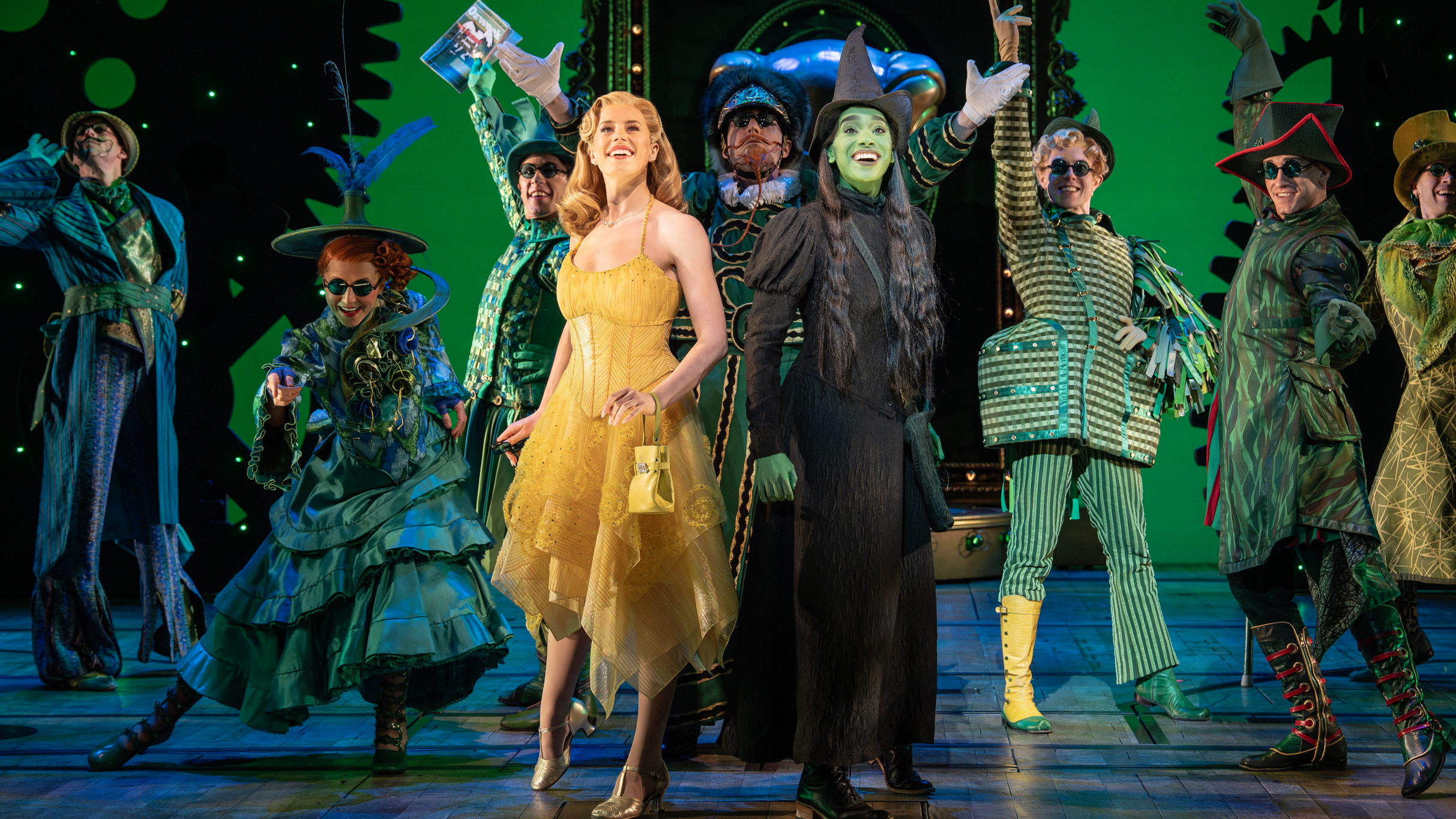
Wicked
Apr. 12, 2026
Candy Crafting at Cricket's Candy Creations
Apr. 12, 2026
The Gazillion Bubble Show